
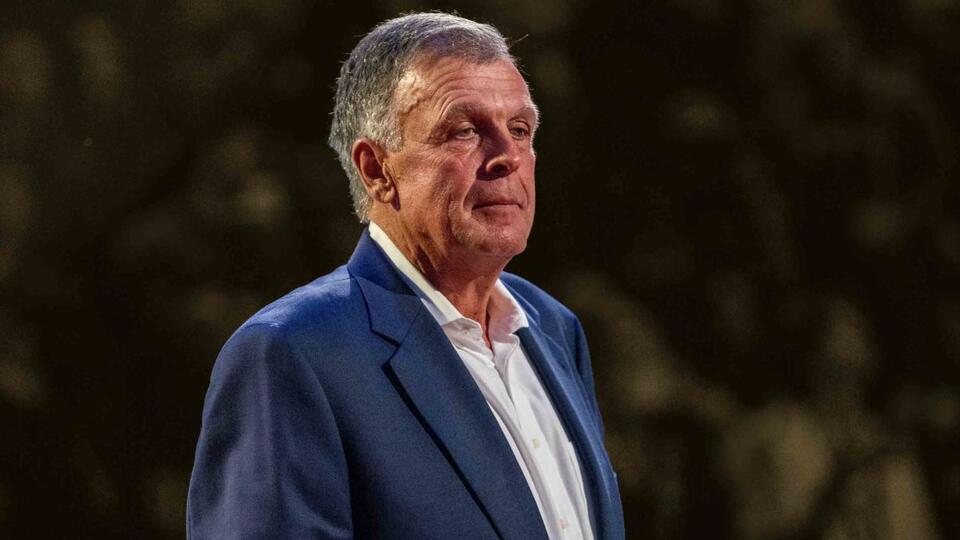

Kevin McHale was part of the 1980 Draft class and as always, each draftee entered basketball’s biggest stage under very different circumstances, largely depending on the state of the NBA franchise that had picked them.
Nearly 45 years after Draft Night in New York City, the Hall of Famer reflected on just how vast that gap could be, recalling his first steps in the league compared with those of his peers — steps that were on a completely different level.
Entering the dominant Celtics
When McHale, a standout at the University of Minnesota and the third overall pick, joined the Boston Celtics, he stepped into a team loaded with experience.
“Larry [Bird] and I were the only two young guys on the team and everybody else was veterans,” Kevin recalled in August 2025, per Beckett.com.
Not only was Boston’s roster experienced, it was also loaded with talent. Center Robert Parish dominated the paint, forward Cedric Maxwell was already a vital, underrated force and lefty point guard Tiny Archibald ran the offense as a four-time All-Star.
Meanwhile, leading the front office and already one of the greatest coaches in NBA history was Red Auerbach.
Looking at that setup, the goal for the 1980-81 season — McHale’s first of 13 in the league — was clear: win a championship title, which would have been the 15th in Boston’s franchise history and the first since defeating the Phoenix Suns in the 1976 Finals. The fact that McHale was only 23 and Bird a year older, both relatively inexperienced and still adapting to the league, did nothing to alter that goal.
Thriving from day one
For McHale, stepping into a team that had finished the previous season 61-21 and as division champions meant adapt or fail.
The contrast with other rookies joining rebuilding or weaker teams, who had the luxury to grow at their own pace, was stark.
“As a lot of my friends that were my age got into the league, they were learning how to play in the NBA,” McHale reflected. “I was learning how to win the NBA, which is a completely different thing than playing in the NBA.”
What certainly helped the him in that process was coming off the bench instead of starting immediately. It gave him breathing room, allowed him to observe more experienced teammates and learn the nuances of winning in a high-pressure environment — lessons rookies on weaker teams rarely encounter.
That approach proved vital.
Not only for McHale — a future three-time NBA champion and seven-time All-Star — who credited his rookie season for teaching great lessons playing with all those vets, but also for the Celtics. The franchise from Massachusetts had a long tradition of placing skilled, high-IQ players on the bench, with John Havlicek and Frank Ramsey as standout examples and McHale became next in line to uphold that standard.
Ultimately, it was a perfect fit.
Sure, the iconic power forward didn’t have the luxury of easing into the league and was thrust into the spotlight from day one. Yet instead of being daunted, McHale adapted masterfully — a process that culminated in winning his first championship right out of the gate, with the Celtics, featuring him as a rookie, defeating the Houston Rockets in the 1981 NBA Finals.