

Around the parts of Dallas Many people think so, but no one says it out of superstition. And the blond goatee that Cooper Flagg He has already grown during the Summer League and has further fueled the imagination of fans along with his first preseason outings in the jersey. Mavericks.
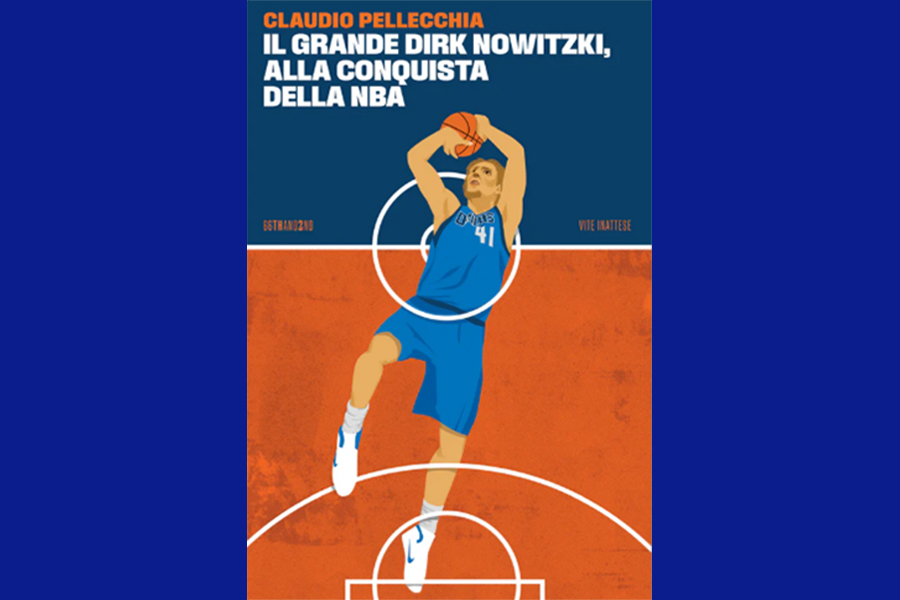
No, obviously the slimmed-down and now Californian-born Luka Doncic has nothing to do with it. The hope of Texan supporters is that the rising star of American professional basketball can revive the epic story given to the Dallas Mavericks by the phenomenal Dirk Nowitzki. Exactly the one told by Claudio Pellecchia ne “The great Dirk Nowitzki, conquering the NBA” (66thand2nd publisher, €18), a perfect read in view of the imminent season opener to grasp, beyond the role and physical size, the similarities and differences between the “German Wunderkind” (one of the many nicknames given to Nowitzki during his career) and the talented boy from Maine who in turn aims to prove himself a phenomenon on the parquet.
First point of different similarity, the sporting DNA: son of Helga, a German national basketball player, and Jörg, a passionate handball player, Dirk Nowitzki; son of Kelly, a successful player and then NCAA basketball coach, and Ralph, a modest college basketball player, Cooper Flagg. But if playing sports could only be a family tradition for both, the story of the No. 41 of Dallas (jersey retired in January 2022) is very different from that of the current number 32. Because Cooper Flagg is yet another predestined one who was given a basketball in his hands already in the cradle, while Nowitzki’s rise – as Claudio Pellecchia tells in great detail – is essentially that of a predestined… by chance.
Yes, because after an unsatisfying attempt at handball and unrealizable dreams of imitating his idol Boris Becker in tennis, the natural progression to basketball for the lanky twelve-year-old Würzburg (today known above all as his birthplace, once only for the presence of some frescoes by Tiepolo) would not have the same impact without the fortuitous – and fortunate – meeting in the changing rooms of the local gym with Holger Geschwindner, who at almost fifty still plays for fun after a career that also saw him wear the shirt of the German national team.
The year is the 1994 and from that moment on, Geschwindner, literally struck by the sight of that young boy, still raw but already producing incredible plays, became Dirk Nowitzki’s mentor, not only in basketball. “At a certain point,” writes Claudio Pellecchia, “It’s as if Geschwindner were proposing a spiritual path to Nowitzki rather than a training program., a path of analysis and introspection aimed at achieving a serenity and psychophysical balance that can make anything possible, on and off the pitch.”
The following lines of the book are also intriguing, effectively summarizing how Nowitzki’s education is something unique and very different not only from “cutting one’s teeth” in overseas playgrounds. “For example, the long rowing sessions on the Main they are much more useful than weight room work for strengthening the trunk and arm muscles without weighing down the shooting mechanics; dance lessons They serve to improve footwork and coordination because “everything that happens on a basketball court must be performed with a certain rhythm”; the combinations of squats and shooting in motion make the body more flexible and elastic when it comes to “exploding” upwards with the ball in hand; the fearsome “suicides” from one baseline to the other, made skipping in a jump with high knees (and not by running, like everyone else does), they increase resistance to prolonged effort and provide an extra reserve of breath that can be used when others are tired. And then there are many books to read and just as many musical instruments to play, especially guitar, piano and saxophone, because, as Butler (Geschwindner’s ex-partner, ed.) keeps repeating to him, basketball is like a melody after all; you can’t just learn to play it but you have to feel it inside, you have to “live it”, make it flow through your body and soul”.
What follows is a journey of commitment, difficult choices, potentially devastating mistakes (starting from that wrong free in the last seconds of Game 3 of the 2006 Finals which effectively allowed the Miami Heat to overturn the series from 0-2 to 4-2) and to follow proud redemptions. Until arriving at the definitive conquest of the NBA with the title of 2011 (4-2 always against the Miami Heat) and with Dirk Nowitzki also lifting the trophy MVP of the finalA journey told in the book “step by step,” or rather, action by action, like a long and fascinating television replay. A journey that Cooper Flagg now plans to replicate, and which everyone in Dallas is eagerly waiting to see. (Paolo Corio)