
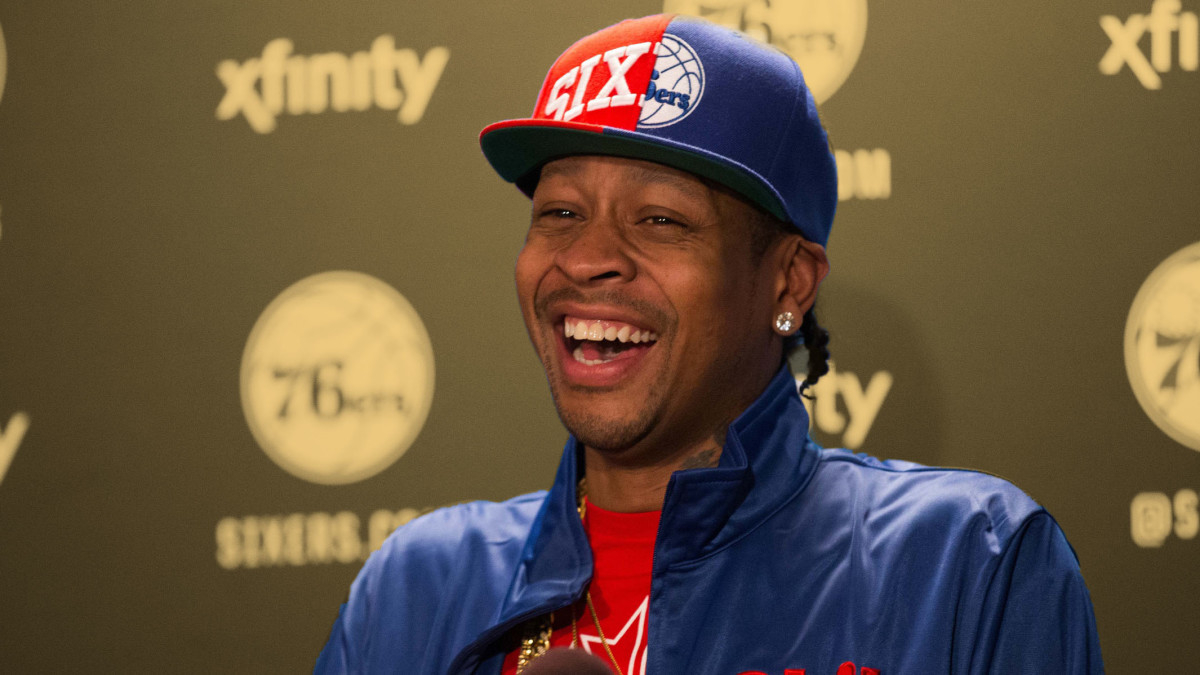
Allen Iverson has never been one to follow the script — bold, unapologetic, and uncompromising, he’s always carved his own path. His recent appearance on “The Breakfast Club” touched on that very idea.
In a candid, hour-long conversation, Iverson spoke openly about the pressures of fame, money and authenticity — the timeless balancing act every NBA superstar faces and how he managed to stay true to himself through it all.
Young AI already stood out
Long before Iverson became a League Most Valuable Player, 11-time All-Star and Naismith Basketball Hall of Famer with fans around the globe, “Bubba Chuck” — or simply “Chuck,” as friends call him — already carried the aura of greatness.
Blessed with what he described as rare athletic ability, young Iverson was a standout not only on the basketball court but also on the football field, and that talent turned him into something resembling a local legend.
Growing up in Hampton, Virginia — one of the state’s largest and most competitive sports communities — Iverson recalled feeling rich when he was poor, meaning that even though money was scarce, he was constantly recognized and treated like a star during his formative years.
For example, when a young AI, around eight years old at the time, was just entering the barbershop, guys much older than him would turn their heads to catch a glimpse of the young prodigy arriving.
Now, nearly four decades later, Iverson, who has almost 15 million followers on Instagram, said he has felt famous for as long as he can remember. That certainly rings true, as the attention he first received during those barbershop moments only continued to grow, especially after joining Georgetown in the mid-1990s and excelling with the Hoyas.
Challenges of staying real throughout all the money famae
For most kids, that kind of early hype can twist everything — turning confidence into arrogance, making them feel not only above everyone else but also untouchable in every way. Fame like that has its pitfalls, especially when it comes before you’re ready. And when the spotlight grows from local buzz to global glare, as it did for Iverson after being drafted number one overall in 1996 by the Philadelphia 76ers, the pressure only intensifies.
But Iverson wasn’t built that way. He said those early moments of recognition, that street-level fame, didn’t inflate him; they grounded him. In fact, they instilled a fear of losing himself, of becoming someone he eventually couldn’t recognize in the mirror. That awareness became a guiding force, shaping how The Answer approached both his career and his life.
Now, at 50, Iverson says that drive helped him stay on the right path, adding that he feels that way because no one in his circle has ever suggested otherwise.
“I’ve never heard a person say, once Chuck got some money, he changed. Once Chuck got to the NBA, he changed,” he said.
It certainly seems that way, and after decades under the brightest lights, Iverson remains grounded in his roots. The idea that the point guard icon could suddenly turn into someone else now — after everything he’s experienced and learned — would be almost unimaginable.
Ultimately, Iverson’s story should serve as a lesson for every talented basketball prodigy: staying true to yourself can earn a rare kind of status — that of a cultural icon, something The Answer unquestionably became, thanks in large part to his unwavering authenticity.
This story was originally reported by Basketball Network on Oct 12, 2025, where it first appeared in the Latest News section. Add Basketball Network as a Preferred Source by clicking here.