
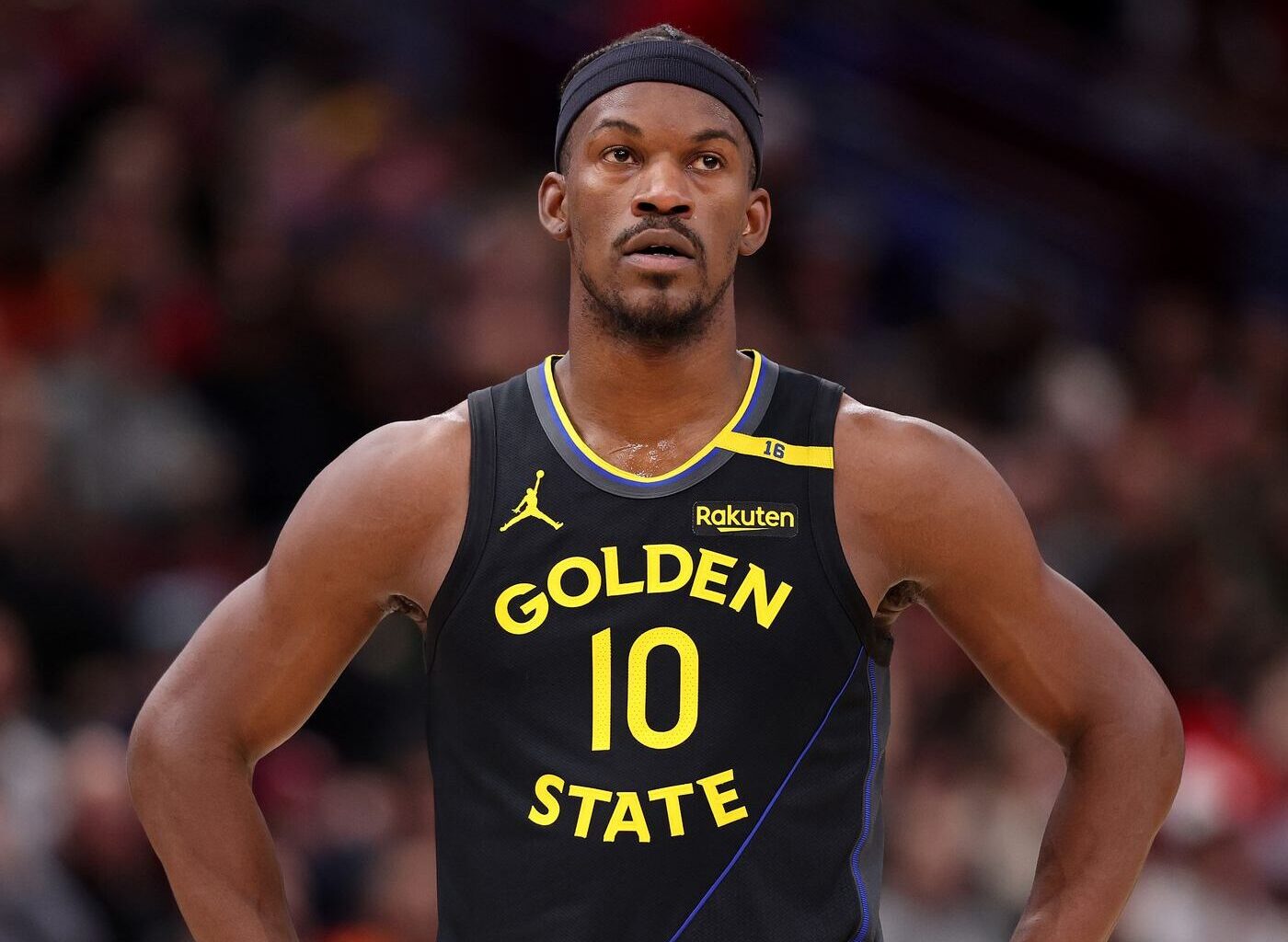
 (Mandatory Credit: Michael Reaves/Getty Images)
The 2024-25 Miami Heat season has long been over. The ending was so merciful that while we wish we could forget, it’s forever stapled in our memories like a bad dream.
The drama-laced Heat season was arguably the worst since the Big 3 with LeBron James, Dwyane Wade and Chris Bosh. The Jimmy Butler saga–stemming from a contract extension he didn’t earn with Miami–was a huge piece of that, though we all know that they eventually traded him to Golden State in a five-team blockbuster while getting Andrew Wiggins, Davion Mitchell, Kyle Anderson and their 2025 first-round pick.
Miami was fortunate to get Mitchell, who will be a restricted free agent this offseason. It’s still not technically complete because of the uncertainty that looms ahead of next month’s draft, but the package looks more disappointing in hindsight.
While these playoffs further justified Miami’s angle about not paying their former star–allocating that much to an aging Butler would’ve crippled the Heat’s mediocre cap sheet–the Heat’s front office should not be absolved from criticism since they are right back to where they were pre-Butler: Purgatory, without many assets.
Heat front office was right not to pay Butler, but still deserves criticism:
Miami Heat president Pat Riley said this during his exit interview regarding Butler–taking some accountability for how it was handled.
“There’s no doubt that what happened with Jimmy had a tremendous impact on our team,” Riley said. “There’s no doubt about it. So the buck stops with me. I’ll take that hit if you want it.
“No, I’m not going to apologize for saying no on the contract extension when we didn’t have to. And I don’t think I should. … It’s over. He’s done. I wish him well. Good luck to him and I hope deep down in his heart somewhere, he wishes us well too.“
The consternation stewed over the fact that Riley preferred Butler prove his worth on the court before giving him a two-year max extension. Butler evidently “lost his joy” and, three suspensions later, was headed to The Bay in February. Golden State subsequently gave him the extension, he re-found his “joy,” and that was all she wrote.
Except that wasn’t the case. Golden State was quite successful with Butler, Draymond Green and Stephen Curry together, going 27-8 despite climbing only two spots in the West standings. Though they didn’t acquire him for the regular season, they acquired Butler to compete for a title with one last “hoorah” for Curry. But after Golden State’s superstar missed all but 13 minutes due to an injury, they crashed and burned out of the West semis in five to Minnesota.
For most of the series, outside of Game 3, Butler, 35, felt invisible on both ends. He was dealing with a pelvic contusion, in all fairness. But he ultimately failed to look even close to the Robin to Curry’s Batman … except the lead star was unfortunately sidelined.
Butler was the superhero in Miami for a half-decade, carrying the Heat to three Eastern Conference Finals and two NBA Finals appearances in five seasons. He was a folklore in the postseason, a mythical hero and one who saved the franchise from purgatory.
Except the Heat have been trapped in mediocrity for three straight seasons, which was why I was always trepidatious about rewarding him with a lofty extension when the supporting cast wasn’t very good.
That’s where the front office comes in. Miami has been one of the most successful organizations for three decades with unparalleled continuity. They have an elite scouting department–headed by Adam Simon, the vice president of basketball operations–with a high-end developmental program that developed an unprecedented number of unlikely stories.
That’s also part of the problem, however. Why rely on undrafted talent as opposed to legitimate talent?
Not every front office is perfect, though it botched the tail-end of the Butler era with asset mismanagement and not trading away the star when they knew they weren’t going to pay him.
I’ve admitted I was wrong about the latter; last offseason, I shared a similar mindset to them: Coming off the worst injury of your career, when your trade value is likely at its lowest, prove that your worth $50+ million per year. Well, I was wrong. Miami was wrong. His trade value tanked, and everyone may have avoided a whole fiasco in the process.
They also didn’t do a good job managing assets.
The Heat let Gabe Vincent walk out the door at an inexpensive cost for nothing; Caleb Martin saved them from themselves and they made a mistake by trading a future first-round pick onto Kyle Lowry’s expiring contract for Terry Rozier (another that I was very wrong about, in hindsight). They flushed all of its second-round picks through 2031 down the toilet, officially trading last two in the Butler deal and most of their trade assets … aren’t great?!?
They didn’t do a great job building around the fringes during Butler’s last few seasons with the Heat, point blank. We could argue about who they should’ve grabbed. But his window wasn’t maximized, point blank.
Again, no front office is perfect. A saying I say often is that it’s easier to general manage in hindsight, but it’s also a requisite to have enough foresight so poor mistakes aren’t made one way or another. The Heat front office isn’t bad–they had enough foresight with Butler’s extension (or lack thereof)–but there’s a reason why they’ve been trapped in purgatory for three years.
As we transition into this next phase post-Butler, let’s just hope they’re able to restock the treasure chest so they can build a contender instead of unloading more of the team’s future into a rudderless ship.
***
To check out our other content, click here.
Follow Hot Hot Hoops on Twitter/X here!
Follow Hot Hot Hoops on Instagram here!
Subscribe to our YouTube channel here!