
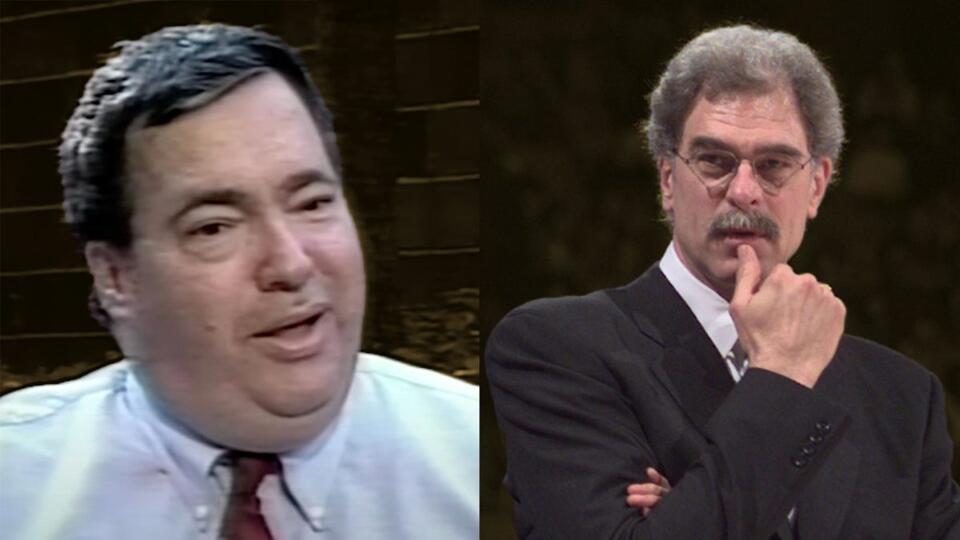

After the 1996-97 season, when the Chicago Bulls won their fifth Larry O’Brien trophy, it looked like nothing in the world could stop them. Phil Jackson continued to execute his triangle offense flawlessly, while Michael Jordan showed no signs of aging or slowing down, and neither did Scottie Pippen.
While the Bulls kept rolling past one Finals opponent after another, behind the scenes, Jerry Krause, the architect of that dynasty, was hitting a wall. Pippen was furious entering the 1997-98 season as just the sixth-highest-paid player on the roster. Also, Jackson, despite all his titles, still wasn’t the league’s highest-paid coach either.
Meanwhile, MJ was making a league-record $33,140,000 that season, more than the entire payrolls of half the NBA teams at the time. It was money he undoubtedly earned, but it also crippled Chicago‘s ability to add or retain key pieces around him.
“Can we get a five and can we get a four, and win? Not in our cap situation. Michael is making $30 million a year. There’s no way we’re going to get another player. We could get what we have and get scraps. There was a contract issue with Phil, but it was Phil who wanted to get out,” Krause said on “The Vertical Podcast with Woj”.
“Phil had enough and I understood that. Phil didn’t want to coach a team without a five or a four. He knew we couldn’t win. Phil was a smart man. He knew that without a healthy Luc Longley and a healthy Dennis Rodman, or somebody similar to both of those guys, we couldn’t win. He knew that, and it was a very simple decision for him. ‘Hey, if I’m not going to win, I’m not going to be here,'” Krause added.
Krause couldn’t find a way out because of Jordan’s contract
The truth was that both Dennis Rodman and Luc Longley were battling injuries, and their performance inevitably declined, even though they remained productive. Concerned about their long-term health, Krause sought medical opinions, which confirmed that neither Rodman nor Longley would likely return to their prime form.
Jerry immediately started exploring ways to fix the issue, but the harsh reality was that Chicago was 123 percent over the salary cap because of Michael’s contract, leaving them unable to find adequate replacements.
On top of that, Pip’s back problems and growing frustration over his contract, along with the overall tension in the locker room, left Krause with no way out. The Zen Master, observing all of this, came to a simple conclusion: the best move was to walk away while still on top.
Phil wanted a bigger contract, but also a contending team
By that point, everyone knew that if Phil left, Michael would follow. And the legendary coach made it clear he wouldn’t stay unless Jerry built a roster capable of contending again. The Bulls went on to win their sixth championship, but in many ways, it marked the bittersweet end of one of the greatest eras in the history of the league.
Jackson wanted $3,000,000, a deal that would have made him the highest-paid coach in the league. He probably would have stayed, even though the Bulls wouldn’t have been title favorites anymore due to age and injuries.
Still, even though he received a $1,65,000,000 deal that made him the third-highest-paid coach in the league at the time, Jackson felt it wasn’t worth risking everything he had built so successfully over the years in the Windy City. He expected that the next offer he’d receive from another franchise would more than make up for it financially.
As usual, Phil was right. After taking a one-year break, he signed a $30,000,000 five-year contract with the Los Angeles Lakers that made him the highest-paid coach in the league, and soon after, he delivered another three-peat, proving beyond any doubt that he was worth every penny.