
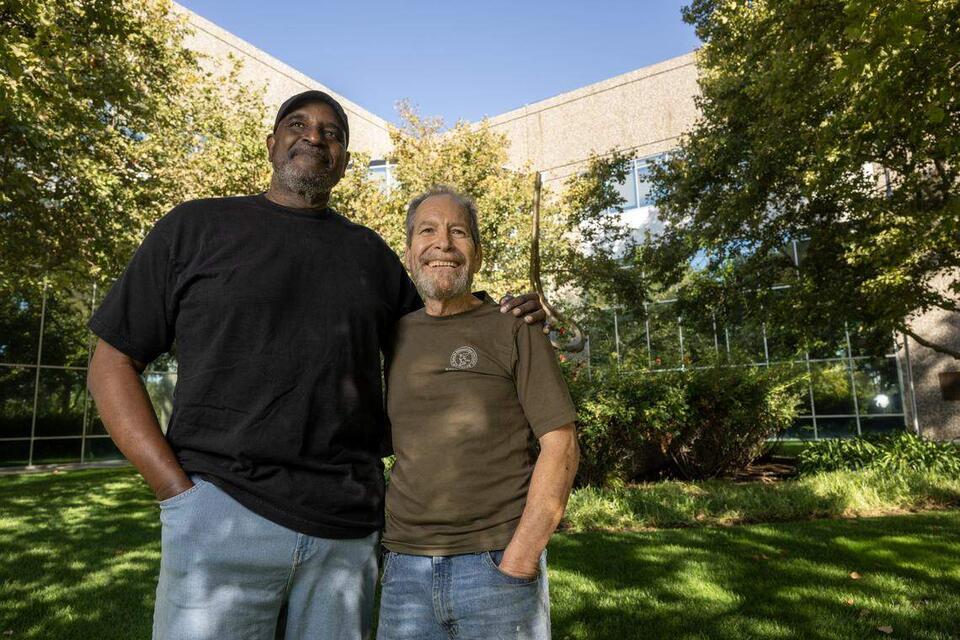
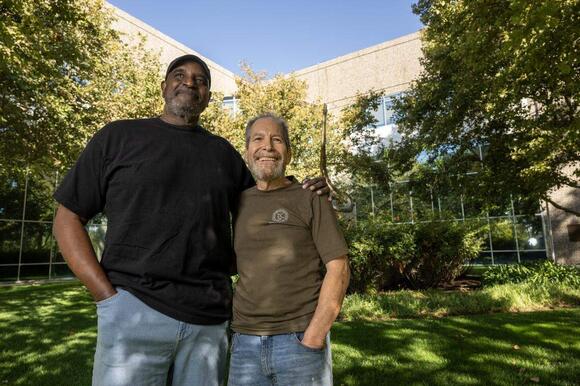
LaSalle Thompson stood in the parking lot of the California Department of Consumer Affairs and noted a tree in the building’s open-air courtyard: That was around where the court for Arco Arena I used to be.
A long time has passed since basketball was here, with the Kings playing in their 10,333-seat temporary home from the first game played there on Oct. 25, 1985 until the 17,317-seat Arco Arena opened nearby on Nov. 8, 1988. The temporary arena was subsequently retrofitted, serving as a home for Sprint and, in more recent years, the state agency tasked with protecting consumers.
There are still remnants of the temporary arena at 1625 N. Market Blvd. in Sacramento, such as a plaque on the building’s exterior to commemorate its opening. And there are people like Thompson, who came west with the Kings from Kansas City in 1985 and remember what this building once was.
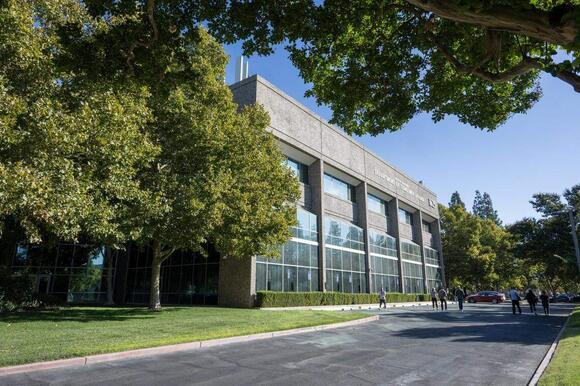
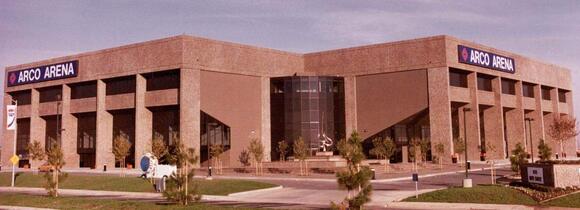
“None of these windows were there,” Thompson said. “And that opening right there, I don’t think that that was there.”
As a team, the Kings celebrated their 40th anniversary season in Sacramento last year, and are approaching another home season opener Oct. 24, now at their Golden 1 Center downtown digs. The actual 40-year mark of the Kings’ first game in town (a loss to the Los Angeles Clippers) the next day offers a window into the team’s varied history locally. There were the early struggles for the franchise, success in the late ‘90s and early 2000s and deeper futility that almost led to the Kings moving to Seattle.
But everything leads back to the improbable way the Kings arrived in Sacramento.
‘A tremendous opportunity for the NBA’
To Gregg Lukenbill, Sacramento and the NBA represented, as he once put it in a letter, “an economic and marketing match made in heaven.”
Lukenbill, a Sacramento native, led a group that purchased the Kansas City Kings in 1983. While Lukenbill spoke publicly about wanting to make the Kings a success in Kansas City, he revealed a different idea to then-new NBA Commissioner David Stern in a letter, dated March 20, 1984.
“The entire Sacramento Valley is an absolute sports vacuum,” Lukenbill wrote to Stern. “As I believe you will soon agree, this situation represents a tremendous opportunity for the NBA. Sacramento and the NBA is an economic and marketing marriage made in heaven.”
A 1989 book by Frank McCormack, “Never Lose,” recounted the effort that brought the Kings to Sacramento. McCormack, who had known Lukenbill since the latter was in eighth grade, helped found the Sacramento Sports Association. This group purchased 40 acres in unincorporated Sacramento County, near city limits, where it would ostensibly build a warehouse.
The real aim — building an arena that could bring the Kings to town — was cloaked in secrecy.
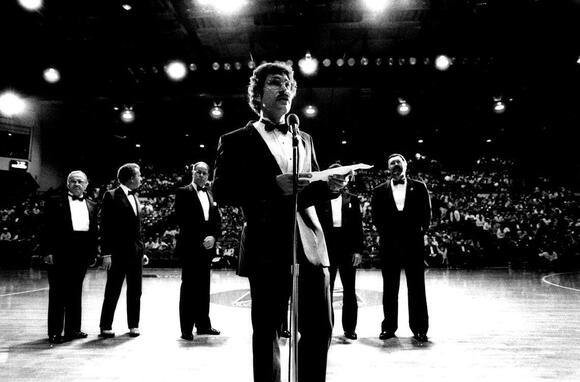
“The best way to describe Gregg during this multi-million dollar political poker game was, ‘Cool Hand Luke,’” McCormack wrote. “His initial five hand draw was: 1. Land on a handshake; 2. No building permit; 3. No financing; 4. No use permit; and 5. No NBA approval.”
Lukenbill, who is now 71 and lives in East Sacramento, conceded in an interview for this story that the idea he dreamed up to bring the Kings to town “is a little bad to crazy to begin with, but the fact that David Stern bought it was even crazier. I couldn’t believe I talked him into it.”
Lukenbill and his partners delivered. At a cost of $14 million, Lukenbill — a developer who’d done construction work since childhood — and his group built the temporary arena in under 12 months. They built in an area that continues to be developed today but, back then, was countryside.
“I remember frequently, like, maybe three or four times a week you’d be going to practice and you had to stop for the herds of sheep crossing the road,” said Thompson, who wrote the foreword to McCormack’s book.
“There was nothing over there,” Thompson added. “That arena sat by itself.”
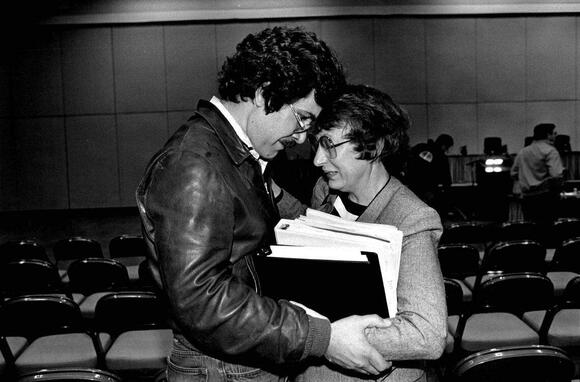
In the 1980s and ‘90s, tule fog could shroud the Sacramento region during the colder months of the year. Rich Kelley, who played his final season for the Kings in 1985-86, remembered a Saturday morning in December when he went to work early with trainer Bill Jones.
“On the edges of the parking lot, I see these shapes, like: The heck is that?” Kelley said. “It looks like there’s ghosts walking around out there because you can’t hardly see and I look a little closer and it’s guys walking around with guns.”
These men were hunters, with pheasant hunting popular near the temporary arena. Sometimes, star players for the Kings such as Reggie Theus joined in, according to former longtime Kings broadcaster Grant Napear, who moved to Sacramento in 1987. “Reggie used to go out with his bow and arrow and go hunting right outside the arena,” Napear said.
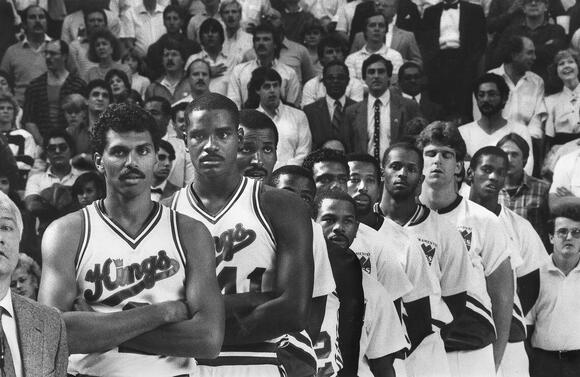
The arena was a huge hit with locals and was known for its noise, caused by both how it was constructed and fan enthusiasm. Although the permanent Arco Arena could also be known for its noise, Thompson said it was probably louder in the temporary arena “because the entire interior, the floor and the stands were all made of wood and (when spectators would) start stomping on the bleachers it would get pretty loud.”
Jerry Reynolds, a longtime franchise presence, became an assistant coach for the Kings in 1985. Reynolds, like NBA legend Larry Bird, is from French Lick, Indiana. Reynolds remembered something Bird said when his Boston Celtics came to town to play the Kings that first season.
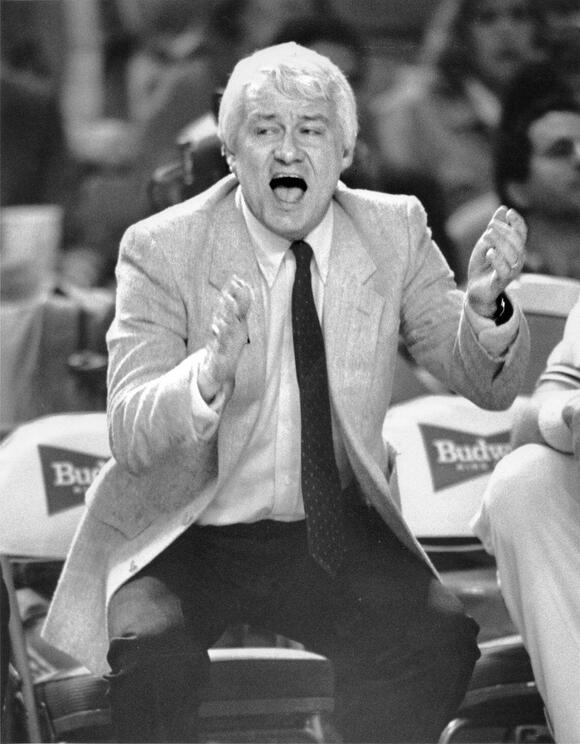
Reynolds said that Bird told him that the temporary arena “reminds me of Indiana high school basketball arenas, the excitement.”
The Kings first round draft pick in 1985, Joe Kleine, likened the fan atmosphere to that of a collegiate fanbase.
“They were just very, very, very excited to have a pro franchise in your city,” Kleine said. “They were very welcoming. They supported us. I mean, they were as good of fans as you could ever hope for.”
Years of losing
Led by Theus, Thompson and others like Eddie Johnson, the Kings went 37-45 and made the playoffs their first year in Sacramento before being swept by the Houston Rockets. It was an omen of things to come, with the Kings going into a slide that lasted the better part of a decade.
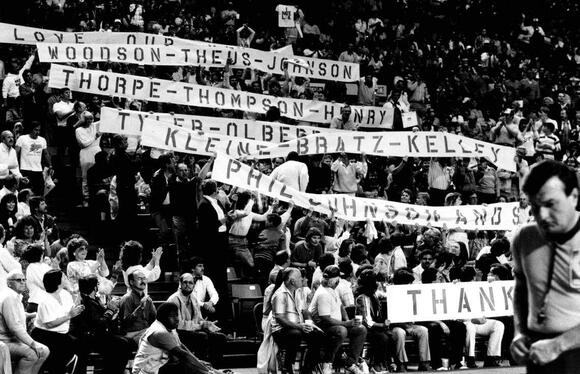
Some of the things the Kings dealt with were unfathomable from a simple sports perspective, such as the August 1989 suicide of their first round draft pick from the preceding year, Ricky Berry.
“It was truly tragic,” said the team’s longtime radio announcer Gary Gerould. “You wonder how much it may have sent the Kings back at that time, because I thought he had the makings of truly becoming an upper marquee-level type player in the NBA.”
It wasn’t just a basketball loss for the team. Harold Pressley, who played for the Kings from 1986 to 1990, said in an interview for this story that he was with Berry more than anyone on the team. Pressley said they saw one another nearly every day. In their last call, the Saturday before Berry’s death, Pressley tried to persuade him to attend a basketball camp he was running for children in the Pocono Mountains.
“Every time I do a basketball camp, I think of him,” Pressley told The Sacramento Bee in 2009.
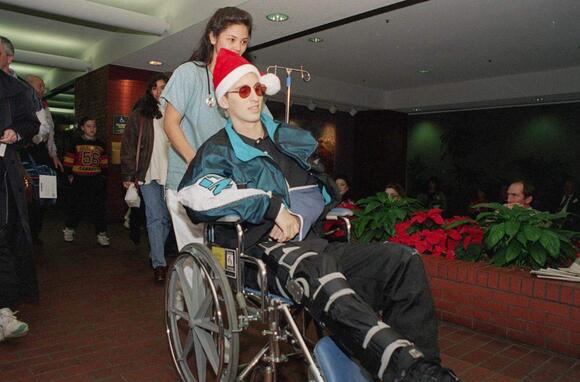
A few years after Berry’s death, first round draft pick Bobby Hurley was nearly killed in a car accident after a game in December 1993.
Hurley, who’d been a storied point guard at Duke, returned to the Kings months later, but never reached the heights he otherwise might have. Reynolds, who drafted Hurley, remembered Hurley facing the 1992 Dream Team as part of a team of collegiate standouts that beat the future Olympic squad in scrimmage.
“I always remember John Stockton talking about how impressed he was with him and (how Hurley was) going to be just a surefire star in time,” Reynolds said.
Other setbacks for the Kings were more of their own making, starting with a series of baffling trades. This included Johnson being traded in June 1987 to the Phoenix Suns for Ed Pinckney and a 1988 second-round draft pick. Johnson said that then-Kings coach Bill Russell, who’d been hired by general manager Joe Axelson in late April, stated that the trade was made for defensive purposes.
Johnson, who lived in Citrus Heights while he was with the Kings, took the trade personally. “I was going to make Sac my home,” Johnson said. “My wife and I were newly-married. We liked it there, despite all the doggone trees that made me itch.”
Instead, Johnson used the trade as motivation.
“I told Bill when they did trade me, I said, ‘I’m gonna haunt you,’” said Johnson, who played another 10-plus years in the NBA after leaving Sacramento. He averaged 18.2 points a game against the Kings, torching the team on 50.5% shooting, both above his career averages.
Russell, for his part, didn’t last as Kings coach beyond the 1987-88 season. Arguably the greatest defensive player in NBA history, Russell had been a champion player-coach in Boston and came close to finishing .500 as coach of the Seattle Supersonics. He coached just 58 games in Sacramento, finishing 17-41.
“I think the best way I can put it is: The way he was used to coaching when he was with the Celtics was one thing,” said Terry Tyler, who played for the Kings from 1985-88. “I think the game had changed when he came to the Kings.”
Even the best of coaches, though, might not have won more than they lost with the revolving door for players in Sacramento in this era.
Other standout players who were on the Kings around this time and were dealt elsewhere included Theus, Otis Thorpe and Kenny Smith. Then, long before Jimmer Fredette, Thomas Robinson or Marvin Bagley III, there were failed draft picks such as Pervis Ellison, who the Kings selected first overall in 1989. At Louisville, Ellison had been “Never Nervous Pervis.” In Sacramento, due to his injury issues, Ellison became “Out of Service Pervis.”
Still, fan interest remained strong, with the Kings having a sellout streak at Arco Arena of 497 games. Asked what he remembered about the fan environment in Sacramento, Anthony Bonner — one of four first round draft picks for the team in 1990 after Ellison was traded away — described it as “insane.”
“We were horrible, but they were fantastic,” Bonner said.
Fan enthusiasm could cut both ways. Olden Polynice came to Sacramento on three opposing teams before the Kings traded for him in early 1994. Then, Polynice got relief from a staple of Kings games over the years: cowbell.
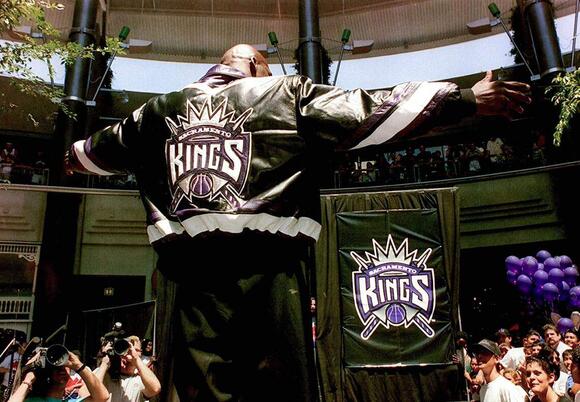
“I don’t even remember hearing it as a King’s player, but when I was an opponent, I used to be like, ‘Why is this guy ringing this irritating a — cowbell?’” Polynice said.
Some of the support might have been due to a willingness among players to be involved in the community.
Kings owner, Jim Thomas, who bought the team from Lukenbill’s group in 1992, was, along with his wife, a generous donor to the Sacramento Ballet. Polynice even appeared in a cameo in “The Nutcracker,” drawing audience laughter by picking up a ballerina and striding off.
Rise and fall
Buoyed by the hiring of executive Geoff Petrie, the Kings became competitive again in the mid ‘90s, culminating with the team becoming a perennial playoff club by the end of the decade. The run of success coincided with the Maloof family purchasing controlling interest in the team from Thomas in the late 1990s.
When the Kings got good, it happened in a hurry. In a matter of months prior to the 1998-99 season, the team traded franchise cornerstone Mitch Richmond for Chris Webber, hired coach Rick Adelman, signed free agent Vlade Divac, drafted Jason Williams and persuaded 1996 first round draft pick Peja Stojakovic to come to Sacramento from overseas.
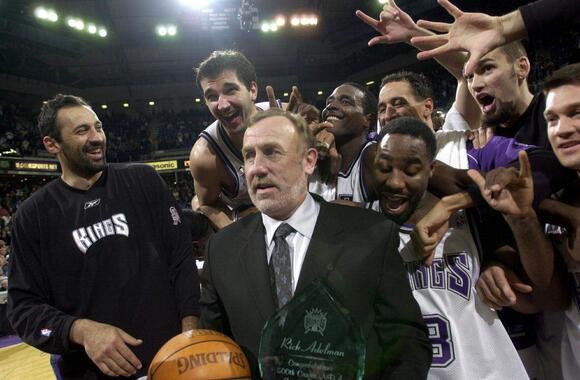
Lawrence Funderburke, the Kings’ second round draft pick in 1994, was a key reserve for the Kings from 1997 to 2004 and had played with Stojakovic for PAOK in Thessalanoki, Greece. Funderburke remembered a conversation he had with Stojakovic. “I said, ‘You’re going to be a really good player in the NBA. You’re gonna have a chance to be a star,’” said Funderburke.
The team’s peak in those years came in the 2002 Western Conference Finals when the Kings pushed the Los Angeles Lakers to seven games before falling. The series remains controversial among Kings fans more than two decades later in part because of questionable officiating and never-substantiated but also never-ending rumors the NBA fixed the series to favor the Lakers.
Gerould, who has called more than 3,000 games on the radio for the Kings, recalled a particularly brutal moment for the Kings during that series.
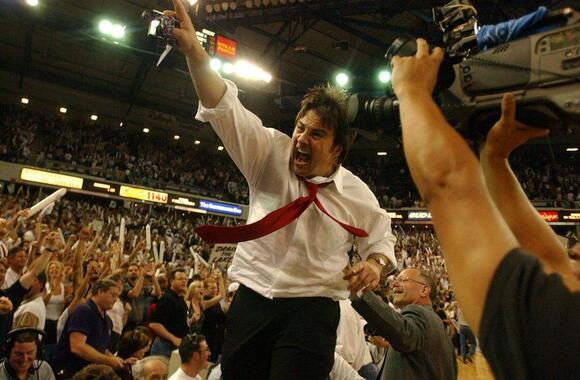
“I remember distinctly seeing Mike Bibby come around the corner off to my right and Kobe Bryant just leveled him with a forearm shiver that just would rattle your bones,” Gerould said. “I mean, it was that violent. It was a football-type of a play and it was right in front of an official. And there was no whistle.”
Webber hurt his knee the following year in the playoffs. So began another long, inexorable slide that was ultimately worse than anything the team had experienced in Sacramento, with the Maloof family hit hard by the Great Recession and dealing away veterans like Bibby for scraps.
The Kings reached a low of 17-65 in the 2008-09 season. And the team very nearly moved to Seattle a few years later, before a push by then-Sacramento Mayor Kevin Johnson led to the NBA Board of Governors rejecting the team’s sale by the Maloof family to an ownership group that sought relocation.
Instead, the Kings were purchased by a group led by Vivek Ranadivé with Golden 1 Center being built to replace the by-then aging arena. Napear credited Johnson and Stern but said they alone didn’t do it.
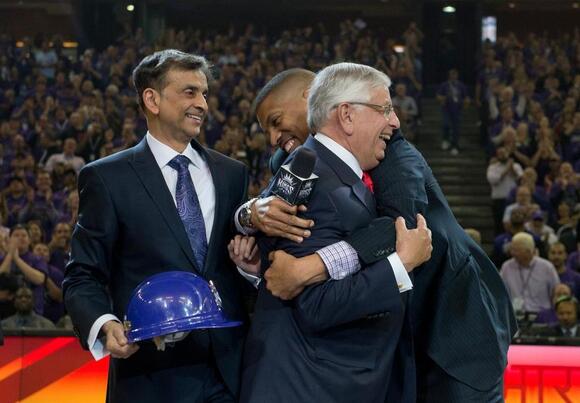
“Without the support of the fans, without their unwavering, loyal support, the Kings would have moved to Seattle,” said Napear, who called Kings games on TV for more than 30 years and now has a radio show from 3 p.m. to 6 p.m. on Fox Sports Sacramento.
“There’s very few fan bases in North America that are more loyal than the Sacramento Kings fans,” Napear added.
What 40 years means
Many Kings from over the years have gone elsewhere.
Kleine lives in Arkansas and has invested in multiple Corky’s Ribs & BBQ restaurants. Bonner made time to do a phone interview for this story during his day as a school teacher in St. Louis, Missouri. Funderburke lives in Columbus, Ohio, where he runs a business and is now a certified financial planner.
. The old days do live on here, though. Lukenbill keeps reminders of the ‘80s Kings in his basement. Thompson lives locally, as does Pressley, who owns Thompson’s former house in Citrus Heights.
Some on the current team acknowledged the significance of the anniversary during the team’s media availability on Monday, even if they had not paind much attention to it. “I haven’t thought about it at all honestly,” said shooting guard Keon Ellis. “But, I mean, I’m pretty sure that’s really big for the city.”
Domantas Sabonis, a three-time All Star, also hadn’t been aware of the upcoming anniversary. “That’s pretty cool for the city,” Sabonis said. “I’m happy we’re still here and we just got to go out there and get a win for it.”
For others like Doug Christie — a key player for the Kings during the early 2000s glory years, later a broadcaster for the team and, now, its coach — the anniversary hits differently. Some of it resonated because of the the thwarted relocation, but that’s not all for Christie.
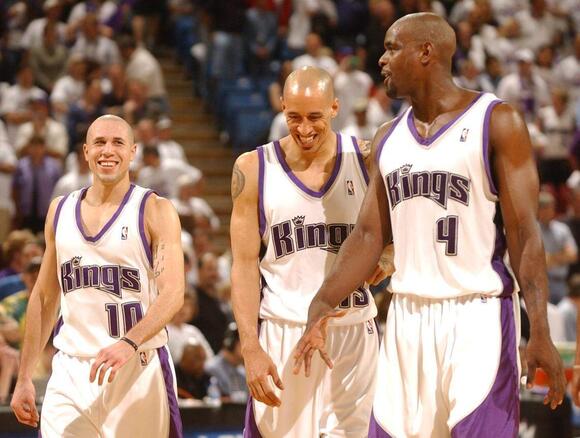
“It’s big-time, man,” Christie said. “Forty years of anything is huge and I’m just proud to be a part of the Sacramento Kings as we go on the journey of taking that next step towards where I know we can be.”
Already, the team has come a long way from being the dream of a person like Lukenbill who was willing to build a temporary arena to bring the Kings to town.
“I love Sacramento,” Lukenbill said. “That’s really what it comes down to, right?”