
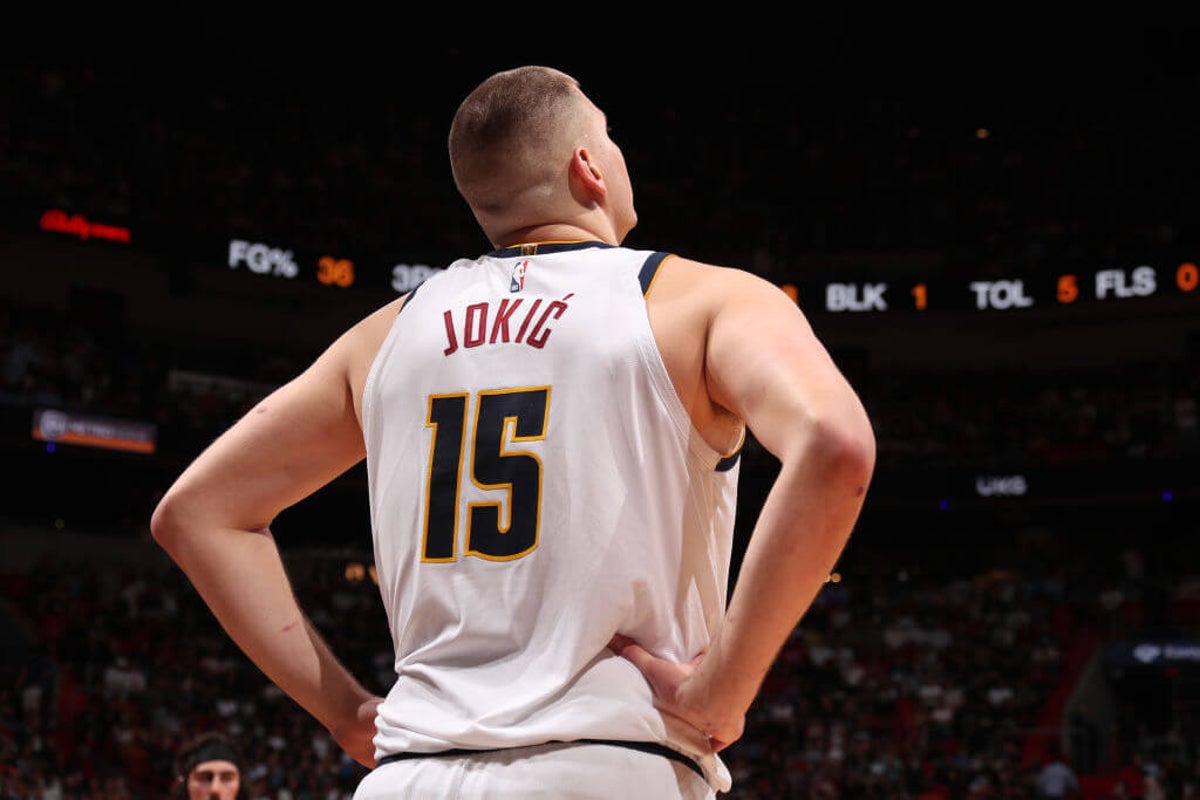
Editor’s note: This article is part of the Program Builders series, focusing on the behind-the-scenes executives and people fueling the future growth of their sports.
SAN DIEGO — There is no sign of Denver Nuggets chaos, or even a hint of tension, inside this news conference room at Pechanga Arena.
It has been six months since team president Josh Kroenke, son of the longtime owner Stan Kroenke, ended the ‘cold war’ between the organization’s former leaders by firing the general manager and longtime coach in one fell swoop with just three games left in the regular season. The move was both stunning and messy at the time, but it yielded the kind of positive results that were seen by ownership as a strong sign that their title-contending window — the Nikola Jokić era, one could call it — was alive and well in the Mile High City.
The two men who are now tasked with bearing that superstar burden, longtime Nuggets executive Ben Tenzer and former Minnesota Timberwolves executive Jon Wallace, are seated on metal folding chairs to discuss their widely-celebrated first summer together as co-heads of the new Nuggets front office. There’s no mention of the seats being hot — not yet, anyways — but they’re well aware of the pressure that comes with this position.
Truth be told, they see it as a privilege.
“There’s an obligation to it,” said Wallace, a former Georgetown point guard who spent his last six seasons (three in Denver and three in Minnesota) with the architect of the Nuggets’ celebrated core, Minnesota Timberwolves president of basketball operations and former Nuggets president of basketball operations Tim Connelly. “The word ‘pressure’ just keeps coming up, (but) I don’t think of it as pressure. I think even when you sit and talk with Nikola a lot of times, he’s very upfront about what he needs. He (gives) that reassurance that you’re on the same wavelength of him in terms of seeing the game from his perspective, and seeing what the team needs to be successful. He’s so unselfish, so you want to take advantage of that white hot space.”
As Tenzer made clear, that’s the only temperature check they’ll spend any time losing sleep over.
“There’s obviously a lot of responsibility with this opportunity we have, but we’re genuinely grateful knowing that this is a special opportunity,” said Tenzer, a law school grad, salary-cap specialist and former general manager of the Nuggets’ G League team who has earned widespread respect during his 16-year tenure in Denver. “I think instead of (calling it) pressure, we look at it like, ‘This is an exciting thing that we have, and let’s take advantage of it.’”
Jokić is one of those transcendent talents whose very presence invites criticism of those around him because of his individual greatness. That has been the case for half a decade, but he’s also 30 now — and two years removed from his one and only championship — meaning the urgency to win is at an all-time high. Add in the fact that his current contract gives him an out for the summer of 2027, when virtually every GM in the league would jump at the chance to steal him if he changed his stance on being “Nuggets forever,” and it’s safe to say that winning another Larry O’Brien trophy this season is in everyone’s best interests. Yet as culture resets go, this one goes deeper than that obvious goal.
If they learned anything from these past few years, when disagreements over roster construction were at the heart of the strained relationship between former general manager Calvin Booth and longtime coach Michael Malone, it’s that dysfunction and a lack of depth are a deadly combination for an organization’s culture. Not to mention a recipe for disaster when you’re trying to keep a generational superstar content.
The course correction, which began when the Kroenkes lifted the interim tag off of coach David Adelman on May 22 and was complete with the placements of Tenzer and Wallace in the front office on June 23, was seen by all involved as a desperately needed fix. There is perhaps no better evidence of these reshaped beliefs than the unique structure of the revamped front office, with Tenzer and Wallace expected to co-chair the effort while collaborating with Adelman and making good use of their vast institutional knowledge.
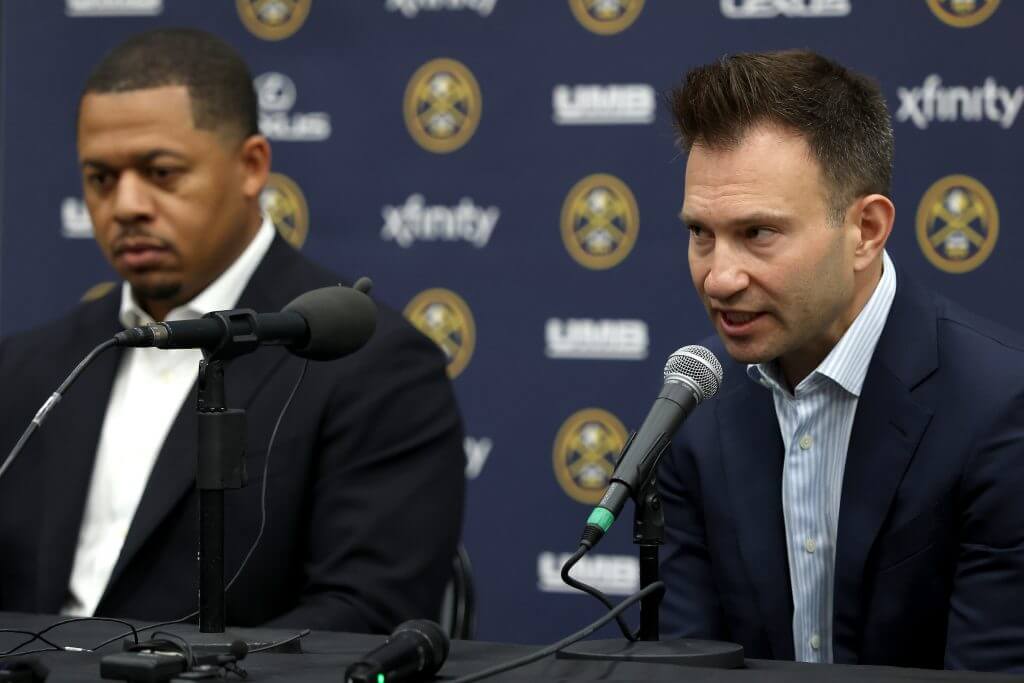
Denver Nuggets executive vice president of basketball operations Ben Tenzer (right) and Nuggets executive vice president of player personnel field questions during Media Day. (Photo by Matthew Stockman / Getty Images)
The early returns could not have been much better, as Tenzer and Wallace — two relative newcomers whose skill sets and personalities seem to contrast in the most complementary of ways — had arguably the best offseason of any of the league’s 30 front offices. They swapped Michael Porter Jr. for Cam Johnson in a deal with Brooklyn that all involved saw as a significant upgrade.
They re-signed beloved veteran wingman Bruce Brown, whose departure in free agency two summers before was such a blow after he played a pivotal part in the title run. They added Tim Hardaway Jr. for additional scoring punch, the kind that coach Adelman believes should be a game-changer when it comes to Jamal Murray’s problematic workload. They found a reliable backup big man for Jokić in Jonas Valančiūnas, landing him from the Sacramento Kings in mid-July (and even navigating a harrowing situation in which it looked as if he might try to get out of his NBA contract and bolt for Greece).
Considering the backdrop here, how Booth was often criticized for relying too heavily on younger players while Malone longed for the days when he had veterans like Kentavious Caldwell-Pope and Brown at his disposal, this most recent plot twist in the Nuggets’ roster chronicles is quite revealing.
“We wanted to increase depth without sacrificing experience,” Wallace explained. “To bring in younger guys who don’t necessarily see the game at the pace and the level that (Jokić) sees it can almost have an adverse effect on the overall success of the team.
“Joker has his guys that he really likes. He enjoys being a really good teammate, but in order to be a good teammate, you’ve got to have like-minded individuals who see the daily deposits the way he does. …You can see the joy kind of come back on his face in terms of playing. You see it in Jamal’s eyes (too). We see it (Aaron Gordon’s) eyes. So we wanted to add pieces, but we also wanted to bring back some familiarity to a good space, to where (Jokić) was, like, ‘You know what? I’m actually having fun playing basketball (again).’”
That last part about Jokić’s state of mind, of course, is a pivotal part of this Nuggets plan.
While the three-time MVP played no direct part in all the friction that came before, that friction was rooted in a difference in philosophy about how to build around him. Their once-healthy culture was left in a prickly place as a result, with the Nuggets’ stakeholders well aware that Jokić’s mood could always change if the environment around him didn’t allow him to thrive. What’s more, the issues at the top of the basketball operations department were an unfortunate outlier when compared to the comfort they’d created for Jokić below.
As far as Jokić strategies go, this is hardly the first time the Nuggets have gone to great lengths to surround him with co-workers who made him feel more comfortable and confident. They employ several staffers who Jokić holds dear, from longtime Nuggets assistant coach (and Serbian national team assistant) Ogi Stojaković to strength coach Felipe Eichenberger, associate head athletic trainer Jason Miller and Nuggets scout Nenad Miljenović (a Serbian who was teammates with Jokić on Mega Basket). In today’s NBA, where the Milwaukee Bucks’ recent choice to please Giannis Antetokounmpo by adding a third brother from his family to the roster is the most recent example, these are the types of moves that franchises often make when they’re trying to ensure that their superstar never wants to leave (unless you’re the Dallas Mavericks, of course).
In many ways, the Nuggets’ offseason moves came out of that same playbook. Tenzer — whose childhood friendship with the son of super agent Arn Tellem, Michael, had everything to do with his sports business journey — has long since established himself as a trusted and valued member of their group. His salary-cap knowledge, legal background and scouting eye (he was their G League team’s general manager for two years) have been his primary strengths, but it was his ability to bring a sense of calm and much-needed collaboration to the sensitive situation that was the X-factor in his promotion.
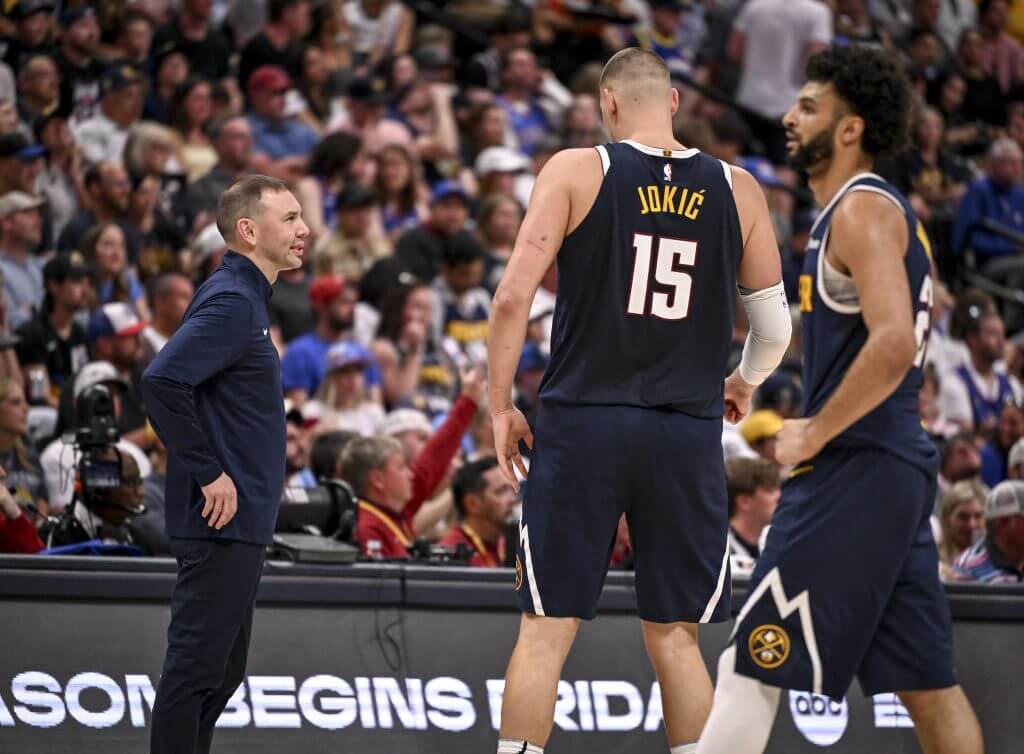
Denver Nuggets head coach David Adelman talks to stars Jamal Murray (right) and Nikola Jokić. A longtime assistant, Adelman was named interim head coach after Mike Malone was fired and then head coach after an impressive playoff run. (AAron Ontiveroz /The Denver Post)
Adelman, who has headed Denver’s vaunted offense since coming to town from the Timberwolves in 2017, proved worthy of the head role when he led Denver to a seven-game, second-round series loss to eventual champion Oklahoma City that, in the end, refreshed the Nuggets’ status as legitimate contenders. More specifically, his rapport with Jokić, coupled with his own understated style, seemed to amplify the big man’s leadership voice. As for Wallace, the very fact that the Kroenkes went after him at all speaks to the fact that the Nuggets wanted people who had a positive history with their program.
During the span when Connelly was putting this Nuggets core together — drafting Jokić with the 41st pick in 2014, Murray with the No. 7 pick two years later and trading for Gordon in 2021 — he lured Wallace away from the Georgetown campus where he had become a local legend. After Wallace’s playing career came to an end in 2015, with the Hoyas’ Final Four run in 2007 leading to professional stops overseas, Wallace had served as a special assistant to then-coach Patrick Ewing for three years. He took an entry front office role with the Nuggets in 2019, then left with Connelly for the Timberwolves because it was an upwards move.
As it turns out, Wallace wasn’t the only familiar face the Kroenkes pursued in the offseason either. League sources say the Nuggets courted Tim Connelly’s brother, Joe Connelly, for a front office position before that outside interest led to him being elevated to Minnesota’s vice president of player personnel role. Joe, similarly to Wallace, worked as a pro personnel scout and player development coach for the Nuggets before leaving with his brother, and Wallace, for Minnesota.
In a way, it was as if the priorities of the Nuggets’ present were a hat tip to their past. And when the time came to make personnel moves that brought a smile to Jokić’s face, it should surprise no one to learn that the franchise centerpiece was consulted during that process. Anything less, as the Nuggets confirmed, would have been malpractice.
“It would be crazy to not listen to his advice and his input, just because he’s so important to the organization,” Tenzer said. “But also, he sees (the game) a different way than we see it and how our scouts see it. He’s a brilliant basketball mind. So yeah, we have to ask him how he feels about things in general. And sometimes he’ll have opinions, sometimes he won’t. But it’s always good to just connect with him. That’s just a sign of respect.”
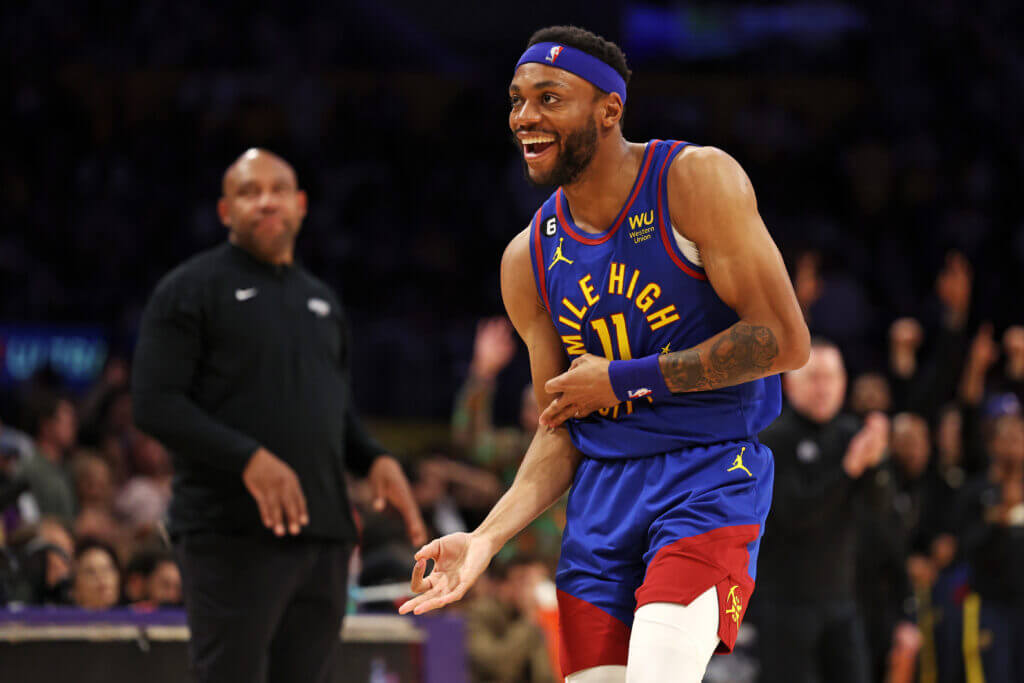
Part of the Nuggets strategy for the 2025-26 season was to return to what led them to a championship in 2023. They brought back guard Bruce Brown, a key role player on that title team. (Harry How / Getty Images)
When Jokić was asked about his decision to bypass an extension this offseason, and whether he was willing to commit to signing one next summer, the reaction to his answer spoke volumes about the disconnect between the local narrative and the national focus.
“I mean, I don’t think about it,” he began. “You know, I think those contracts (and) extensions come as a reward, as something that is natural to the sport, especially in today’s NBA (and) how the salary cap is growing and everything. So, uh….my plan is to be Nuggets forever, so that’s my answer. Nugget forever, or Nuggets.”
Many of the media members who are there every day, and the fans who follow them, highlighted the fact that Jokić declared his eternal love for the Nuggets. Yet outside of Denver, where so much of the focus has been on the fact that several high-profile teams are preserving salary-cap space to make a run at him down the road, it was Jokić’s choice to sidestep the question about next summer that stood out the most.
For the Nuggets, who have a great deal of confidence in the foundation they’ve built with Jokić and expect him to stay for many years to come, there’s simply no upside in overanalyzing his words or fretting about his long-term intentions.
“I think we’re comfortable with where everything’s at,” Tenzer said when asked about Jokić’s messaging about his future. “We understood he wanted to wait, and we feel really comfortable with where he’s at and everything.”
Added Wallace: “Yeah, he hasn’t given any indication otherwise. I mean, he’s been up front with us. He knew where he wants to be, kind of (what) he wants to wait on. So we’ve been in agreement up to this point.”
The overall point here, and the thing that even supersedes the mission of winning it all, is that last season wasn’t a fulfilling experience for anyone in the Nuggets’ building. And the goal that matters most, both for them and the Jokić partnership that they want so desperately to continue for the rest of his career, is that everyone is pulling in the same direction again. That’s where the satisfaction lies, for Jokic and all the rest.
“A little bit of (the offseason) was luck, but a lot of that was us determining, ‘Hey, these are three, four guys that we really like and who we think can make a major impact. Who can we actually go get?’” Wallace said. “We were pretty persistent in that, and it also comes from a standpoint of those (players) seeing where there’s opportunity to re-engage their joy for the game as well.”
Happiness all around, in other words. With Jokić at the center of it all.
Program Builders is part of a partnership with Range Rover Sport. The Athletic maintains full editorial independence. Partners have no control over or input into the reporting or editing process and do not review stories before publication.