
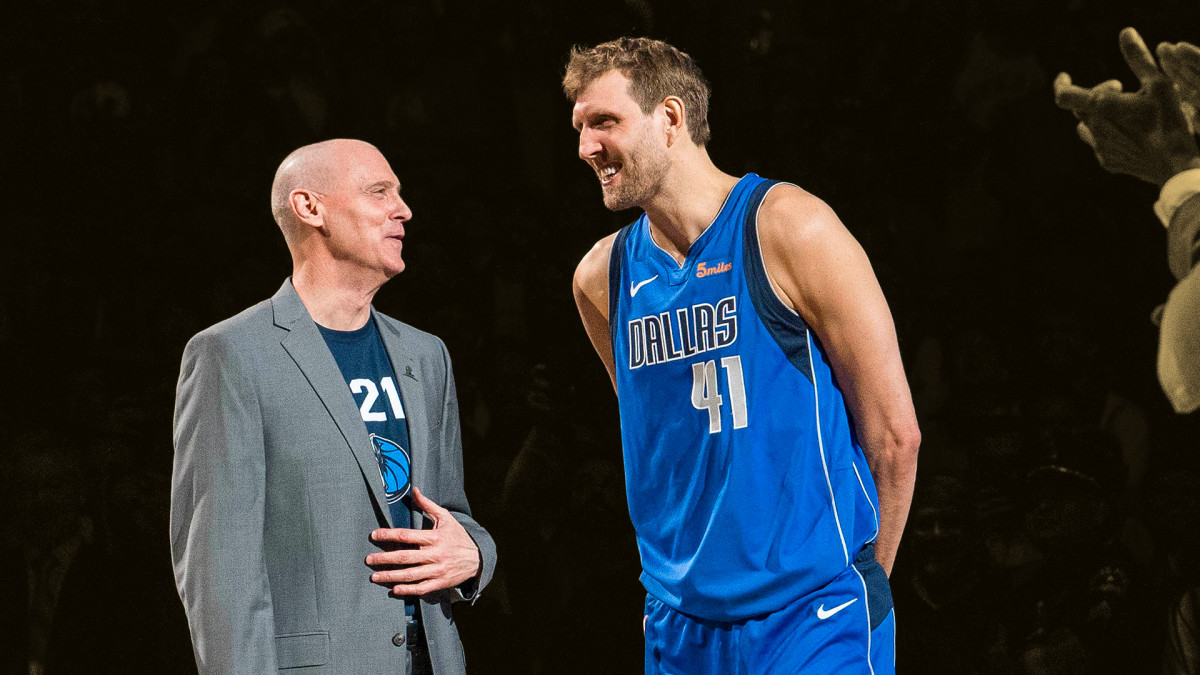
Being a true NBA leader often means making sacrifices no one else notices. That sacrifice didn’t show up in a highlight reel, a box score, or fewer offensive touches for Dirk Nowitzki. It came through a selfless financial decision.
Rick Carlisle, who coached Dirk Nowitzki during the Dallas Mavericks‘ 2011 title run, reflected on that with a clear conviction — they wouldn’t have hoisted the trophy without Nowitzki’s unselfish approach and relentless commitment to the team above all else.
Advertisement
Building a contender under the salary cap has always been one of the NBA’s toughest balancing acts. It requires teams to distribute limited money across a roster built to chase a title, a challenge that often leaves front offices boxed in.
Sometimes, a superstar changes everything by taking less than market value — a financial sacrifice that can redefine a team’s future. According to Carlisle, that’s exactly what Nowitzki did in 2010, reportedly turning down about $16 million to keep the Texas franchise competitive. The move worked, paving the way for the Mavs to land Tyson Chandler, the defensive anchor Carlisle later called “the missing piece” of their championship puzzle.
Advertisement
Put simply, without Nowitzki’s selflessness, Chandler’s arrival — and the 2011 title that followed after beating the star-studded Miami Heat — probably never would have happened. Carlisle himself emphasized that point, noting that the Finals win was a result of the financial sacrifices the Mavericks icon made.
“He (Nowitzki) opted out of his contract and re-signed for less to create room for new, quality players,” explained the current Indiana Pacers head coach, per SPOX.
When you look at Nowitzki’s choice to take less money, one question comes up fast: why don’t more NBA superstars do the same — give up part of their salary to boost their team’s title chances? After all, it worked perfectly for Dirk, who, not long after, won his first and only championship title. It’s a fair question, but not a simple one.
Advertisement
The answer is clear for many players — especially those in line for a maximum deal. They perform at the highest level and believe they’ve earned every dollar their stellar game commands. In their view, it’s the front office’s job to navigate the salary cap and still build a contender. Helping management “make it easier” just isn’t their responsibility.
When Nowitzki did it, though, it wasn’t a shock. That’s just who he was: a superstar who consistently put the team first. Carlisle, who coached him for nearly a decade, knew how rare that mindset was in a league fueled by flash, fame and monster contracts.
“Taking less money to keep the team competitive — are unprecedented for players of his caliber. You don’t see that often. He’s simply one of a kind,” emphasized Carlisle.
Advertisement
Ultimately, Carlisle’s words spark a deeper question — one every superstar should consider before signing their next deal: what’s worth more, a few extra million on your paycheck or giving that up to chase a title and — if reaching the promised land — be celebrated and remembered for your selflessness?
Nowitzki did this more than once. In 2014, for example, he left a staggering $72 million on the table to extend with the Mavericks. Other stars have sometimes done the same, including Dwyane Wade, LeBron James, Shaquille O’Neal and James Harden.
This story was originally reported by Basketball Network on Oct 18, 2025, where it first appeared in the Old School section. Add Basketball Network as a Preferred Source by clicking here.