
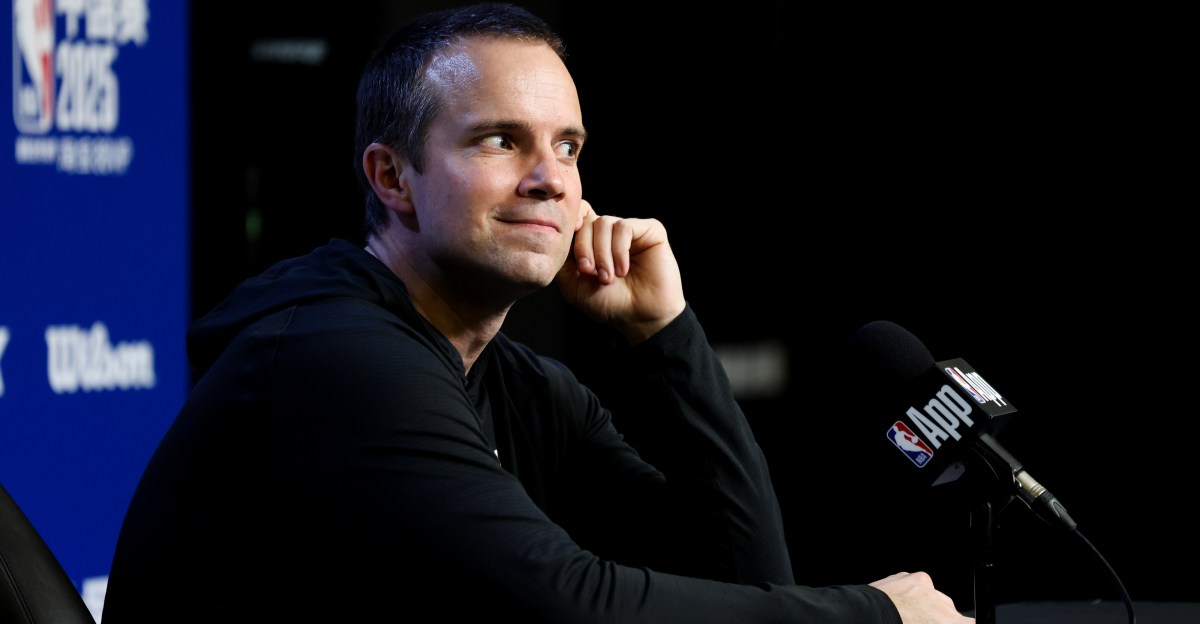
Defend or explode. This seems to be the motto of these new Phoenix Suns. Under Jordan Ott, Phoenix is betting everything on pressure and speed, even if it means flirting with the limit. This is a high-risk philosophy, but one with high potential.
A defense based on pressure, not caution
The preseason defensive rating at 102.2 (5th) and the forced turnover rate at 24.2% (1st in the NBA) are indicators of a system based on aggression.
The Suns do not absorb attacks; they provoke them. They push the tempo, cut passing lanes, and use their activity to turn every defensive possession into an offensive opportunity: 31.3 points generated from opponent turnovers, 1st in the league.
This is exactly the philosophy announced by Ott during the offseason: an aggressive defense as a catalyst for pace, one that presses, disrupts, creates chaos and uncertainty in the opposing offense.
The 12.5 steals (2nd) and 6.5 blocks (6th) are proof of this, as this vision and these stats perfectly define the spirit of: “okay, you’re going to score, but it will never be easy.”
But there is a downside: 29.8 fouls per game (2nd). This aggression often tips the scale of sustainability; it is a pace that is even unsustainable during the regular season. How can a defense function properly if its best players are never on the floor together? Everyone knows the answer.
The Suns impose a constant physical duel, even at the risk of putting themselves in danger. It’s a high-risk defense but one that yields high rewards — the franchise and fans have experienced the “Run & Gun,” and they are now poised to experience the “Gun & Run.”
A connected defense, but without continuity
The statistics on opponents’ shots are telling: 42.4% shooting success and only 39 points scored in the paint (4th in both). This is indicative of a defense that communicates, switches, is aggressive, and functions as a true collective organism, perfectly embodying the vision that Jordan Ott wants to convey. He expressed these sentiments in June during the introductory conference:
Defensively, I want to play aggressive. … And then we’re going to communicate. … Offenses are becoming more conceptual in how we communicate. At the end of the day, defense needs effort. All-out effort all the time. And then we’re going to have to be connected. Through the 48 minutes … there’s going to be some type of adversity. Can we stay connected … and the last piece … is we’re going to do it collaboratively.”
The Suns close off drives, using the mobility of their interiors (Ighodaro, Richards, Maluach, Fleming) to switch without too much suffering. But behind this beautiful facade, the fragility on the boards reveals the cost of the system…
When everyone arrives at the second curtain, it’s logical that not many remain for rebounds, and we know it’s difficult to dominate individually in this area of the game (only 28.5 defensive rebounds per game, the lowest score at 30th during this preseason).
Certainly, opponents’ shots are challenging, but the Suns allow far too many second chances: opponents have grabbed an average of 13 offensive rebounds per game (20th), leading to nearly 19 points on second chances (24th).
As repeated for a few weeks, we need to take a step back on these numbers and performances; it’s only the preseason. But even in this small segment of 4 games, these results are really encouraging and promising for what’s to come. The Suns have ranked among the best defenses in the league. Questions remain, particularly regarding rebounding and our defensive cleanliness, but we have reason to be somewhat optimistic as we approach the start of the regular season.