
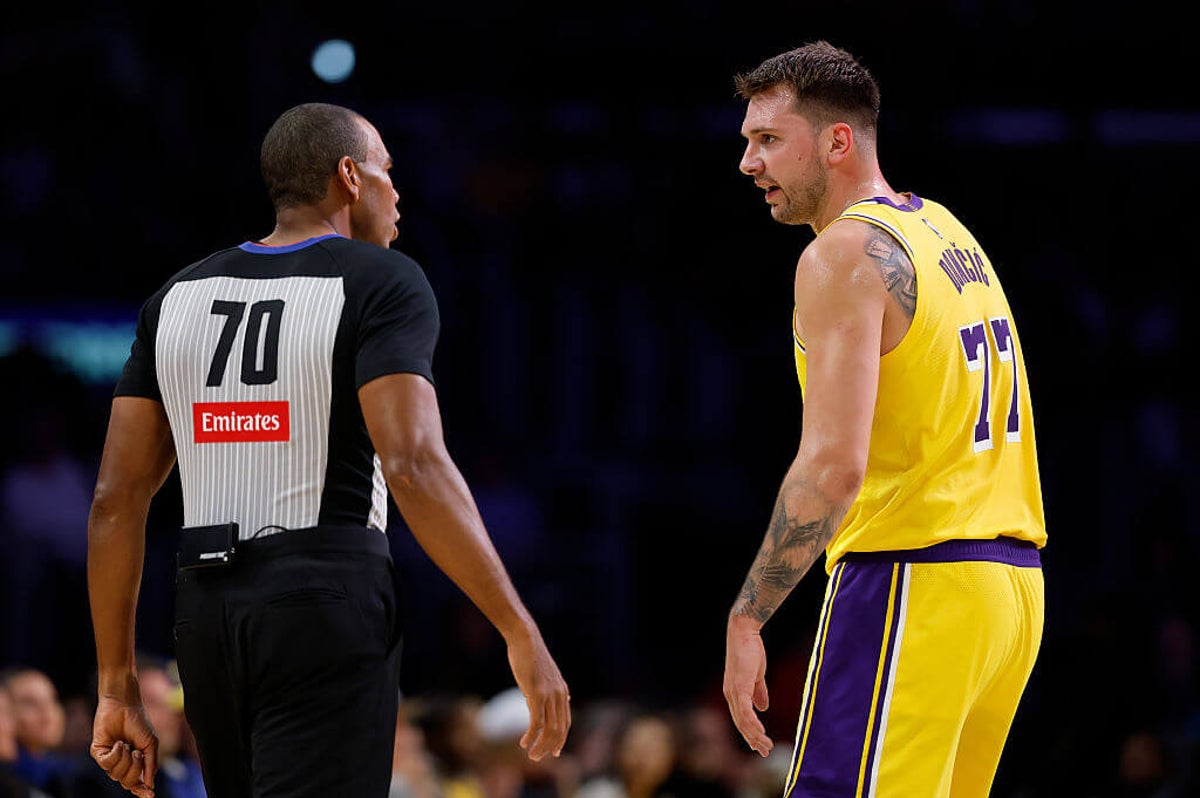
Going into every NBA season, the league and its officials decide on points of emphasis to inform teams, players and media about. These are essentially areas of officiating or the game itself that the league would like to clarify and clean up. They make a big effort to ensure everybody in and around the league is aware why things may look a little different.
To be clear, these aren’t rule changes, such as the NBA allowing end-of-quarter heaves to count as a team attempt but not an attempt against players worried about their shooting percentages. These are often rules just getting tightened up. At one point years ago, that meant cutting down on allowing players to scream at officials. It curbed complaining to the officials and made the game appear nicer — for a couple of months — until the officials seemed to get pretty relaxed about calling these techs. That tends to be what happens the most. The points of emphasis curb activity, then things end up going back toward the way they were before.
One point of emphasis that has seemed to stick, though, is when officials started calling delay-of-game warnings and technical fouls on players touching the ball after it went through the hoop. That has endured quite well as a point of emphasis over the years.
With all that said, there are three points of emphasis from the officials for this 2025-26 season. Let’s review them and assess how likely they are to stick around after this season:
Point of emphasis No. 1: High-fives
This may be the most notable one, which is why I have it first instead of closeouts (the NBA referees’ first point of emphasis). This rule for NBA basketball is something most fans should know after what happened between the Houston Rockets and Golden State Warriors in the playoffs last season (more specifically, between Stephen Curry and Dillon Brooks). You may remember Curry had an injured thumb in the postseason, and Brooks was accused of intentionally trying to injure it by swiping through Curry’s follow-through to hit the thumb. And … Brooks pretty much admitted to doing exactly that.
The reason he “could do that” as a defender, in theory, is because of the high-five rule. If you’re challenging a jump shot, your hand can make contact with the shooting hand after the ball is released, as long as it’s an earnest shot contest and not swiping at various parts of the arm and making contact with them. The last part of that rule is the point of emphasis: making sure the defender isn’t swiping at the arm. This was the video the refs posted on social media explaining the rule and point of emphasis with different examples.
See below for Part 2 of the 2025-26 Points of Emphasis video (narrated by SVP, Head of Referee Development and Training Monty McCutchen), which provides examples and guidance regarding Closeouts on Jump Shots – High Fives: pic.twitter.com/FwToG4tySd
— NBA Official (@NBAOfficial) September 26, 2025
I do think this is a little tougher to officiate with everything refs have to monitor when a defender contests jumpers. There will be more of an inclination to watch the landing zones and the contact with the body on fly-bys. This feels like a direct reaction to what happened with Brooks and Curry during the first round last spring..
Likelihood of sticking around: 4/10. They’re all judgment calls, obviously, but I think this is a judgment call with which it’s easy to fall back into old habits. This will definitely be a thing to start the season as officials try to train defenders not to swipe down on these contests. However, I could easily see this being a thing in the playoffs with us wondering, “Wasn’t this supposed to be a point of emphasis?”
Point of emphasis No. 2: Landing space on closeouts
This is the biggest one that can be the difference between a shooting foul and a flagrant foul. When you have a reckless closeout and take up the landing space of the shooter, it’s pretty dangerous. Ankles get turned often from the offensive player landing on the foot that is in their landing zone. The most infamous example of this is probably Zaza Pachulia and his feet recklessly being in the landing zone of Kawhi Leonard during the 2017 Western Conference finals. It was the reason Leonard only played 24 minutes in the series and didn’t come back.
We saw examples of this with Jalen Brunson and other players landing on feet during the postseason and affecting their ability to remain healthy. Here’s the video the NBA officials posted explaining the emphasis with examples.
See below for Part 1 of the 2025-26 Points of Emphasis video (narrated by SVP, Head of Referee Development and Training Monty McCutchen), which provides examples and guidance regarding Closeouts on Jump Shots – Landing Space: pic.twitter.com/LgXFvc6bWL
— NBA Official (@NBAOfficial) September 26, 2025
This is something the NBA has been pretty good about for years, so it’s interesting to find a point of emphasis being highlighted here. But that’s probably because they’re going to be much harsher with flagrant fouls to curb the behavior.
Likelihood of sticking around: 10/10. We see so many turned ankles happen from these reckless closeouts that I expect the refs to be very consistent all season. This is about keeping players very healthy, and as Spurs fans will remember, this can alter seasons completely.
Point of emphasis No. 3: Straight-line pathway plays
This last one is about driving paths being impeded by defenders. Defensive players are supposed to keep their bodies squared up to the offensive player with the ball and move their feet to stay in front of them the entire time. The NBA has made it nearly impossible to defend one-on-one. You can’t really touch the offensive player. The referees have become especially susceptible to body flops or head jerks by the offensive player, which can lead to blowing a whistle and calling a defensive foul.
This social media post from the NBA refs shows a lot of examples of these.
See below for Part 3 of the 2025-26 Points of Emphasis video (narrated by SVP, Head of Referee Development and Training Monty McCutchen), which provides examples and guidance regarding Straight-Line Pathway Plays: pic.twitter.com/c1cGPJsI6y
— NBA Official (@NBAOfficial) September 26, 2025
I think this point of emphasis stinks. In the first two examples given in that video, I completely disagree with the calls. James Harden is out of control and bailed out by minimal contact. Harden doesn’t even try to make a real play once he’s fumbling the ball. I don’t like the call on the second play with Anthony Edwards either. The offensive player is initiating the contact unnaturally, in my opinion. I think there has to be some sort of space allowed by the defender, especially when the offensive player isn’t first to the spot.
Likelihood of sticking around: 9/10. The NBA doesn’t want defenders to truly defend in a one-on-one setting. That’s my interpretation of the rules and the way the game is called in general. The league wants scoring because scoring means fun and possibly ratings and it’s a “highlights league.” The refs will likely be pretty consistent in continuing to call this in the offensive player’s favor, no matter how much they initiate the contact or try to get bailed out when they’re out of control.