
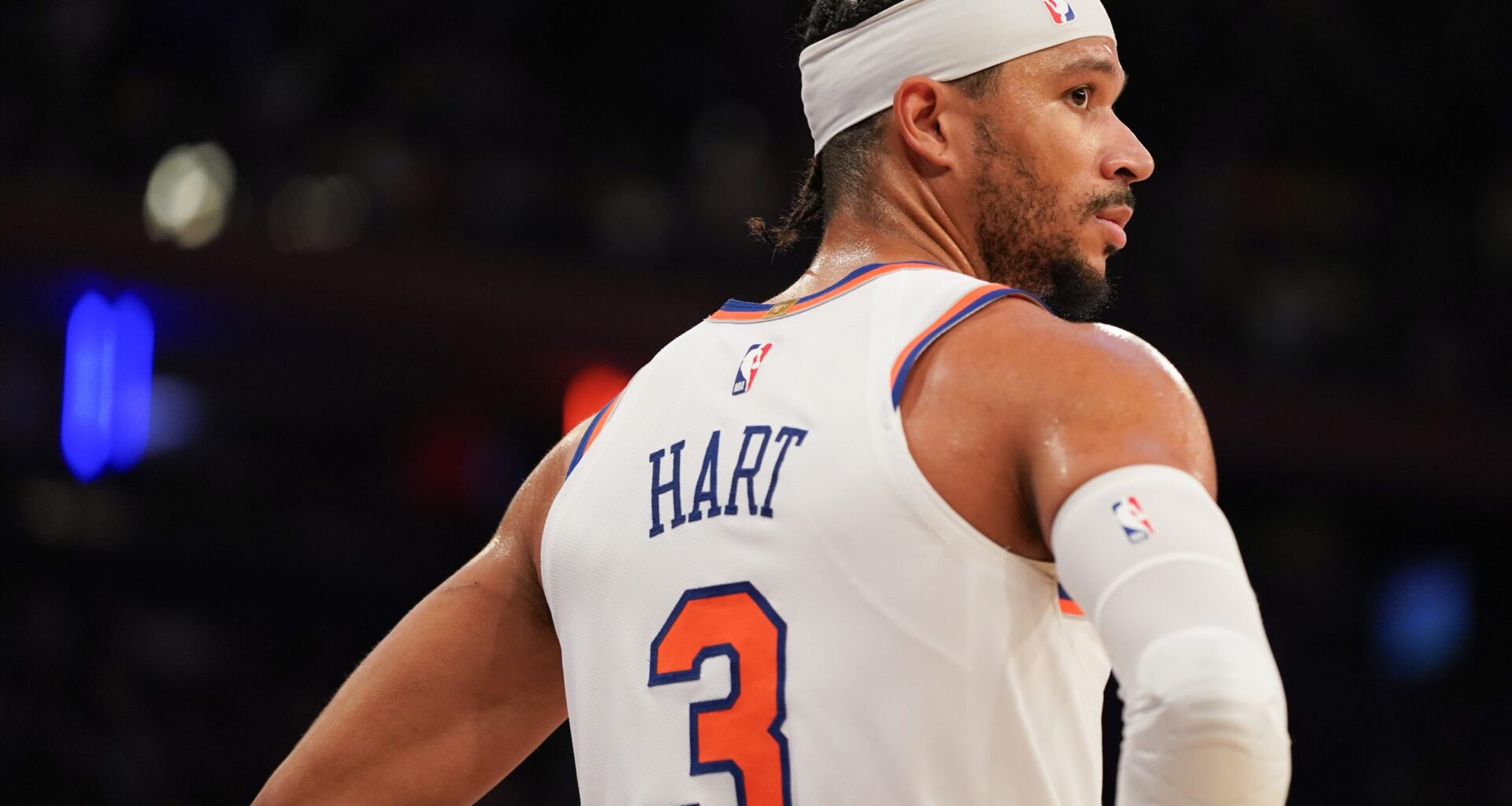
After a busy offseason and a season start with questions to answer, the New York Knicks have found an unlikely constant: Josh Hart. The veteran’s energy, switch-and-rebound defense, and playmaking have given Mike Brown a second-unit identity that’s kept New York competitive even when the starters have needed time to gel.
The Glue Guy Every Team Needs
Hart’s box score doesn’t always pop, but the effects are everywhere. Through the early 2025 stretch, he’s consistently delivered hustle plays, offensive rebounds, and simple but decisive passes that turn defensive boards into transition points. Those actions create a cleaner look for the team’s shooters and give Brown freedom to stagger minutes without seeing chemistry crash.
When Hart is on the floor, the ball moves better, and the Knicks’ defensive effort carries more teeth. That combination— rebounding, switching on defense, and hitting the right pass— is the kind of seasoning every contending roster needs.
Bench Rotation Get Real Minutes, Real Roles
The second unit that’s worked for the Knicks this year is clear and simple: Hart, Deuce McBride, Jordan Clarkson, and Landry Shamet. Those four get real minutes together and cover the core roles Brown needs off the bench.
Hart: rim runs, defensive switching, hustle boards.
McBride: primary on-ball defense, passing out of pressure, late-clock stopgap.
Clarkson: instant scoring punch, shot creation for others.
Shamet: spacing and catch-and-shoot gravity.
That group’s identity is compact— defend hard, rebound, push transition, and let Clarkson or Hart create off the kick. Unlike earlier seasons when bench lineups were cobbled together, this is a repeatable unit Brown trusts to swing momentum.
Value Beyond the Box Score
A couple of numbers illustrate the impact without over-obsessing: New York’s net rating with Hart on the floor this season (early sample) is meaningfully higher than with him off it.
More importantly, the eye test shows the Knicks have a second group that can produce defense-to-offense conversion opportunities— exactly the possessions that flip home and road leads alike in the fourth quarter.
Hart’s value is also cultural. He’s vocal, plays passing lanes, and actively manages the rebound-to-push sequence that makes Clarkson’s scoring cleaner. That reliability helps Brunson and Bridges stay fresher late in games, knowing the second unit will not collapse.
Mike Brown says that Josh Hart is tonight’s defensive player of the game:
“He more than deserved it because of his activity, his awareness throughout the course of the entire ballgame.” pic.twitter.com/DzyXMiUjOc
— Knicks Videos (@sny_knicks) November 4, 2025
Why Does This Matter for Mike Brown’s Plan?
Brown’s system asks for flexibility. He needs a bench that can defend multiple coverages and keep the ball moving when the stars rest. Hart provides that. Because he can slide onto bigger wings or step out on quicker guards without the team suffering matchup losses, Brown can stagger starters in high-leverage minutes rather than keep the core together and lose steam.
If the Knicks want to remain a top defensive outfit while still getting offense in spurts, Hart’s presence ensures the second group doesn’t have to be an afterthought. It’s now a functional extension of the starting five rather than a separate unit that merely survives.
How to Keep This Working
To keep the bench performing, New York should:
Keep the Hart–McBride–Clarkson–Shamet rotation consistent so chemistry compounds.
Let Hart play to his strengths (rebound, push, quick kick) instead of forcing him into high-volume jump shooting.
Use early and late-game lineups with slight tweaks rather than wholesale rotation changes. Consistency will breed the bench identity Brown wants.
If they do that, the bench can continue to be the team’s stabilizer when matchups get messy.
Final Thought
Josh Hart isn’t just a role player— he’s the connective tissue that keeps the Knicks’ second unit from collapsing. In a season where rotations and chemistry will decide seeding, Hart’s steady production and mentality may be the quiet reason New York stays in contention.
That sound, repeatable impact is exactly the kind of thing a team needs from its bench— and it’s why Brown keeps going back to him.