
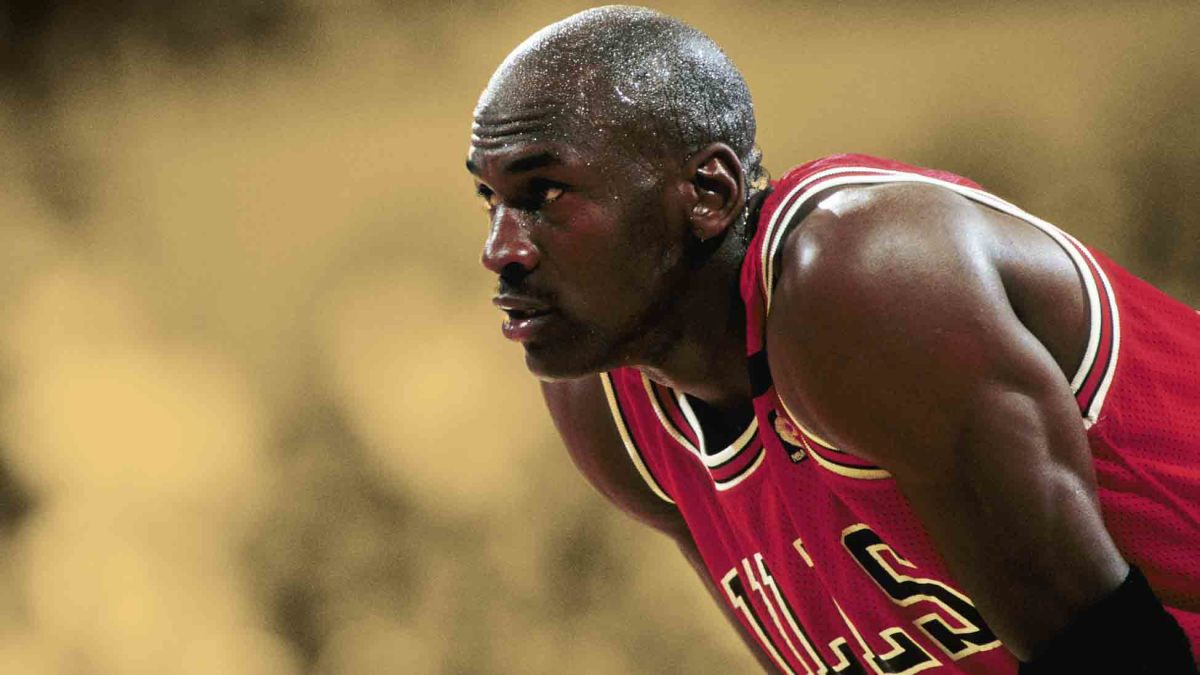
Michael Jordan may be a great all-around player, but the Chicago Bulls legend was still just a human. Hence, the 6-foot-6 guard can tire, meaning the Windy City squad needed to adjust accordingly if fatigue occurred. In the 1992 finals against the Portland Trail Blazers, Michael admitted that playing on both ends was exhausting. “His Airness” admitted that he was winded, affecting his performance down the stretch of a few games.
“I got a little winded,” Jordan said via NYT. “I had to play a lot of minutes when Scottie was in foul trouble. I really didn’t have the legs to make the shots. They say when you’re tired, your legs are the first to go.”
Advertisement
Jordan’s inefficiency showed in Games 2 and 4 of that series. Chicago enjoyed good leads for most of those games but crumbled in the final minutes and lost both of them. Bulls coach Phil Jackson admitted that if his players had stepped up when MJ struggled, the series would have been over in four games. Instead, they found themselves on even footing with the Trail Blazers.
“By all rights, this series should be over, except for the closing four minutes of a couple of games,” Jackson rued. “It’s very dangerous. I’m angry.”
Pippen needed to level up fast
The Bulls failed to sustain their game brilliance until the 48th minute, so critics questioned if they could still win the 1992 crown. Jordan did his share, but other Bulls players needed to help, especially during crunch time. One player who was most expected to do that was Scottie Pippen.
Advertisement
Looking at his playoff averages of 19.5 points, 8.8 rebounds, and 6.7 assists that season, Scottie’s numbers weren’t that bad. But being the next big name after Jordan, pundits expected more from him and consistently.
Pip had nights where he could be streaky and play well. Since that was the final, most expected the Central Arkansas product to perform at a high level.
With the 1992 Finals down to a best-of-three affair, Jackson urged his players to play harder against Portland. Discovering that the Bulls had trouble closing out games, Rick Adelman and his players’ confidence was building.
Thankfully, Pippen stepped up in Game 5 and almost finished with a triple-double (24 points, 11 rebounds and 9 assists. Despite playing with a bad ankle, Jordan still led the team with a game-high 46 points.
How benching MJ helped Bulls win the 1992 title
Seizing the advantage once more, the Bulls needed only one more win to end the Trail Blazers. Jordan knew about the stakes but was trying to do too much in Game 6. With Game 6 slipping away from Chicago, Bulls assistant coach Tex Winter approached Jackson to potentially save the game. He suggested that MJ be benched temporarily, and they played Pippen with four reserves.
Advertisement
Jackson took Winter’s advice in the fourth quarter, and the ploy worked. They were able to overcome a 15-point deficit, cutting it to three with three minutes left in the game. It was the perfect time for Jackson to bring back Michael. Calmer at the time, Jordan went to work and made the critical points to help the Bulls win their second-straight title.
That move was a test of character for the Bulls, and the perfect time for Pip and other players to step up with MJ on the bench. Further, that risky benching gave Jordan time to rest and refocus.
That gamble paid off handsomely in the end. Well-rested, Jordan returned in the nick of time to help apply the finishing touches. He scored the marginal points and eventually helped the Bulls close out the series, 97-93.
The irony is that if the Bulls had given Jordan proper rest in Games 2 and 4, one could only wonder if the series would have ended in four games. It would have also been a good way for Jackson to figure out who could help MJ and Pip. Players like John Paxson, Horace Grant, and Bill Cartwright helped, but their contributions were sporadic.