
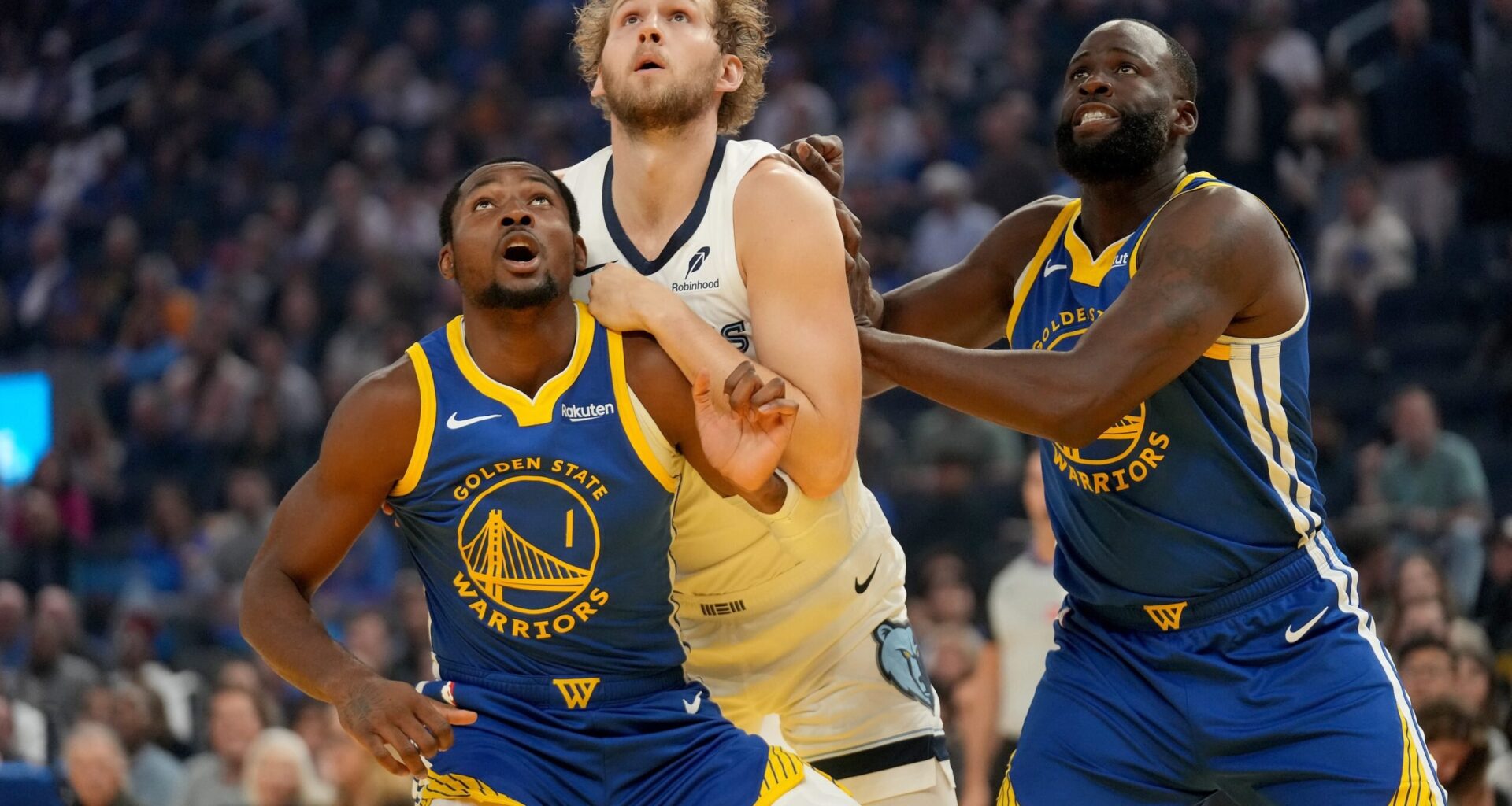
SAN FRANCISCO — The Golden State Warriors won a game they had to win. Ending San Antonio’s home streak should have restored calm. It also broke their six-game road skid. Yet even this victory felt uneasy. For a team once built on joy and chemistry, the Warriors’ toxic energy now feels impossible to ignore.
Why The Warriors Are A Bit Toxic Right Now
Winning Isn’t Always Healing
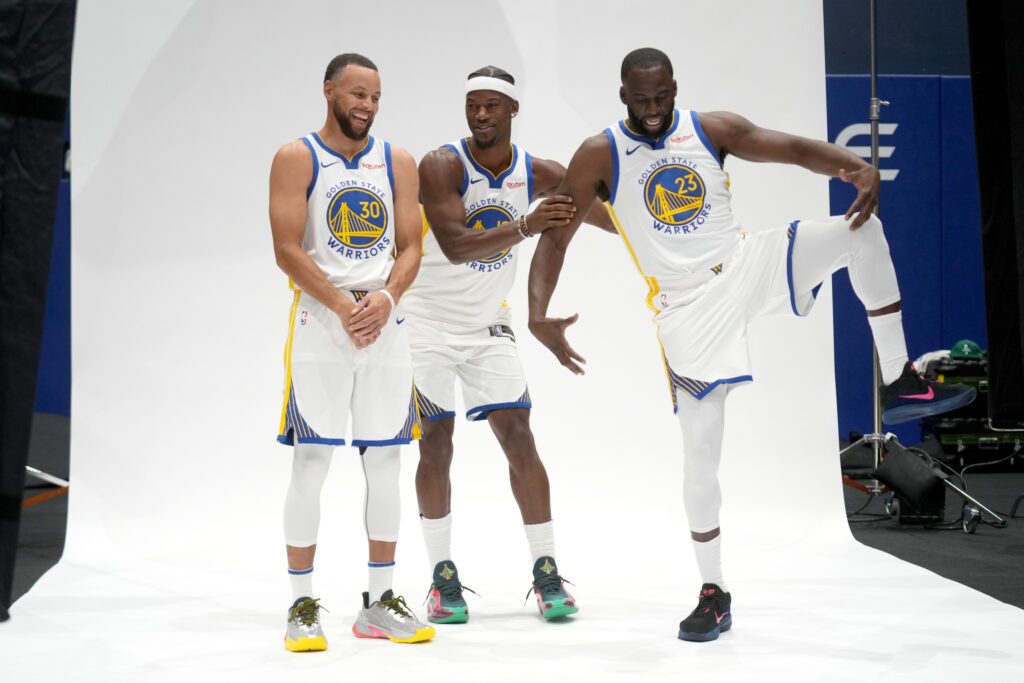 Sep 29, 2025; San Francisco, CA, USA; Golden State Warriors guard Stephen Curry (30), forward Draymond Green (23), and forward Jimmy Butler III (10) prepare to pose for a photo during Media Day at the Chase Center. Mandatory Credit: Cary Edmondson-Imagn Images
Winning often quiets dysfunction. For a night, at least. The Warriors’ win should have been that night. Jimmy Butler looked revived with 28 points. Steph Curry was spectacular again, dropping 46 and torching the Spurs with 22 in the third quarter.
The box score told a story of defensive dominance — 13 steals, active in the passing lanes, pace. But look closer, and the Warriors still resemble a team in conflict with itself. Winning doesn’t always heal when the fractures come from within.
This team has lived this pattern before: the hot start, the promise, the unraveling. When it happens again, it’s no longer coincidence. It’s culture.
When Accountability Turns Selective
Head coach Steve Kerr made bold moves before the game. He benched Jonathan Kuminga and Quinten Post, replacing them with Moses Moody and Will Richard. On paper, it was tactical. In reality, it revealed a double standard.
Draymond Green, who struggled again, had four turnovers — yet his starting role remains untouchable. Kuminga, meanwhile, gets punished for his mistakes. That’s not leadership; that’s hierarchy.
Green spoke openly after the Thunder loss. “I think everybody was committed to winning [back then] and doing that any way possible,” he said. “Right now, it doesn’t feel that way.” He continued: “I think everyone has a personal agenda in this league. But you have to make those personal agendas work within the team confines. If it doesn’t work, you kind of got to get rid of your agenda or eventually the agenda is the cause of someone getting rid of you.”
He’s not wrong. But his words land differently when his play hasn’t matched them. Accountability can’t be conditional. When that happens, the Warriors’ toxicity starts to write itself.
Ambition Meets the Dynasty Wall
Both Kuminga and Brandin Podziemski want more. That’s not a sin; it’s ambition. Yet in Golden State, ambition feels like defiance.
Kuminga spent the summer negotiating his contract, searching for recognition as more than a role player. He earned a two-year, $48.5 million extension and opened the season strong. Steve Kerr praised him as an “entrenched starter.” Then came the turnovers — and the benching.
Podziemski drew attention too. When asked if he wanted to reach Curry’s level, he answered he “wants to be better than him.” Some within the organization rolled their eyes. But that’s what young players should say. They’re not supposed to play small next to legends.
The problem isn’t the hunger of the young. It’s the insecurity of the old.
A Dynasty Wrestling With Time
Every dynasty reaches this stage — the uncomfortable handoff between eras. The Lakers had it after Magic. The Bulls after Jordan. The Spurs after Duncan. The Warriors are now there, straddling two timelines with tension instead of trust.
Draymond’s words echoed a truth deeper than he realized. When agendas take over, it’s not always selfishness. Sometimes, it’s survival. The veterans protect their legacy. The young players chase theirs. Both think they’re right.
But the line between legacy and ego blurs fast. That’s how situations become toxic — not through one fight, one loss, or one quote, but through a thousand quiet moments where trust erodes.
This win over the Spurs will sit nicely in the standings. Yet if Golden State doesn’t repair what’s broken inside, it won’t matter. The scoreboard can hide tension for only so long.
Because even when they win, something about these Warriors still feels a little toxic. And that, more than any losing streak, is the real warning sign.
Credit: © Cary Edmondson-Imagn Images