
Photo Credit: Craven Whitlow / Imagn Images
💰 Want to Get Paid for Following Arkansas Sports? Learn More
When you throw an Arkansas basketball game on the TV, it’s easy to fixate on the backcourt duo of Darius Acuff Jr. and Meleek Thomas.
The pair of freshmen are averaging a combined 37.6 points and 9.6 assists. Alongside sophomore Karter Knox, they form a trident of Razorback guards projected to go in the first round of the NBA Draft. But it wasn’t any of them who won the game for Arkansas against Samford on Friday.
That was Billy Richmond III, according to Arkansas basketball coach John Calipari.
The Memphis native scored in double figures for the first time this season, finishing with 10 points, 5 rebounds, a steal and a block. But as usual, it was the dirty work outside the box score where Richmond was a real difference-maker – on-ball defense, grabbing loose balls and other miscellaneous hustle plays. There’s no doubt that “Thrill Bill” has become an X-factor for the Hogs, and a fan favorite in Fayetteville.
The idea of Arkansas producing a fourth first-round pick in the 2026 NBA Draft seems almost too good to be true. But that’s the very possibility that Field of 68’s Corey Tabula pondered on Halloween: “If Drake Powell is a top 20ish pick, why is Billy Richmond not?”
Why not indeed?
Who is Drake Powell?
Poll
Want to Get Paid for Following Arkansas Sports?
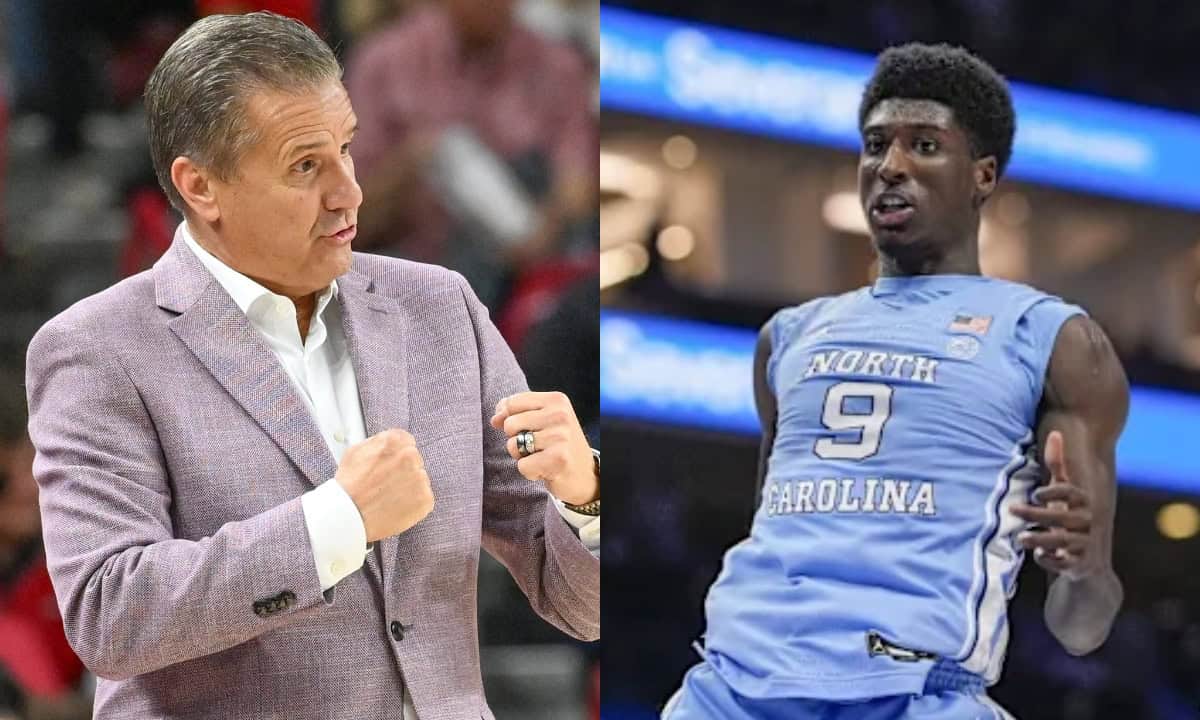
For the unacquainted, let’s first unpack Drake Powell a bit. The 6-foot-5, 200-pound guard left North Carolina after a standout freshman season and went 22nd overall to the Brooklyn Nets in this year’s NBA Draft. Longtime scout Jonathan Givony said that “Powell’s physical tools, instincts, and intensity give him a strong framework to build off on the defensive end, and he is consistently praised for his selfless approach and strong off-court intangibles.”
Are you thinking what I’m thinking? Because everything in that previous paragraph sounds a whole lot like Richmond.
Calipari clearly has love for the most famous Drake in the world. He’s about to have an appreciation for this Drake, as well, if he helps smooth Richmond’s path to an NBA roster.
It’s also an apt comparison when you look at their respective college stat lines last season. In Powell’s lone season at North Carolina, he averaged 7.4 points (on 57/38/65 shooting splits), 3.4 rebounds, 1.1 assists, and 1.4 stocks (combined steals and blocks, a measure often used by NBA scouts to assess a broader defensive impact). Meanwhile, Richmond averaged a comparable 5.7 points (on 57/13/73 shooting splits), 3.0 rebounds, 1.4 assists, and 0.9 stocks.
Up to this point, there really has been just one glaring weakness for Richmond.
Richmond Renaissance
Every NBA team is looking for a roster full of guys who can shoot the long ball at an efficient clip and defend multiple positions. The key thing that sets Powell’s season at North Carolina apart from what Richmond did at Arkansas last season is shooting efficiency. Powell shot 38% from deep on nearly three attempts per game. Richmond didn’t make a single three in the regular season.
True shooting percentage is an important stat to consider when evaluating efficiency. It provides a more accurate measure of scoring than traditional field goal percentage because it accounts for the different values of two-pointers, three-pointers, and free throws. It can give credit to players who impact the game with fewer possessions. Powell’s true shooting percentage (58.1%) only slightly edged out Richmond’s (56.4) last year.
But Arkansas fans may be seeing Richmond make a leap before their eyes here at the start of his sophomore season. Through four games, Richmond is averaging 7.0 points, 4.5 rebounds, 1.1 stocks and 0.3 assists. He only made two three-pointers all of last season, and he’s already made three in the first four games at a 30% clip. Even adding more of the long ball to his arsenal, his true shooting percentage has remained pretty consistent at 56.5%.
“I’m grateful for that,” Richmond said of his shooting improvements on Calipari’s weekly radio show Monday. “I’m just still working on my shot to try and get it to perfection. You just gotta shoot with confidence, which is the biggest thing I’ve had to learn.”
“Nothing seems to phase him,” Calipari added, praising Richmond’s ability to play multiple positions. “His skills have gotten better … and if I asked him to play the five he’d say, ‘Okay.’”
The sophomore certainly has the athleticism of an NBA talent, as evidenced by his flying block against Memphis and a number of emphatic dunks this season.
The talent surrounding Richmond this season has also helped free up space for him. The freshman Thomas made the bold claim after Arkansas’ season opener against Southern that the Hogs were “unguardable” and “unbeatable” when they “spray the ball amongst each other.”
That spreading of love, as Thomas put it, will be a major factor in shooting efficiency for all of Arkansas’s draft prospects, not just Richmond. It’s easier to shoot at an efficient clip when you’re getting open looks because a defense is unable to guard all the weapons on the floor.
If Richmond continues on this trajectory, the conversation around him will shift quickly, from being Arkansas’ fun, athletic glue guy to a legitimate NBA prospect in his own right. His improved efficiency, coupled with his already strong defensive instincts and physical tools, makes him exactly the kind of versatile wing that front offices covet. He has all the traits you can’t teach, and he’s working tirelessly on improving the ones you can.
“I just try to bring the energy and the grit, and my teammates kind of feed off me,” Richmond said. “I’ve been doing this since I was a little kid, so just giving my all 100%, that’s something I’m used to.”
The Razorbacks already look like a team built to make noise deep into March. If Richmond’s early-season growth holds, he could be walking across a stage to shake hands with NBA commissioner Adam Silver next summer.
***
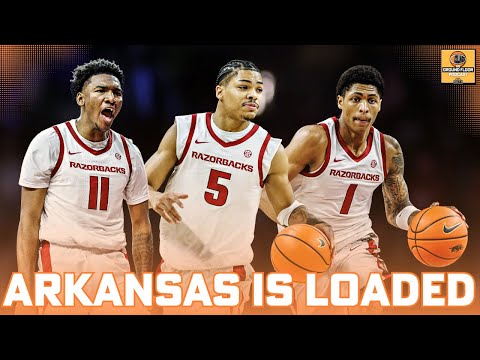
The Field of 68 crew talks Billy Richmond around the 4:50 mark:
***
More coverage of Arkansas basketball from BoAS:
 Smash That “Follow” Button