
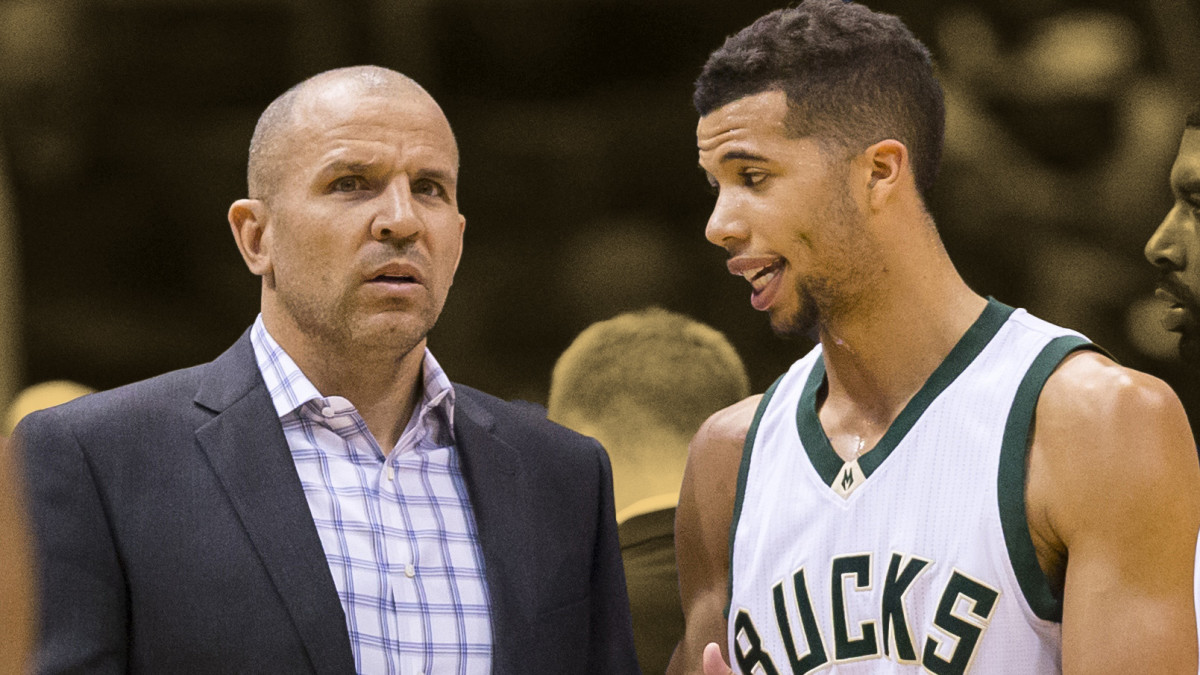
After a year and a half with the rebuilding Philadelphia 76ers, Michael Carter-Williams sought a fresh start. The 2014 Rookie of the Year had put up solid numbers on a struggling Sixers squad, averaging 16.7 points, 6.2 rebounds, and 6.3 assists across 111 games.
But development without direction only goes so far. By February 2015, MCW had been traded to the Milwaukee Bucks. For Carter-Williams, this was a chance to work under a former player he had long admired, Jason Kidd.
Not on the same page
At the time, the Bucks were in their own stage of reinvention. Kidd, then in his second season as head coach, was molding a young, athletic roster built around Giannis Antetokounmpo, the franchise’s top draft choice from a year earlier.
It felt like a match made in basketball heaven. But it didn’t take long before the chemistry fizzled with Carter-Williams. The young coach and the young guard didn’t align well.
“I think he saw a lot of me in himself,” Carter-Williams said of Kidd. “And I think he got frustrated with kind of that process and it made us kind of buttheads and not being on the same page. And it was unfortunate because I loved the organization and I loved my teammates there.”
The early optimism faded into confusion as the relationship between the former All-Star point guard turned coach and his new floor general began to erode.
Their dynamic was tense. Kidd, known for his perfectionist tendencies and stern leadership style, expected a fast learning curve from the 6-foot-5 Carter-Williams. But for a player who had only just started his professional journey, that curve was steep and unforgiving.
Still, there were flashes. MCW opened the 2015–16 season on a high note, averaging 12.8 points, 6.8 assists, 4.5 rebounds, 1.8 steals, and a block per game over the first four contests. However, momentum was cut short by an ankle injury, and when Michael returned in mid-November 2015, something had shifted.
Kidd’s patience was wearing thin. From Nov. 14 to Nov. 27, Carter-Williams’ production dipped to just 9.1 points, 3.7 assists, and 2.4 rebounds per game. Soon after, he was moved to the bench. For a young point guard trying to cement his role, the benching felt like a demotion, but more importantly, it signaled that Jason had moved on.
Despite the on-court friction, Carter-Williams found camaraderie in the locker room, especially with Antetokounmpo. But off-court harmony couldn’t compensate for professional tension. The philosophical divide between coach and player became irreconcilable. By the following year, it was clear that Milwaukee wasn’t going to be MCW’s long-term home.
The Carter-Williams trade
On Oct. 17, 2016, just days before the new season tipped off, Michael was traded to the Chicago Bulls. For the former lottery pick, it was a professional disruption.
“It was hard going through that,” Carter-Williams said of being traded. “I got traded the last game in preseason to another team. And you get traded last game of preseason, and you don’t get any preseason with this team, with the next team you are going to. So, you are behind automatically.”
That trade set the tone for the years that followed. In Chicago, MCW struggled to find footing. He averaged just 6.6 points per game that season. What followed was a carousel of short-term contracts and brief stops from the Charlotte Hornets to the Houston Rockets and finally the Orlando Magic.
In Orlando, Carter-Williams reinvented himself as a veteran role player off the bench. Between 2019 and 2021, he brought energy, defense, and maturity to a young Magic team, even winning over fans with his gritty play.
However, the promise that defined MCW’s early years had been replaced by a different identity.