
CLEVELAND, Ohio – This week is big for two drafts.
All eyes are on the NFL Draft, which takes place in Green Bay with a lot of hoopla leading to televised rounds over three days beginning Thursday, April 24.
More quietly, it also marks a milestone for the NBA.
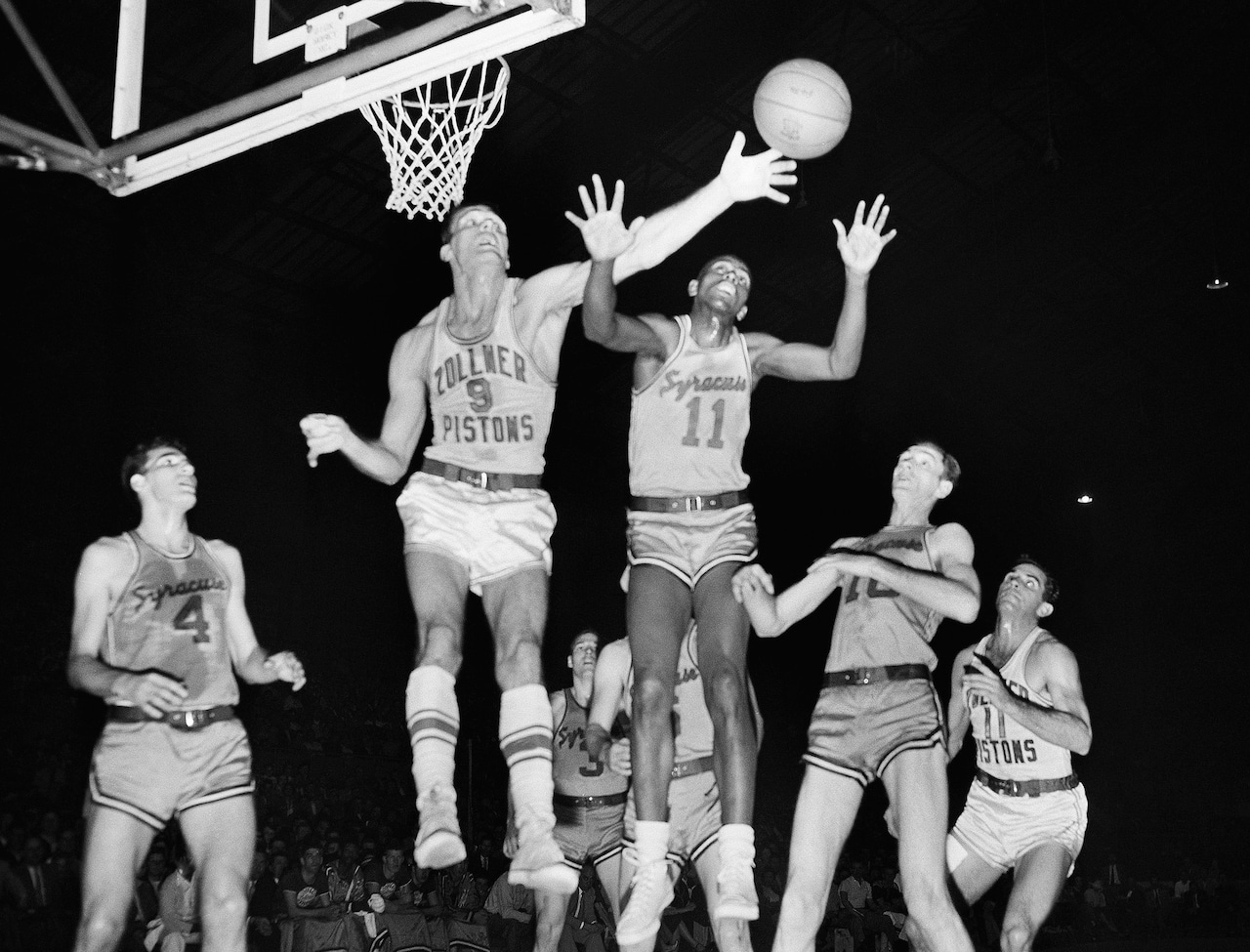
The 75th anniversary of the inaugural NBA Draft is Friday, April 25. It was pivotal not because of the number of stars who came out of it but because it was the first to be held after the merger of the National Basketball League and Basketball Association of America.
It was closer to the halcyon days of Dr. James Naismith putting up peach baskets than to its present-day incarnation of slams and three-pointers, no-look passes in transition and a 24-second shot clock.
In 1950, the NBA had 11 teams playing a roughly 68-game schedule. In that first draft, 121 players were taken, with only 40 playing at least one game professionally. Only 11 players taken in 1950 played in five or more seasons.
Compare that to 2024, when 58 players were taken over two rounds.
It’s filled with historical footnotes, some surprises and a touch of greatness. The latter is from Bob Cousy. The Tri-Cities Blackhawks selected him fourth overall in the first round.
A magician with the ball, Cousy finished his 14-year career averaging 18.4 points, 7.5 assists and 5.2 rebounds.
Some people say the old-timers couldn’t play with today’s players. But basketball historian Al Stark doesn’t hesitate when it comes to placing Cousy among the all-time greats.
“To me, that’s BS,” said Stark, a 74-year-old who has followed the league and respects the past. In 2011 he researched and compiled a list of the 500 greatest NBA players for Slam magazine. “When you have the skill that Cousy had – he was doing things on the court that no one was doing expect for the Harlem Globetrotters. For me, he’s a top 30 player of all time. I don’t see how he could not be.
“ ‘Houdini of the Hardwood?’ You don’t get a name like that for nothing,” Stark said of Cousy, who is set to turn 97 in August.
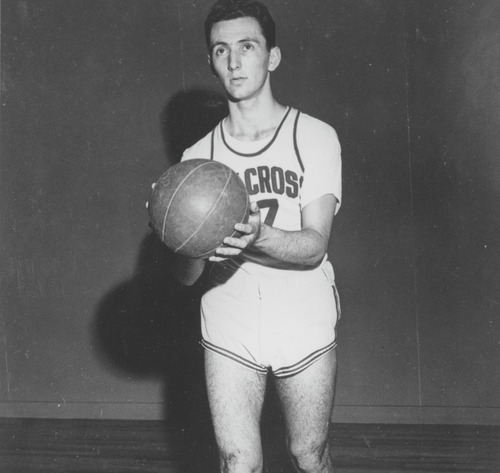
Bob Cousy, shown in his college days at Holy Cross.Associated Press
It was a different game and a different time. Scouts today have video on phones and mounds of statistical analyses at their fingertips. But 1950? The jet age was in its infancy and interstates weren’t crisscrossing the country. A scout or general manager would be lucky to see a player at all before a draft.
“What happened was, in the best-case scenario, Red Auerbach never saw Bill Russell play,” Stark said. Instead, he said, using the example from 1956, Auerbach had his own network and was tipped off.
“All it took was a phone call from someone you respected in the business. Because let’s face it, nobody was scouting, nothing was on television. How did you see these guys play? Hit the dirt, hit the pavement.”
Also, a pipeline to places like New York helped. North Carolina coach Frank McGuire, a New York transplant, used that informal networking to find out about players.
“Where did he get these New York guys? Where did he get all these kids?” Stark said. “He had his guy in New York, and he’d say ‘Frank, got another one for you.’ ”
The 1950 Draft wasn’t brimming with Hall of Famers. But a few intriguing aspects came out of it:
• The draft was held in Chicago just two days after Minneapolis defeated Syracuse for the NBA title.
• The Boston Celtics selected Chuck Cooper 13th overall in the second round out of Duquesne. A transfer from West Virginia State University, he would play six years but is known for being the first Black player drafted in the NBA. Earl Lloyd of West Virginia State was taken 101st overall in the ninth round by the Washington Capitols. A little more than a month later, Lloyd would became the first African-American to play in an NBA game. He also was the last player taken in that draft who saw any playing time in the league.
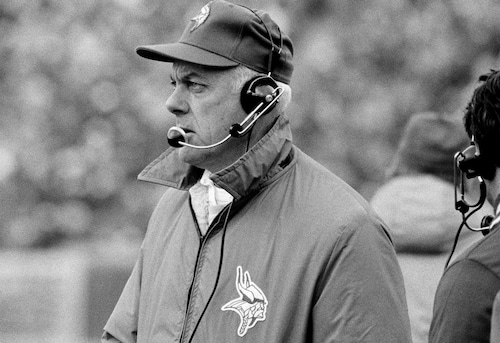
Bud Grant was known by many as the longtime Minnesota Vikings football coach. But he was selected in the 1950 NBA Draft and played two years in the league.Associated Press
• Bud Grant, a name football fans might recognize, was selected in the fourth round, 47th overall, by the Minneapolis Lakers. Grant, out of the University of Minnesota, would play two years in the NBA. He became more famous as coach of the Minnesota Vikings for 18 seasons from 1967 to 1985.
• Northeast Ohio holds a few connections to the 1950 NBA Draft. Painesville-born Larry Foust was selected sixth overall in the first round, two spots after Cousy. He would play 12 years in the NBA. The Rochester Royals selected Bob Roper, a Campbell, Ohio, product who transferred from Northwestern University to John Carroll. Roper, 6 feet, 8 inches, was the 34th overall pick in the third round. Leroy Thompson of Kent State was taken 56th overall in the fifth round by the Fort Wayne Pistons. Roper and Thompson never played in the league, though.
• Paul Arizin, a heralded star out of Villanova, actually was selected before the draft as a territorial pick of the Philadelphia Warriors. The territorial draft rule allowed teams to take a player who attended college with 50 miles of the team selecting him. It was aimed at generating fan interest. Arizin would play 10 years and become one of five players from the 1950 Draft to become an All Star. Akron-born Chuck Share, who attended high school in Cincinnati and college at Bowling Green, was the first pick in the formal draft when Boston took him. He had a nine-year professional career.
• None of the 40 players who were drafted in 1950 and competed in the NBA are alive except for Cousy. Paul Hicks, the 40th player taken overall in the fourth round out of Eastern Kentucky but did not play in the NBA, died Jan. 4 of this year.
• Mr. Irrelevant of the 1950 draft was Ed Montgomery, a 5-foot, 11-inch guard out of Tennessee nicknamed “Britches.” He had served as an officer in the Merchant Marine during World War II. The Philadelphia Warriors took him with the final pick, No. 121.
Stark is a basketball historian and lyricist who grew up in Queens, New York, and is semi-retired from operating youth-services programs. He was intrigued by history and counts Nate Thurmond as his favorite player of all time. Growing up in New York, baseball was king. But he’s never forgotten his love of hoops, and hopes his attention to history and the game keeps it alive for younger fans.
“Whatever was on TV was scarce. You’d always see the Celtics, Lakers and 76ers. I was fascinated by Syracuse Nationals and Rochester Royals. I tell kids, ‘No one knows where Golden State was until Steph Curry came along.’ ”
I cover restaurants, drinks, sports-related and other topics on our life and culture team. For my recent stories, here’s a cleveland.com directory. WTAM-1100’s Bill Wills and I talk food and drink at 9:35 a.m. Tuesdays. Twitter and IG: @mbona30. To check out my books, go to marcbona.net.
Want to know what’s going on in the weekend? Sign up for cleveland.com’s weekly “In the CLE” email newsletter. Also: Follow @DineDrinkCLE on Instagram.