
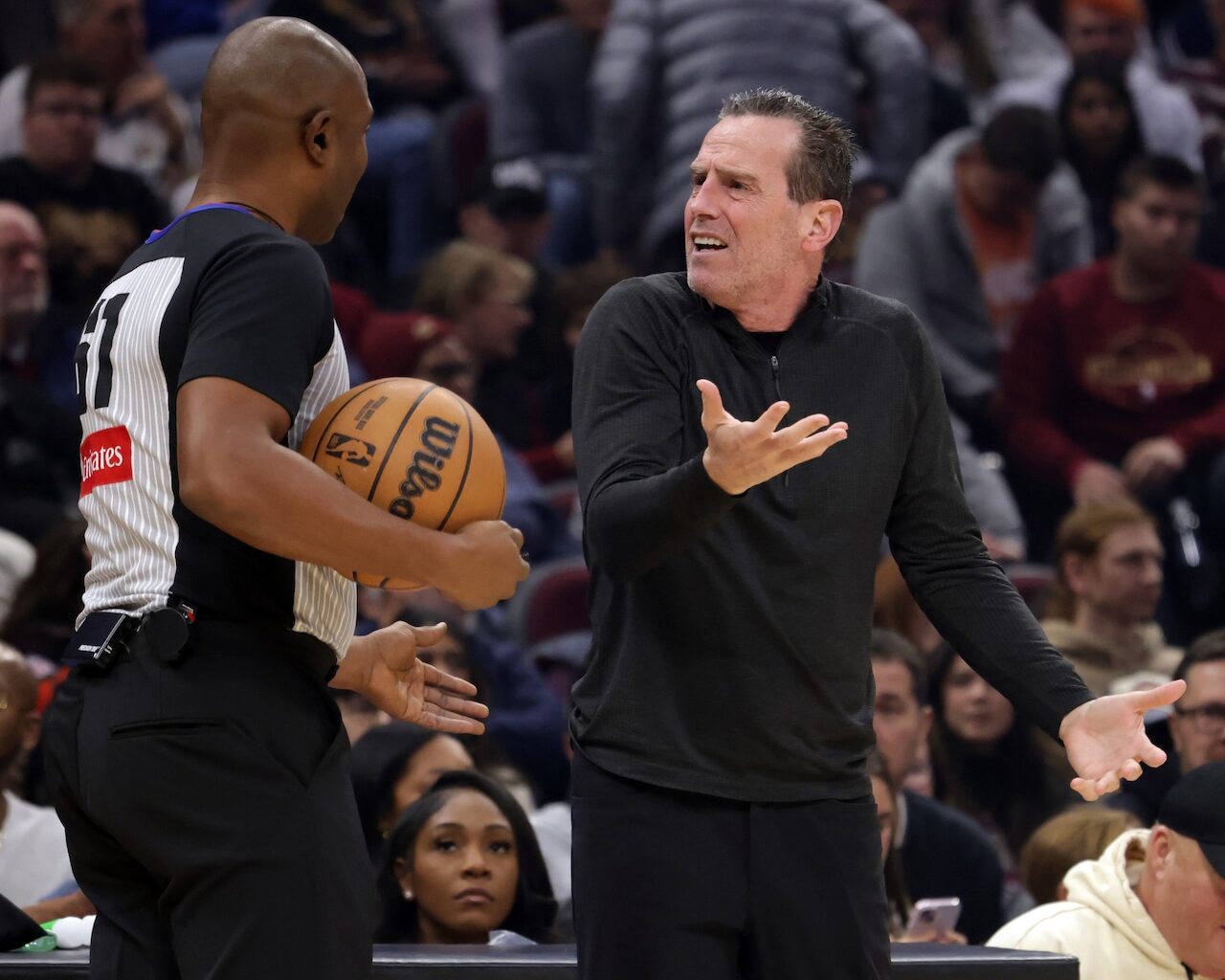
CLEVELAND, Ohio — The Cavs have a solution sitting right on their bench, but they refuse to use it for an extended stretch.
In the latest episode of the Wine and Gold Talk podcast, beat reporter Chris Fedor exposed a troubling disconnect: while the coaching staff openly praises the energy and compete level of their bench players, they won’t use these high-effort athletes to hold underperforming stars accountable.
Following another disappointing loss, this time to the 9-13 Portland Trail Blazers, Fedor highlighted comments from acting head coach Kenny Atkinson that reveal a clear distinction between the effort levels of Cleveland’s rotation players versus their bench.
“Kenny Atkinson was talking about how the compete level of Jaylon Tyson, the compete level of Thomas Bryant, Craig Porter Jr., Nae’Qwan Tomlin, the compete level of all those guys it’s different than some of the main guys that the Cavs are relying on, and it shouldn’t be,” Fedor explained on the podcast.
This isn’t just a one-game observation — it’s becoming a consistent pattern. The podcast discussion revealed that the coaching staff has repeatedly acknowledged this disparity in effort and energy, yet continues to stick with similar rotation patterns even when the starters are clearly lacking in hustle, intensity, effectiveness and overall competitiveness.
Host Ethan Sands pointed out the particular example of Darius Garland, who struggled mightily against Portland, shooting just 2-of-13 from the field.
“Tonight, Darius did not have it on the defensive end or the offensive end,” Sands said. “Craig Porter Jr.’s got better defensive acumen. Craig Porter Jr. is a better rebounder. Craig Porter Jr. can do some of the things offensively that Darius Garland can.”
Fedor took this criticism further, challenging the coaching staff’s reluctance to use playing time as leverage against underperforming starters. A tactic that could send a powerful message to the team.
“If those are things that you’re noticing aren’t good enough, aren’t to the level that you want them at as a coach, and you have guys that are going to do that … You have solutions. You have stated that you have solutions,” Fedor argued.
The solution Fedor proposes isn’t complicated. It’s Basketball 101: players who aren’t competing at the required level shouldn’t be guaranteed minutes, regardless of their status or salary. This is especially true when there are hungry, high-energy players waiting for an opportunity.
“He might have to do that just one time, maybe two times. However many times it takes to try and get a message across, a message that is going to resonate in a different kind of way,” Fedor stated. “And the best way I think that you can make guys see something is you can take away their time, their playing time.”
Sands noted that Kenny Atkinson has praised players like Tyrese Proctor for their defense pregame, then didn’t give them any minutes in the actual contest — another example of the disconnect between words and actions.
What makes this situation even more frustrating for Cavs fans is that this approach has proven successful elsewhere in the league.
Fedor pointed out that Atkinson previously worked under Steve Kerr, who regularly uses his bench to send messages to underperforming starters. A tactic that has contributed to the Warriors’ championship culture.
As the Wine and Gold Talk podcast reveals, the Cavaliers’ issues with effort and intensity might have a simple — if uncomfortable — solution. The question is whether the coaching staff will have the courage to implement it.
To hear the full breakdown of the Cavaliers’ compete level issues and the potential bench solution they’re ignoring, check out the complete episode of the Wine and Gold Talk podcast with Chris Fedor and Ethan Sands.
Here’s the podcast for this week: