
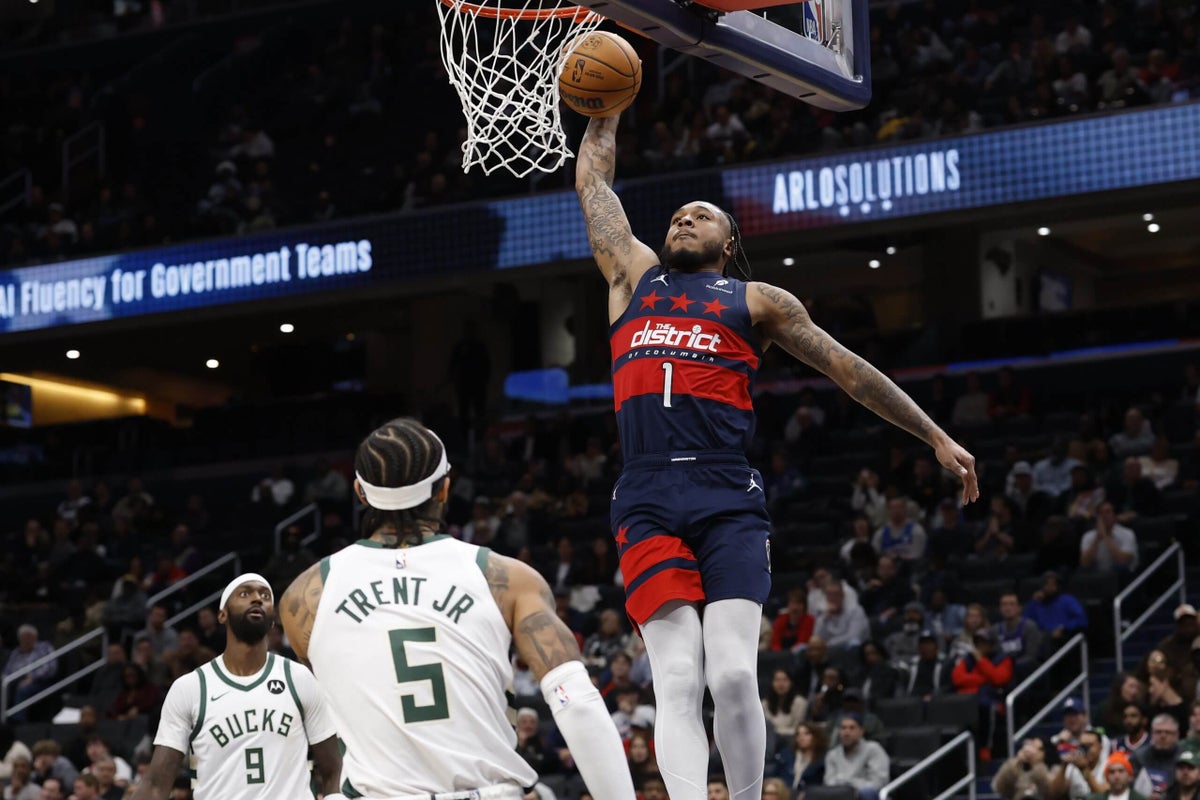
WASHINGTON — Coach Brian Keefe did not play Cam Whitmore a single second in the Washington Wizards’ 131-116 loss to the Atlanta Hawks on Saturday night.
It seemed like a bewildering decision. Because of injuries, the Wizards were missing Bilal Coulibaly, Khris Middleton, Corey Kispert and Tre Johnson, all of whom are wings, as Whitmore is. Washington entered the game with a 3-18 record. It couldn’t have benefitted from playing Whitmore? What on earth was going on?
“We have certain standards that we have for our team,” Keefe said. “He has to live up to those on the better, and he’ll have a chance here. But that’s going to be up to him when that time comes, and he has to meet the standards and expectations that we have for him as a team.”
After his postgame question-and-answer session with reporters, Keefe told The Athletic the “standards” that he spoke of were not related to anything off the court. Keefe and, later, a team source said that Keefe’s decision was not a punishment for anything. Whitmore had not committed any violations of team rules.
So what was going on?
For an approximate clue, it would be helpful to flash back to nearly 22 months ago, when Keefe was in his first month as the Wizards’ interim coach. After the coaching staff had spent more than half the season attempting to get through to Jordan Poole — attempting to teach him to avoid taking tightly contested, low-efficiency shots and trying to convince him to play defense with at least some effort — Keefe moved Poole to the bench. Playing with the second unit gave Poole the ball in his hands more often, which was the team’s stated goal, but it also hammered home to Poole team priorities that had been repeated often by coaches but, up to that point, had gone unheeded by Poole. It wasn’t a punishment. But it was a dose of tough love that leveraged one of the few tools in a coach’s arsenal: a role demotion.
Keefe’s decision to sit Whitmore should be viewed in a similar vein, as an attempt to teach Whitmore, who is still only 21 years old, how to elevate his overall game and play more productive team basketball.
Throughout Whitmore’s basketball career — during his one-and-done year at Villanova and his two disappointing seasons with the Houston Rockets — he has gotten by on his unique combination of power, explosiveness and ball skills. He puts his abilities on display when he motors forward in transition, dunks alley-oop passes or beats opponents off the dribble. But he has not elevated his overall game much beyond that, if at all.
Internally, the Wizards speak of “standards,” and Keefe repeated that word in his vague postgame explanation, leaving him and the franchise as a whole up for ridicule. It’s no secret that the organization is attempting to retain the 2026 protected first-round pick that it now owes to the New York Knicks, and it has the league’s second-worst record. Washington ranks last leaguewide in offense, last in defense, last by a wide margin in net rating and last by a wide margin in point differential per game. It’s been a season filled with bad performances.
The standards, however, are relatively easy to identify: The coaches and front office preach the value of playing with effort, being competitive at all times, playing with physicality (especially on defense) and playing smart basketball.
Internal points of emphasis include getting back on defense, being in the right position as the low man on defense, communicating loudly, moving the ball on offense, understanding time and score and things as simple as helping a teammate off the floor.
The Wizards are, for the most part, far behind most of their opponents in all of these categories. This is a young team and roster that arguably has less talent than nearly all of its opponents. This is apparent when Keefe burns timeouts early in games, and it also speaks to Keefe’s coaching style and the team’s overall developmental priorities.
When Keefe calls early timeouts, rather than stunting opponents’ momentum, he’s attempting to hold his own players accountable for repeated mistakes, like hoisting contested long 2-point shots early in the shot clock, failing to get back on defense on consecutive possessions or complaining to a referee during live-ball situations. Calling timeouts is an attempt at correcting bad basketball habits, and it exhausts timeouts that might be more useful late in a game.
Many players on the roster make mistakes, as the team’s record and leaguewide rankings indicate.
So, why is Keefe seemingly singling out Whitmore?
Because he tends to make more of these unforced mistakes than everyone else on the team, and those mistakes weren’t just his lack of getting back on defense, subpar defensive physicality or poor effort (at times) during Washington’s 146-101 loss Thursday to Boston. These are recurring issues.
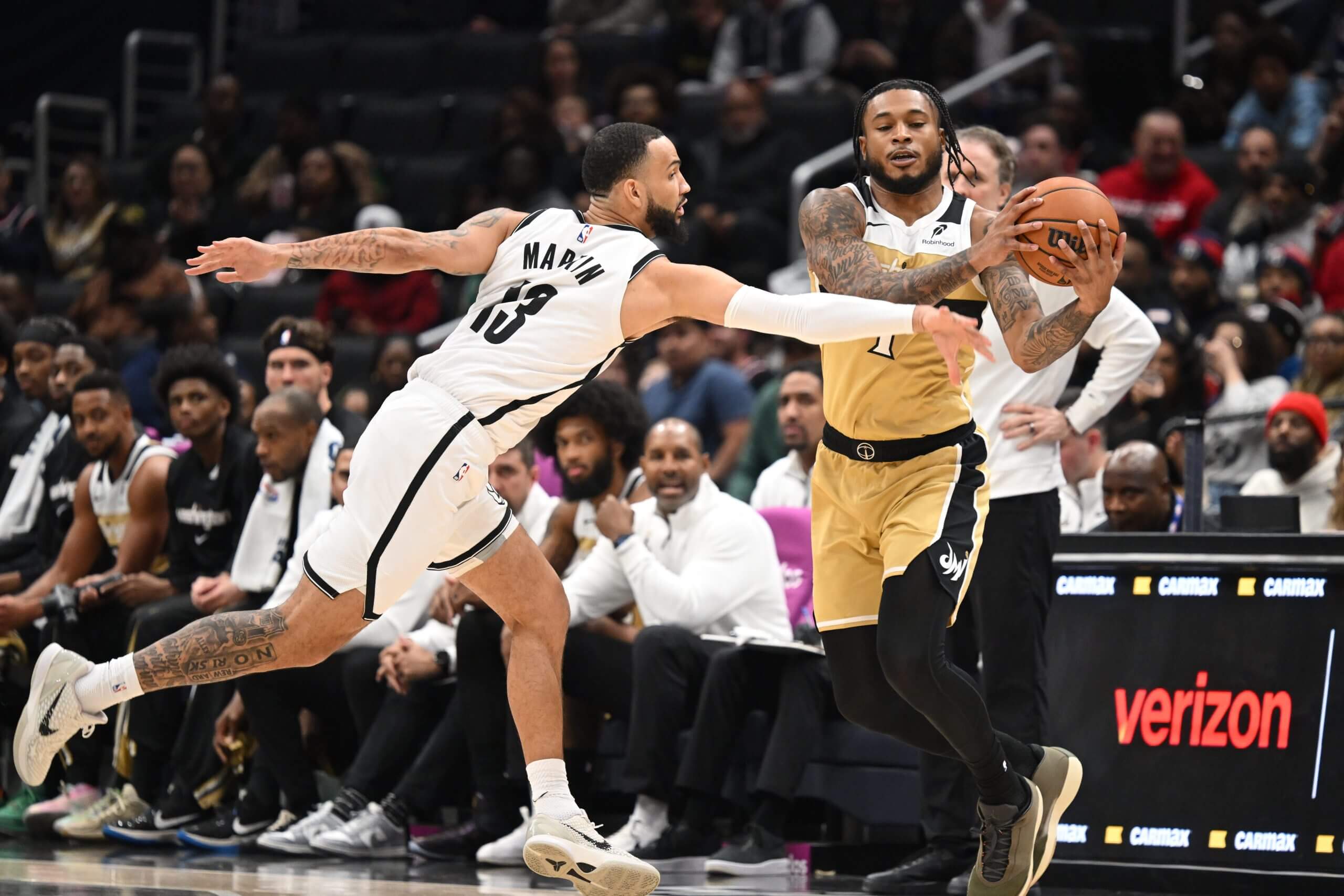
Cam Whitmore excels at drawing defenses’ attention, and in those cases, coaches want him to pass the ball as part of a ball-movement offense. (Rafael Suanes / Imagn Images)
Keefe and his assistant coaches want their offense to be a democratic system predicated on ball movement. If they’re not facing an expiring shot clock, for example, players are expected to pass up OK shots if a teammate has a good shot. When an opponent brings two defenders to the ball, the Wizards’ ballhandler is expected to pass.
But more than any player on the roster, Whitmore has tunnel vision, which has been a staple of his game going back at least to Villanova. Although his potential has been apparent all season long, so have his flaws.
This season, he has made only 220 passes, the lowest number on the team among any regular rotation player, according to the NBA’s player-tracking database. He also has made 0.62 passes per minute, the lowest average for any player on the Wizards’ roster, per The Athletic’s calculations based on the NBA player-tracking data. His assist rate is lower than any other regular rotation player on the team.
The coaches have spent the first quarter of the season preaching to the entire team the value of the Wizards’ standards, and it’s now time to hold players accountable for not meeting those priorities and to reward players who are attempting to meet the standards. Fifth-year forward Justin Champagnie, rookie wing Will Riley and rookie guard Jamir Watkins are not perfect players — it’s fair to say their athletic ceilings pale in comparison to Whitmore’s — but they exceed Whitmore in meeting the standards team officials profess to value.
During his preseason news conference, Wizards general manager Will Dawkins said players would compete for minutes. Until now, however, it appears that minutes have been given rather than earned.
Champagne, Riley and Watkins have shown more effort than Whitmore in games. Keefe feels it’s time to acknowledge that through the best avenue that he has at his disposal: adjusting his team’s allocation of minutes.
The Rockets, who have one of the best teams in the Western Conference, have little taste for developmental projects and prioritized gaining added room under the first apron, so they unloaded Whitmore for next to nothing in return. The Wizards gave up the Chicago Bulls’ 2026 second-round pick and the Sacramento Kings’ 2029 second-round pick to acquire him. It was the ultimate low-risk, high-reward move.
Wizards officials still think Whitmore will become an upper-level player if he can develop in the areas where he’s been deficient, and team officials hope that Keefe’s move will help spark that growth.
Imagine a Cam Whitmore who plays with the hustle of a Will Riley or a Justin Champagnie. He would be quite a sight.
Again, Whitmore is only 21 years old, and he’s under contract for next season at the relatively low salary of $5.5 million. He has time to learn, and the Wizards have time to teach.
As Keefe said, Whitmore “has to meet the standards and expectations that we have for him as a team.”
If Whitmore does that, then Keefe’s decision may be the impetus that helped Whitmore take a necessary positive step in his career. That’s what part of what coaching and accountability are supposed to be.