
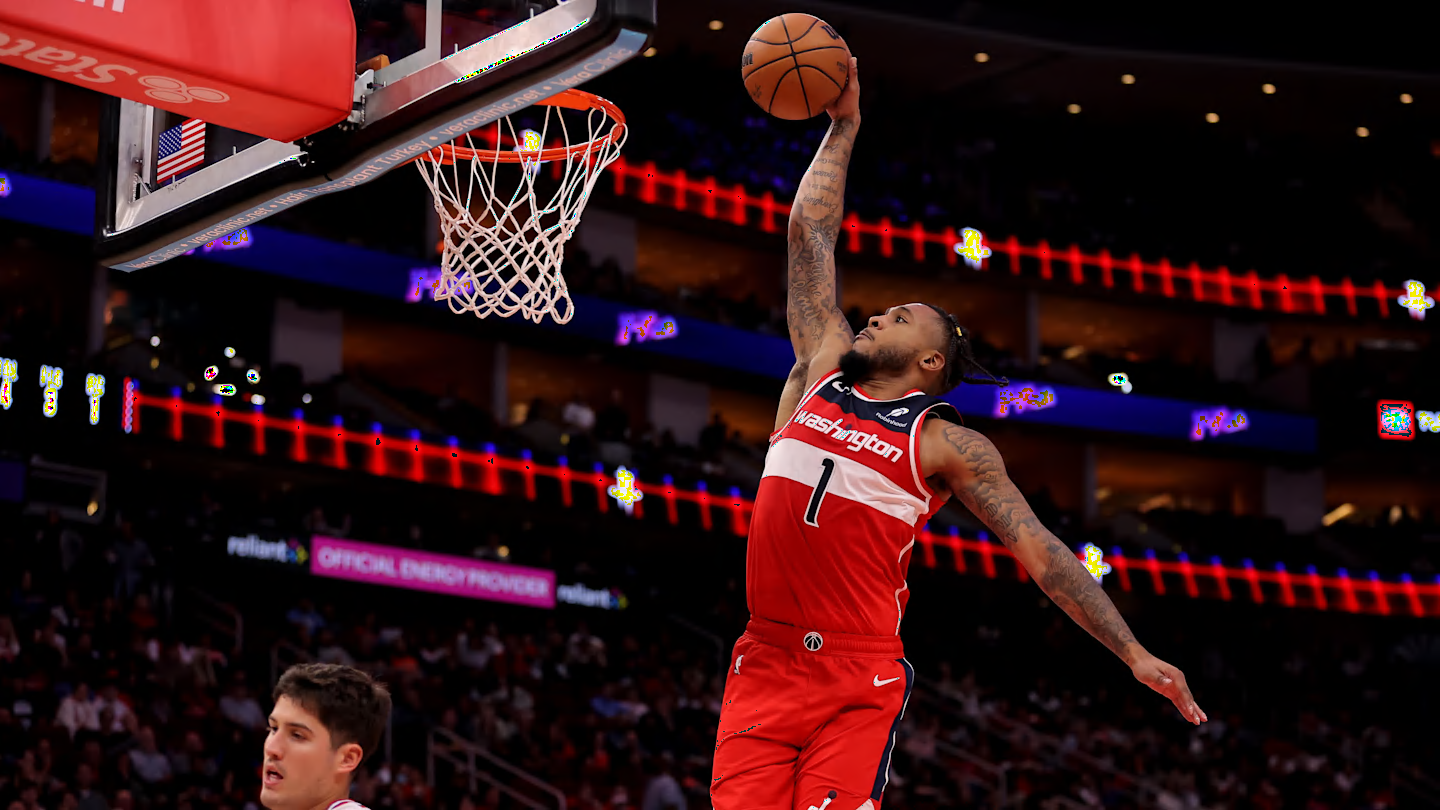
When the Washington Wizards acquired Cam Whitmore this past offseason, the organization spoke confidently about his upside and long-term potential. The former first-round pick brought athleticism, scoring, and an aggressive play style that seemed tailor-made for a rebuilding team seeking foundational pieces.
While Whitmore’s play on the court has been solid, the Wizards are reportedly dissatisfied with aspects of his development, specifically his shot selection, decision-making as a passer, off-ball defense, and even his practice habits. However, placing this blame solely on Whitmore ignores a larger and far more consequential issue. The Wizards organization has failed to create an environment conducive to focus, growth, and success.
Wizards Coach Brian Keefe benched Cam Whitmore on Saturday against Atlanta. Here’s why. pic.twitter.com/70YqhGeIUo
— Varun Shankar (@ByVarunShankar) December 7, 2025Why the Wizards Deserve the Blame
Nov 22, 2025; Chicago, Illinois, USA; Washington Wizards head coach Brian Keefe directs his team against the Chicago Bulls during the first half at United Center. Mandatory Credit: Kamil Krzaczynski-Imagn Images | Kamil Krzaczynski-Imagn Images
Washington’s directionless rebuild has placed its young players in a situation where winning is not a priority. It is extremely difficult for any player, especially a young one still learning the league, to consistently give 100% effort in a culture where accountability and achievement appear secondary.
When the organization itself does not project urgency, structure, or ambition, it becomes unrealistic to expect its players to embody those traits on their own. Whitmore may have lapses in focus, but he is performing within a context lacking the clarity and stability ambitious young players need.
Coaching has been a major weak point for the Wizards’ play on the court. That directly affects Whitmore’s trajectory. For years, Washington has struggled to establish consistent systems on both ends of the floor, frequently shifting roles and rotating players through undefined expectations. Young talent cannot thrive when fundamentals aren’t reinforced, responsibilities aren’t clearly defined, and mistakes aren’t constructively addressed. In this light, Whitmore’s uneven decision-making and defensive inconsistency reflect organizational shortcomings more than personal failings.
Furthermore, the Wizards’ front office has yet to demonstrate a coherent long-term plan. Without visible goals or a unified direction, players operate in uncertainty. Are they playing to win? Are they playing to develop? Perhaps the Wizards are playing to experiment? Whitmore’s habits, preparation, and focus are undoubtedly influenced by the message, or lack thereof, sent from the top down.
If Washington wants to get the best out of Cam Whitmore, the responsibility begins with creating an environment where structure, accountability, development, and winning matter. The Wizards cannot demand disciplined performance without first building a disciplined organization. Whitmore’s issues may be real, but the root cause is clear: the Wizards’ lack of direction has made it difficult for him or any player to flourish.