
Sixteen of the Vermont State University at Castleton men’s and women’s basketball players are from the Green Mountain State, but only two can call themselves brother and sister. Conner and Maggie McKearin are siblings from Proctor, Vermont, who are playing NCAA Division III college basketball at a school that is less than 20 minutes from their hometown. “We’re really close. She’s my best friend, so we get to spend a lot of time together. It’s special to me,” Conner said.“I’m really grateful me and my brother are, like, best friends, so it’s really nice,” Maggie added. Conner and Maggie say their bond grew through the game of basketball, based on how much time they spend together training each other in the offseason. It’s paid dividends. Conner is coming off career-highs in his 2024-2025 season in 3-point percentage (.348), field goal percentage (.365) and points per game (6.3). Maggie thus far is leading the women’s basketball team in 3-point percentage at 41% from deep. “We get to train together, shoot together, it’s just made us closer,” Maggie said. “We get each other a little bit better because we’re going through the same thing.” The two credit a lot of their accomplishments at the collegiate level back at home through Proctor High School basketball to reach this point. They say playing for the Proctor Phantoms developed and fine-tuned their games to be able to succeed at the college level. “It’s awesome,” Conner said. “I can have people from my life be able to go to my games all the time, support me … My parents come to every game, so it’s pretty nice.” At the same time, a lot of those same supporters who watched their growth at Proctor High School have a short trip to see them in action in their college basketball careers. That includes Maggie and Conner’s dad, Joe McKearin, who coached Maggie when she competed for her high school’s girls’ varsity basketball team. “My dad was my coach in high school,” she said. “Just being able to see him after the game, talk about things and just all be together, it’s really kind of rare. Not many families get to do it, so I’m very grateful.” The McKearins wear their family pride through the No. 12 on the backs of their jerseys. 12 was first worn by the two’s oldest brother, Gannon McKearin, which eventually led Maggie and Conner to both continue the tradition. “It’s just funny. We’ve been called ‘McKearin 12.’ It’s just a little funny thing,” Maggie said. “A nice little family tradition.” Conner and Maggie are both in their last years of eligibility as college basketball players, but the McKearins are hoping their journeys sticking together and reaching this stage in their athletic careers will inspire future generations of sibling duos in Vermont to create their own family college sports stories. “It means a lot. I’m from a small town, so I think sometimes you get overlooked a little bit,” Maggie said. “If you work hard, you can figure it out.” The regular seasons for both Conner and Maggie will last until around the end of February before conference college playoffs begin for NCAA Division III basketball.
CASTLETON, Vt. —
Sixteen of the Vermont State University at Castleton men’s and women’s basketball players are from the Green Mountain State, but only two can call themselves brother and sister.
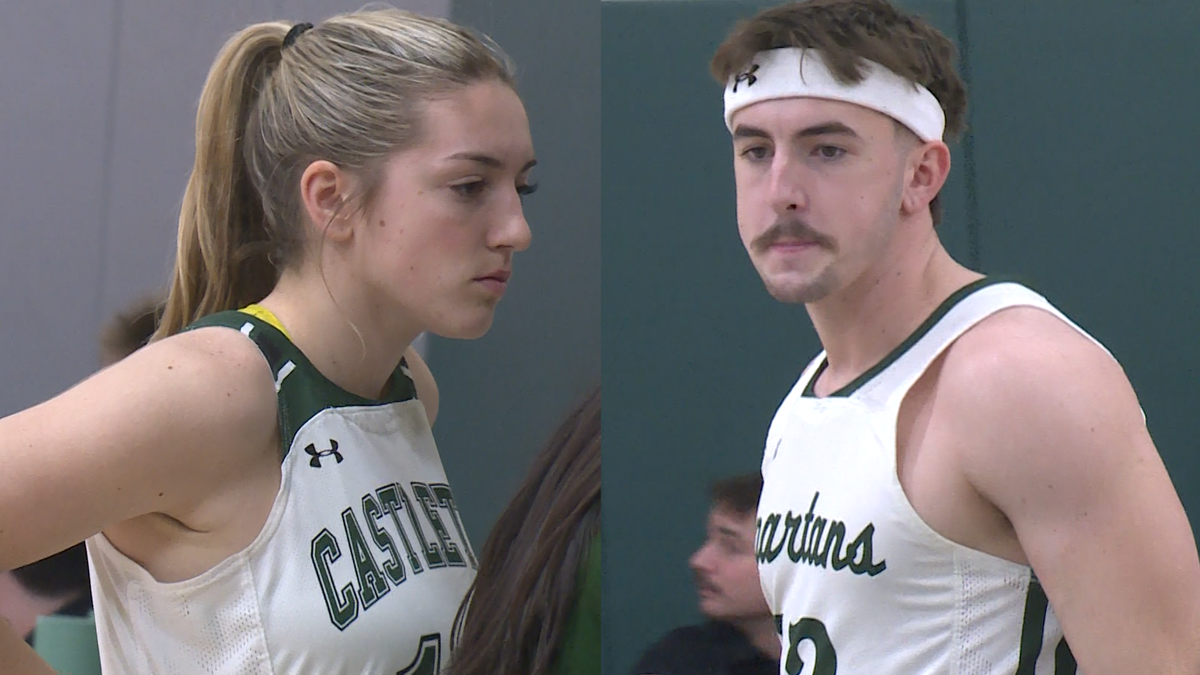
Conner and Maggie McKearin are siblings from Proctor, Vermont, who are playing NCAA Division III college basketball at a school that is less than 20 minutes from their hometown.
“We’re really close. She’s my best friend, so we get to spend a lot of time together. It’s special to me,” Conner said.
“I’m really grateful me and my brother are, like, best friends, so it’s really nice,” Maggie added.
Conner and Maggie say their bond grew through the game of basketball, based on how much time they spend together training each other in the offseason.
It’s paid dividends. Conner is coming off career-highs in his 2024-2025 season in 3-point percentage (.348), field goal percentage (.365) and points per game (6.3). Maggie thus far is leading the women’s basketball team in 3-point percentage at 41% from deep.
“We get to train together, shoot together, it’s just made us closer,” Maggie said. “We get each other a little bit better because we’re going through the same thing.”
The two credit a lot of their accomplishments at the collegiate level back at home through Proctor High School basketball to reach this point. They say playing for the Proctor Phantoms developed and fine-tuned their games to be able to succeed at the college level.
“It’s awesome,” Conner said. “I can have people from my life be able to go to my games all the time, support me … My parents come to every game, so it’s pretty nice.”
At the same time, a lot of those same supporters who watched their growth at Proctor High School have a short trip to see them in action in their college basketball careers. That includes Maggie and Conner’s dad, Joe McKearin, who coached Maggie when she competed for her high school’s girls’ varsity basketball team.
“My dad was my coach in high school,” she said. “Just being able to see him after the game, talk about things and just all be together, it’s really kind of rare. Not many families get to do it, so I’m very grateful.”
The McKearins wear their family pride through the No. 12 on the backs of their jerseys. 12 was first worn by the two’s oldest brother, Gannon McKearin, which eventually led Maggie and Conner to both continue the tradition.
“It’s just funny. We’ve been called ‘McKearin 12.’ It’s just a little funny thing,” Maggie said. “A nice little family tradition.”
Conner and Maggie are both in their last years of eligibility as college basketball players, but the McKearins are hoping their journeys sticking together and reaching this stage in their athletic careers will inspire future generations of sibling duos in Vermont to create their own family college sports stories.
“It means a lot. I’m from a small town, so I think sometimes you get overlooked a little bit,” Maggie said. “If you work hard, you can figure it out.”
The regular seasons for both Conner and Maggie will last until around the end of February before conference college playoffs begin for NCAA Division III basketball.