
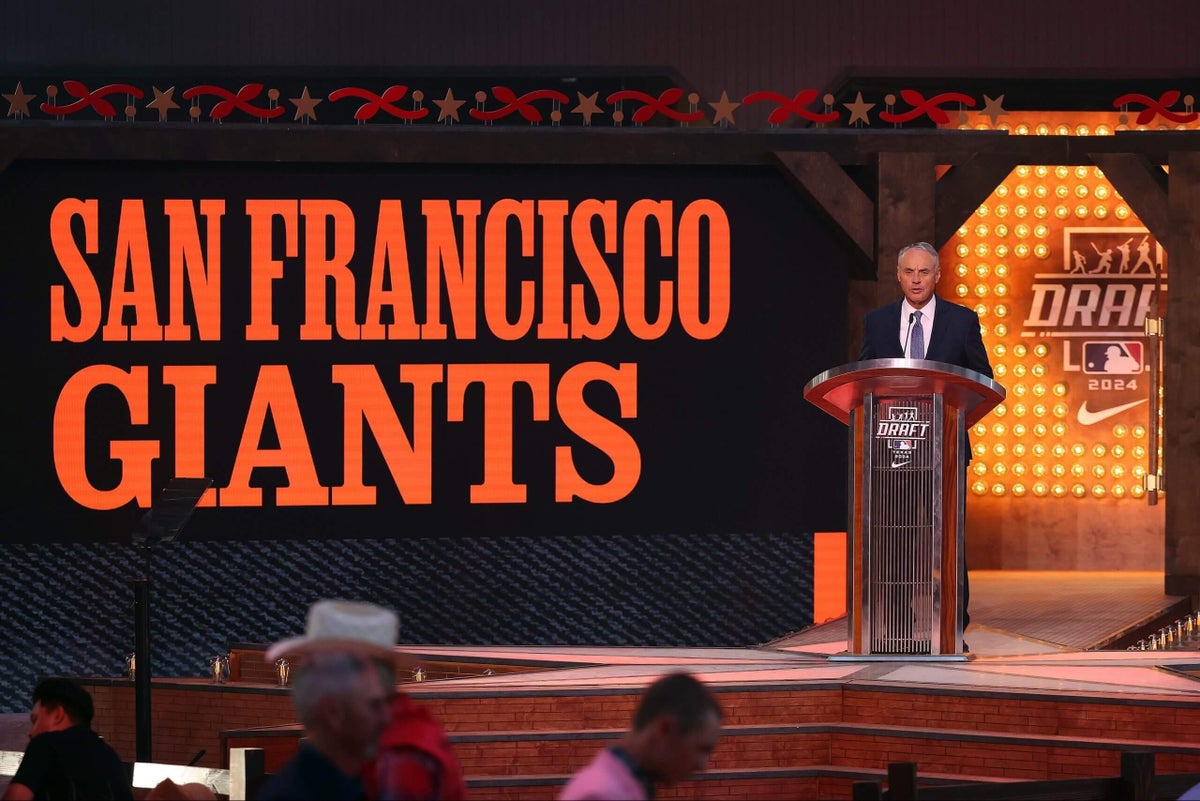
The Giants entered Tuesday night’s Major League Baseball Draft Lottery without expectations. They had the 15th-best record in baseball and were projected to get the 12th pick. Anything better than that was gravy. Moving up to the 11th pick would get them a better chance at a preferred pick. Moving up to the 10th pick could safely be described as a “windfall,” with all sorts of positive ramifications.
The Giants moved up to the fourth pick. Now, this is still the MLB Draft, which is as tricky and uncertain as ever, so don’t start calling contractors to expand the trophy room yet. Still, it’s hard to oversell what just happened to the fortunes in the near and long term. They entered the lottery without expectations, and they left with another top-100 prospect and extra money to spend in the draft. Describing it as a windfall sells it short.
Let’s look at why the fourth pick is such a big deal, and why there were almost certainly a lot of high-fives in the Giants’ front office when it was announced.
The Giants haven’t had a lot of picks like this in franchise history
Since the MLB Draft began in 1965, the Giants have picked fourth or better just four times. Those picks:
1985 — Will Clark (No. 2)
1986 — Matt Williams (No. 3)
1997 — Jason Grilli (No. 4)
2018 — Joey Bart (No. 2)
That’s two players who were the face of a franchise during one of the most memorable eras in San Francisco history and two major leaguers who did more for other franchises than the Giants. Still, you can give Grilli credit for the solid-if-uneven Giants career of Livan Hernandez, and Bart was a top prospect with plenty of trade value for years, even if he didn’t work out as expected.
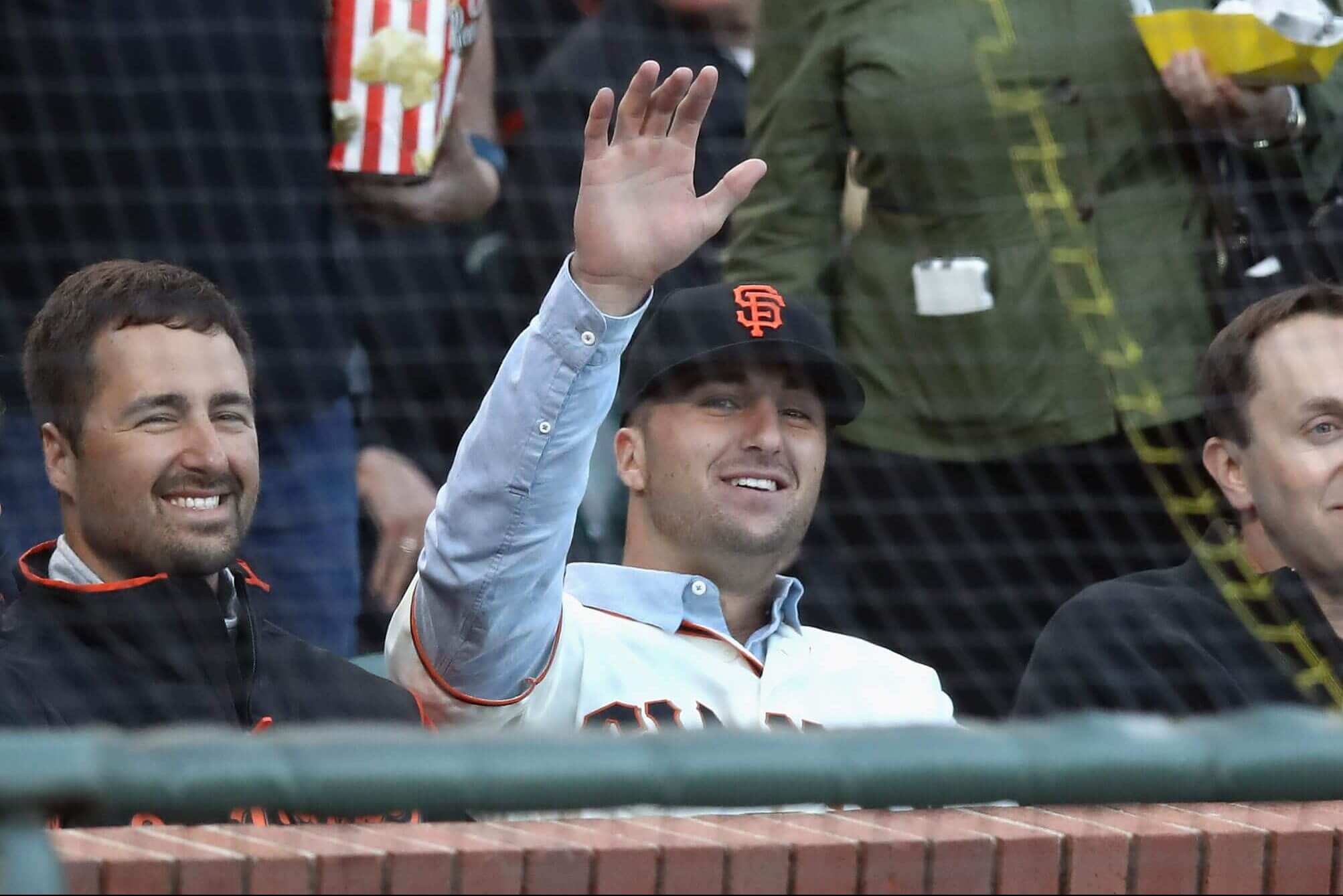
The last time the Giants picked inside the top four, they drafted Joey Bart, who was a top prospect with plenty of trade value for years. (Ezra Shaw / Getty Images)
The Giants improved their chances of coming away with a franchise player
The easiest way to explain the difference between the fourth pick and where the Giants were expecting to draft is to make a top-10 list of the best draft picks at each slot.
Here are the 10 best No. 4 picks in draft history, by Baseball-Reference’s WAR:
1. Barry Larkin (70.5 WAR)
2. Kevin Brown (67.8)
3. Dave Winfield (64.2)
4. Thurman Munson (46)
5. Darrell Porter (40.9)
6. Ryan Zimmerman (40.1)
7. Jon Matlack (39.4)
8. Alex Fernandez (28.5)
9. Kevin Gausman (27.8)
10. Kerry Wood (27.6)
There are plenty of still-active careers that could get in there, too. Nick Kurtz and Wyatt Langford were No. 4 picks, as were Ethan Holliday and Marcelo Meyer. You already have two Hall of Famers and a whole heckuva lot of All-Star seasons up there. The gap could widen even further.
Compare that to the list of the No. 12 picks, which is the pick the Giants were statistically likely to get in the lottery:
1. Nomar Garciaparra (44.3 WAR)
2. Kirk Gibson (38.4)
3. Jered Weaver (34.6)
4. Billy Wagner (27.7)
5. Delino DeShields (24.4)
6. Matt Morris (20.4)
7. Yasmani Grandal (20.2)
8. Jay Bruce (19.7)
9. Brett Myers (14.6)
10. Doug Glanville (10.9)
There’s still a Hall of Famer up there, but it’s a reliever. The second-best player on the list, according to WAR, is one of the better major leaguers to never make an All-Star team. In the back half, you start getting into “very nice career” territory, which isn’t a slight. It’s hard to have a very nice MLB career. But you can see the difference in quality between the best players drafted at each slot.
You can really see the difference in the next 10-best picks at each slot. The 11th through 20th-best picks at the No. 4 spot were worth a combined 146 WAR, but the same cohort at the No. 12 spot combined for just 60.9 WAR.
There was a nifty bit of synchronicity for this year’s free-agent class, too, as the 12th-best draft picks at each slot happened to be free agents with a similar profile. Kyle Schwarber went from the fourth pick to a five-year, $150 million deal this offseason, and Josh Naylor went from the 12th pick to a five-year, $92.5 million deal. Both mash dingers from the left side, but one of the players mashes a few more.
That’s the difference, and if you’re looking for a shorthand way to describe the difference between the two picks, it’s hard to do better than “Kyle Schwarber vs. Josh Naylor.” The No. 4 pick is the Schwarber of picks, almost by definition.
It’s a great year for the Giants to sneak into the top part of the first round
Don’t take it from me. Take it from The Athletic’s Keith Law, who actually knows about the prospects in next year’s draft. Here’s what he messaged me:
“This upcoming class already looks like a very strong one for college position players, with a top-5 overall that likely rivals a 2023 group that has already produced Paul Skenes, Wyatt Langford and two of the top five prospects still in the minors (Max Clark and Walker Jenkins.) There’s a clear 1-1 in UCLA shortstop Roch Cholowsky, followed by a group of five to six college bats, including Kentucky’s Tyler Bell and Georgia Tech’s Drew Burress, plus one standout high school player in shortstop Grady Emerson from Fort Worth. But the pitching group looks very light, and the talent drops off around pick 8.”
With any luck, that UCLA shortstop will have a disappointing season and fall all the way to the fourth round. It’s happened before. It’s definitely a top-heavy draft, though, and while there will be movers and shakers who upset the projected draft order, like they do every year, the Giants are practically guaranteed to draft someone that the industry is very, very fond of.
This isn’t the kind of draft that’s wide open, with no consensus on the top talents. There’s a consensus, all right, and the Giants just Kool-Aid Man’d their way into it.
This will help the Giants get better prospects later in the draft, too
Last season, the Nationals had the fourth pick, and the Twins had the 12th pick. The total amount of money the Nationals could spend in the 2024 Draft, including on their first-round pick, was $16.6 million. The Twins could spend only $12.7 million, by comparison.
That’s a cool $3.9 million in extra money the Giants just got to buy players out of college commitments and convince them to sign. If they save money on the fourth pick, they can apply it toward players who fall in the draft. If they don’t save money and instead pay that fourth pick even more than his slot value, they’ll still have more money to spend by the time they get to their later picks.
The best recent example of the Giants using money in the draft to get a better prospect is 2020, when they built their draft around the idea that they could convince Kyle Harrison — a first-round talent — to give up his strong UCLA commitment after drafting him in the third round. It’s oversimplified to suggest he was the Giants’ true first-round pick but not to suggest they felt like they came away with the equivalent of two first-round picks. Six years later, those picks have turned into 22 percent of the Giants’ starting lineup — Patrick Bailey as the starting catcher and Harrison as a part of the trade package for Rafael Devers.
Getting Harrison to sign took a lot of maneuvering, and there was plenty of risk involved. It will be a lot easier for the Giants to take those chances with a bonus pool that’s based on the fourth pick. A lot of the extra money is going to go to whoever they draft with that pick, but not all of it.
This might even help the Giants immediately
You’re too impatient to wait for a prospect. You want a new, shiny major leaguer now. The Giants have urgency, dang it, and you can’t wait until 2028 or 2029 for a prospect who may or may not work out. Can this sudden change in the fortune of the Giants’ farm make a difference right now?
At the risk of oversimplifying, yes, this can help the Giants immediately. Again, this is the MLB Draft, not the NFL or NBA. These players will not show up next season. We’re talking about future Giants prospects, but we’re also talking about people who are doing kegstands at the moment, unless they’re studying for an AP History final. Don’t get carried away.
With that disclaimer out of the way, the Giants can expect to have another top-100 prospect by the trade deadline. They can count on a talent infusion that other teams looking to deal prospects might not be expecting. This doesn’t mean that they’re suddenly keener on trading their top prospects, such as Bryce Eldridge or Josuar Gonzalez, or that they are comfortable dealing a recent first-round pick like Gavin Kilen, but they’re getting a predictable boost to the system that wasn’t there a few hours ago.
The Giants have had a famously tough time with their recent first-round picks. Bailey has the highest career value of any Giants first-rounder since Joe Panik in 2011, but do you know who’s second? It’s Bart. That’s how bleak it’s been. After Bailey and Bart, you have Heliot Ramos, Christian Arroyo and Phil Bickford (0.3 career WAR) rounding out the top five. Drafting fourth is no guarantee to break that string of flops. If the Giants want No. 4 pick Nick Madrigal starting at second base for them next season, to use one cautionary tale, they can sign him as a minor-league free agent.
Still, rocketing up the draft order might be the best thing that happens to the Giants during the Winter Meetings, even if they make a wise signing or crafty trade. It’s rare to see a piece of baseball news that comes without almost zero potential downside for the organization. Here’s one. Celebrate it while it lasts. If the Giants draft the next Will Clark or Matt Williams, Giants fans might just celebrate it for the rest of their lives.