
Spurs arena negotiations are about to heat back up at City Hall.
In the weeks since Bexar County voters approved the county’s portion of the funding for a new $1.3 billion downtown Spurs arena, council members who already signed off on their own funding framework back in August have started considering next steps, like plans for keeping the public informed about construction milestones and how to spend a $75 million community benefits agreement.
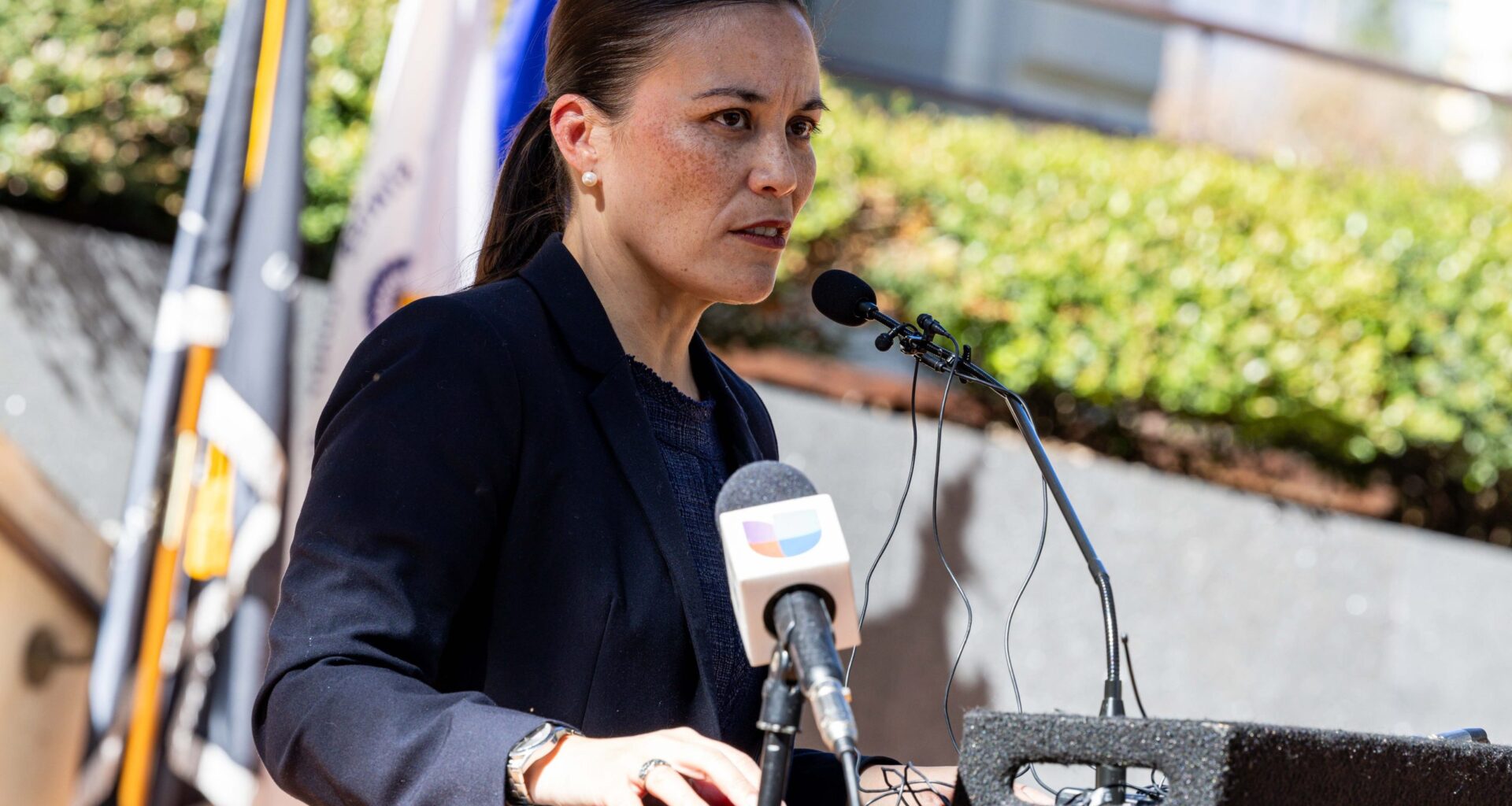
At the same time, Mayor Gina Ortiz Jones is calling to reopen major portions of the non-binding agreement, suggesting the city still needs to assess major costs associated with the project as well as revenue projections before sealing a deal with the team.
“We need to have some data to help us understand how we should lay our chips, right? This is a generational investment,” Jones said at the Texas Tribune Festival last month. “[A] $75 million [community benefits agreement], frankly, is better than what we had … and we continue to negotiate for more.”
Some members of the business community have raised eyebrows at that characterization of the city’s agreement, suggesting it could send the wrong message to developers looking to do business with San Antonio in the future.
But as of this week, the city has drafted a request for proposals from consultants who can provide some of the additional information Jones has been asking for about what the city is likely to spend and earn from operating a downtown sports and entertainment district.
The city anticipates awarding the consultant contract in May, according to a copy shared with the San Antonio Report.
An email City Manager Erik Walsh sent to the City Council on Wednesday said
the study will focus on the cost of providing city services to the sports and entertainment district, such as security, traffic direction and fire services.
It’s also expected to produce a 30-year revenue projection for sources that aren’t already committed to repaying arena bonds — primarily sales taxes, since money earned from ground leases and new property taxes within the district are already earmarked for the project’s construction.
The prospective consultant is also being asked to identify potential for “new, innovative, or strategic revenues” to come out of the district — though few details are provided.
The document is still a draft and hasn’t been finalized by the council or issued to prospective applicants.
Wheels in motion
While Jones views the city’s agreement with the Spurs as a work in progress, many council members are already gearing up to start influencing what they see as the natural next steps.
On Thursday the council’s Governance Committee heard the first of two Council Consideration Requests aimed at managing the $75 million community benefits agreement included in the original term sheet. That’s money the team is supposed to give the city over the course of 30 years, at $2.5 million per year, to be spent how the council sees fit.
Councilman Edward Mungia (D4) and Teri Castillo (D5) brought forward a proposal asking city staff to create a standard framework for such agreements that could be used for the sports and entertainment district or other economic development negotiations going forward.
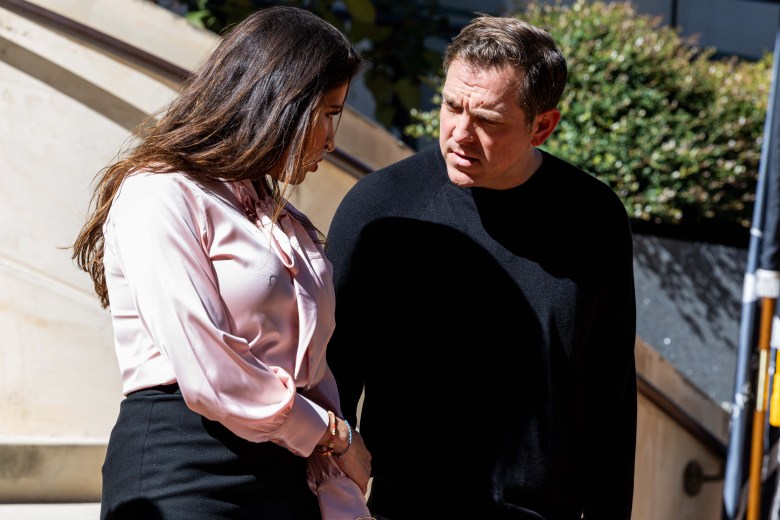 District 7 council member Marina Alderete Gavito talks with San Antonio Spurs Managing Partner Peter J. Holt during a press conference in front of City Hall on Nov. 5. Credit: Amber Esparza / San Antonio Report
A separate policy proposal, filed by Councilwoman Sukh Kaur (D1) on Dec. 4, would create a community benefits oversight committee of leaders across the city, as well as representatives from San Antonio ISD and the Bexar County Commissioners Court, to seek community input and manage how the $75 million is spent.
That plan has the support of Mungia, Castillo, Councilman Ric Galvan (D6) and Councilman Marc Whyte (D10), and both proposals are expected to come up for council discussion in January.
A third policy proposal, put forward by Whyte and Castillo on Thursday, asks the city to start thinking about how it would track progress on the project’s construction and design processes and keep the public up-to-speed on the timeline.
“I would think that both of these [oversight committee and dashboard] CCRS] will face very little opposition, if any,” Whyte said in an interview. “They’re both designed to really keep the public informed of what’s going on, and make sure that the investment that the Spurs are going to make into this community benefits agreement is something that really does meet what what the community would like to see.”
‘A continuing discussion’
In Jones’ public comments since the Nov. 4 vote, she has repeatedly said that San Antonio should wait to finalize its agreement with the Spurs until it sees where city finances shake out in the coming year, when federal cuts are expected to exacerbate a city budget deficit.
She’s also suggested that the city already put itself in a poor negotiation position by moving so quickly on the term sheet, and must continue using all the leverage it has to ask for more.
“I continue to say we need revenue-sharing, this is not a foreign concept,” Jones said at the Texas Tribune Festival on Nov. 14. “We’re the third most impoverished city in the country. If we want to change any of this, we need to make sure that we are asking for what we deserve.”
On Thursday, Jones suggested the community benefits agreement could be another place to sweeten the deal for the city.
“Given what we’re in the midst of, [our discussions should include] what is and is not included in a CBA,” Jones said. “Would somebody consider naming rights, a cut of that, as part of the CBA?”
The window for such negotiations has closed, according to some council members. But with many major contracts to come in the coming year, Jones has made clear she disagrees.
“When I think about this deal, I’m thinking not only about this arena, but I think, this is our opportunity to revitalize downtown, so we have to broaden the conversation,” she said at TribFest.” … This is why the non-binding term sheet is a continuing discussion.”