
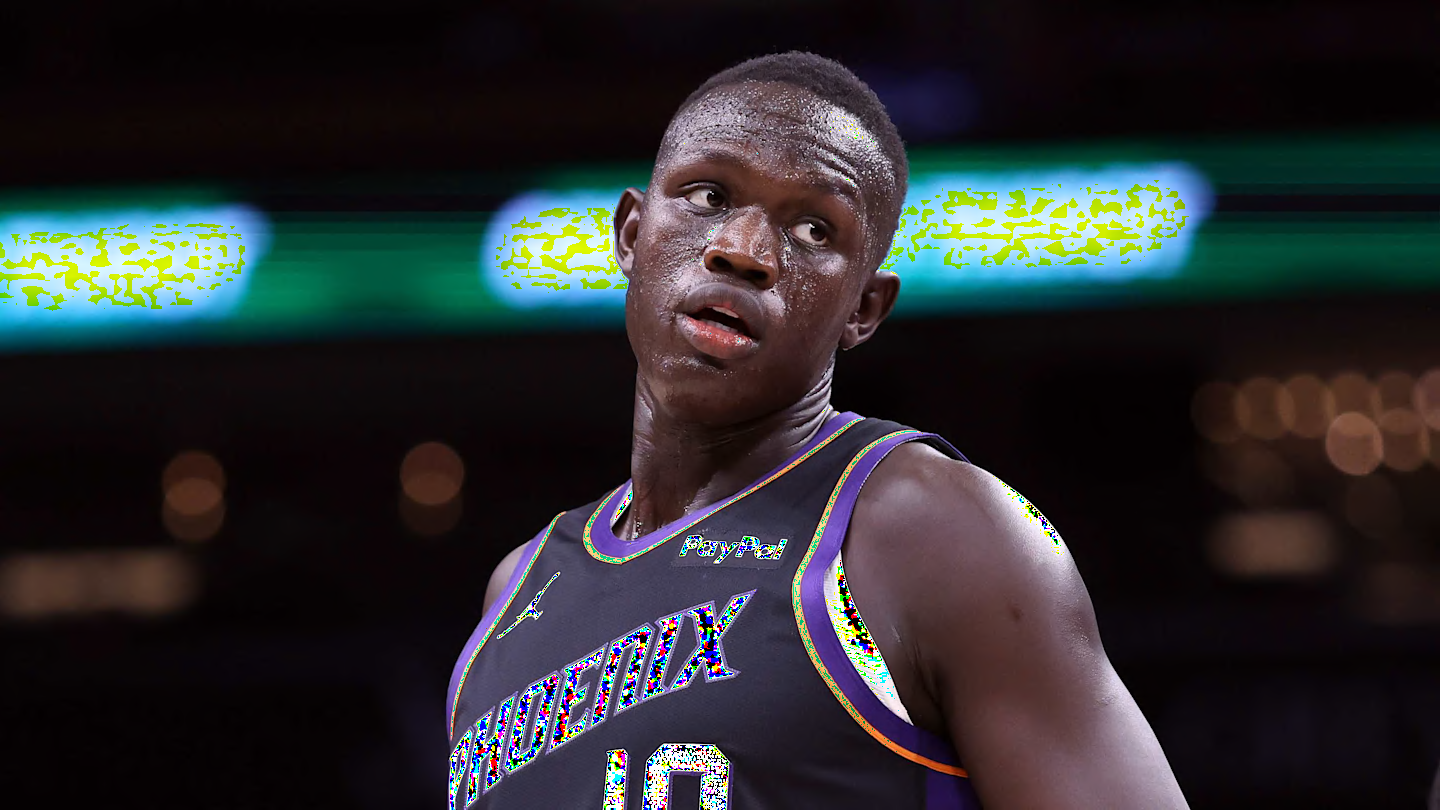
The 2025 NBA Re-Draft conversation may be hypothetical, but it already tells us what’s oh-so-important about team building: sometimes the best pick isn’t the guy with the cleanest box score. It’s the guy who solves your franchise’s most desperate needs. And in a world where it is reported that Khaman Maluach is sliding to the Chicago Bulls at No. 12. Notching that selection would feel more like a strategy than luck.
Maluach hasn’t lit up box scores for the Phoenix Suns—or cracked their rotation effectively. But that isn’t the point. For the Bulls, who’ve lacked a steadfast defensive anchor for years, his archetype is the kind of foundational piece a rebuild should covet.
Profile over production: Why it matters
In today’s NBA, teams no longer draft solely on points per game or other obvious stats. They draft on impact potential—the things numbers don’t always show yet. At 7-foot-2 with a staggering wingspan and mobility uncommon for his size, Maluach doesn’t just block shots; he changes the geometry of the paint. He’s been praised as an elite rim protector with fluid lateral movement, capable of contesting shots vertically and guarding in space better than most bigs his size.
And that’s precisely why Chicago needs him. The Bulls have spent seasons gingerly trying to plug defensive holes with rotation bigs and versatile forwards, but they still rank poorly in paint protection and interior deterrence. A true rim anchor doesn’t just block shots—they erase them mentally, deter drives, and fundamentally alter how opponents attack your defense. That’s a foundational value.
Defensive ceiling: More than a big body
All the scouting reports on Maluach agree about his physical upside: moving like a wing defender while still offering the vertical deterrent of a traditional center. With a 7-foot-5-plus wingspan, he has the makings of a modern defensive big who doesn’t just sit at the rim—he closes gaps, switches when needed, and protects paint with instincts that can’t be taught overnight.
At Duke, he averaged 1.3 blocks in about 21 minutes per game against high-level competition, showing that the tools already translate—even if the production isn’t yet elite. Contrast that with what the Bulls have trotted out recently: centers who can score or pass but don’t change opponent strategy defensively. If Maluach becomes even a competent defender at the NBA level, he instantly upgrades the entire team’s defensive identity. That’s unicorn potential on the modern defensive spectrum.
A developmental timeline that fits Chicago
This is where the Bulls’ long-game strategy and Maluach’s profile align perfectly. Maluach is still only 19. He doesn’t need to play 30 minutes a night, and he doesn’t need to be Christmastree-impact right out of the gate. What he needs is time to grow, learn, add strength and refine instincts—both of which are luxuries Chicago can afford.
Teams like the Suns—with a window to contend now—don’t have that luxury for a raw big. But Chicago does. They can let Maluach spend time in the G League, rotate him as a backup big, and cultivate his defensive instincts without the pressure to win a title today. That patience fits right into the Bulls’ timeline, as their young core (think Giddey, Buzelis, upcoming wings/picks) begins to coalesce into something greater.
Why falling in a Re-Draft isn’t a red flag—it’s a steal
If Maluach falls to 12 in a re-draft, some will point to his limited production as a “bust risk.” But pick No. 12 isn’t meant for polished stat lines— t’s intended for upside. And few prospects in 2025 have a more intriguing ceiling on one side of the ball than Maluach.
At that slot, getting a true rim protector with elite physical traits—a player rarely available without top-10 capital—is a strategic steal. Bulls fans should see that as more than just luck—it’s value pick territory.
Every rebuilding team wants a wing scorer or a smooth facilitator. But the rare ones who actually shape games defensively—the bigs who alter attempts and force offenses to rethink—are the ones worth swinging on at mid-first round range. Maluach fits that description.
Comparing other options: Why this matters more than box scores
Sure, guards and wings who score early in their careers jump off draft boards. But scoring guard after scoring guard rarely fixes the real problem: paint protection and defensive identity. The Bulls don’t need “another guy who can shoot 3s.” They need a defensive foundation—someone who makes life harder for opposing bigs and guards alike. A Maluach selection isn’t “safe”—it’s strategic.
The Bulls can still get this one right
It acknowledges the truth that defense still wins games—and that the Bulls have been chasing the rim protector archetype for years. Maluach’s profile does precisely that: elite defensive tools, mobility for the modern NBA, and a timeline that matches Chicago’s patience.
So while the box score might say “underwhelming,” the blueprint says perfect fit. The Bulls shouldn’t be reaching for the next scorer at 12—they should be swinging for the fences on the rare defensive center who actually changes how opponents attack their paint.
In a re-draft or a trade in the real world, Maluach isn’t just a pick; he’s the defensive insurance policy the Bulls’ high-octane offense desperately needs to become legitimate. On draft day, that’s not just a pick. That’s a statement.