
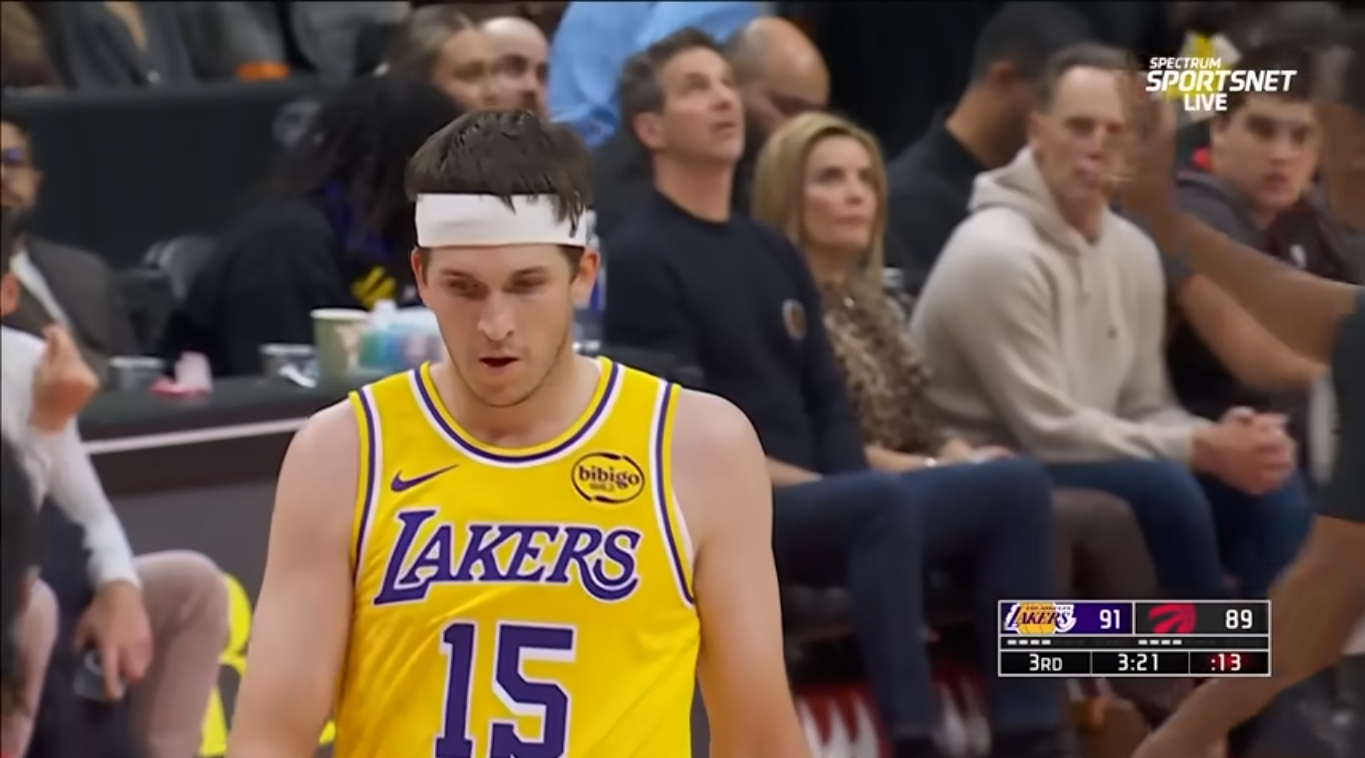
Reaves is experiencing a breakout season averaging career highs in points (27.8), assists (6.7), and rebounds (5.6) while flirting with the 50/40/90 club. The Lakers described his calf strain as “mild
Los Angeles Lakers guard Austin Reaves suffered a left calf strain and will be reevaluated in approximately one week, the franchise announced Friday. While calf strains routinely sideline NBA players for a minimum of two to four weeks, the Lakers characterized Reaves’ injury as “mild” a distinction suggesting potentially accelerated recovery timeline compared to typical calf injury management.
Reaves, 27, has experienced a remarkable breakout season before the injury, averaging career highs across multiple statistical categories: 27.8 points per game, 6.7 assists per game, and 5.6 rebounds per game. Those production levels position him among the NBA’s elite guards and have established him as a critical Lakers offensive component essential to championship aspirations.
The guard’s shooting efficiency has been equally impressive, flirting with entry into the exclusive 50/40/90 club achieving 50% from the field, 40% from three-point range, and 90% on free throws. Reaves currently sits at 50.3% field goal percentage, 36.9% from three, and 87.5% on free throws extraordinarily elite efficiency across all shooting categories.

When recent performance suggests underlying fatigue
Despite Reaves’ season-long excellence, he experienced a production dip over the Lakers’ past two games, averaging only 13.0 points on 28.1% shooting a dramatic decline from his season averages. That statistical deterioration suggested underlying fatigue or injury concerns preceding the official calf strain announcement.
Lakers coach JJ Redick acknowledged pre-injury that the recent schedule had accumulated physical and mental toll on Reaves. “Our performance team mentioned that the two games back-to-back [in Toronto and Boston] and then Philly again, those were three very taxing games in terms of his both intensity and workload,” Redick said, recognizing that consecutive demanding matchups had potentially compromised Reaves’ recovery capacity and physical resilience.
That assessment suggested the calf strain resulted from accumulated fatigue and schedule intensity rather than representing isolated traumatic injury. Back-to-back games against championship-level opponents in Toronto and Boston, followed by Philadelphia, created exhausting schedule that potentially predisposed Reaves to injury susceptibility.
When mild designation creates reevaluation timeline
The Lakers’ characterization of Reaves’ calf strain as “mild” carries significant implications for his return timeline. Standard calf strain management typically requires two to four weeks of absence from NBA competition, yet mild designation suggests possibility of accelerated recovery and earlier return authorization.
The one-week reevaluation timeline indicates medical staff confidence that Reaves’ condition could improve substantially during that period. That optimistic assessment positions potential return within two to three weeks rather than the typical four-week minimum associated with standard calf strains.
However, reevaluation doesn’t guarantee immediate return to play. Additional medical assessments following the one-week timeline could extend his absence if recovery doesn’t progress as anticipated or if symptom exacerbation occurs during interim recovery period.
The upcoming schedule implications
The Lakers face three games within the next week, all on the road: at Phoenix on Sunday, at Utah on Thursday, and against the Clippers next Saturday at the Intuit Dome. That compressed schedule creates challenge for Reaves’ recovery and medical staff’s ability to carefully manage his rehabilitation without competitive pressure accelerating return timeline.
Road-heavy schedules present additional complications for injured player management, including travel fatigue, varied practice facility access, and limited ability to maintain specialized treatment protocols. The Lakers must balance competitive necessity against medical prudence in determining Reaves’ participation across the upcoming three-game stretch.
The defensive urgency context
Reaves’ absence arrives at particularly problematic moment given the Lakers’ defensive deficiencies. Los Angeles has lost three of their past five games, with defense representing the primary culprit. The Spurs’ 35-point transition scoring performance Wednesday represented a season-high allowed by the Lakers evidence of systematic defensive breakdowns transcending individual player performance.
Coach Redick acknowledged the severity of defensive concerns and the need for organizational urgency. “I don’t think there’s anybody in that meeting room that thinks we’re a good defensive team right now, but I also don’t think there’s anybody in that meeting room who thinks we can’t be a good defensive team. We’ve got to get better.”
That perspective emphasized both the acute defensive problems and organizational confidence in improvement capacity. The Lakers scheduled a film session Friday specifically to address transition defense vulnerabilities and systematic execution failures that contributed to the Spurs loss.
When offensive firepower cannot substitute for defensive competence
Reaves’ offensive excellence has been essential to Lakers competitiveness throughout the season. His 27.8-point average provides scoring punch that supplements LeBron James and Anthony Davis production. Yet his absence will test whether the Lakers can maintain competitive defense without requiring his perimeter defensive contributions.
The timing of Reaves’ injury, coinciding with critical defensive deficiency and schedule intensity, creates organizational challenge requiring both compensation for his offensive production loss and defensive stabilization addressing the team’s primary weakness.
The championship window implications
The Lakers’ inability to maintain defensive competence while possessing elite offensive capability undermines championship viability. Reaves’ potential extended absence removes both offensive production and defensive reliability when the organization most needs comprehensive two-way contribution.
Whether the Lakers can address defensive problems during Reaves’ recovery period will determine whether his eventual return finds a team that has established defensive foundation or one still struggling with systemic defensive execution failures.