
As the end of 2025 approaches, it is abundantly clear this has been a year hot with big media and sports deals. And it’s a trend that should spill into the new year.
Consulting firm PwC (formerly Price Waterhouse Coopers) on Tuesday released its annual outlook for deal activity in the media and telecommunications industry, and discerned a notable uptick in the value of proposed tie-ups compared with 2024.
The last few months have witnessed a surge in large combinations, marking a 61% rise in deal value in the second half of the year, compared with the last six months of 2024, the firm said in the report.
Several deals this year have stood out:
Walt Disney Co. in January agreed to buy the majority stake of a small competitor, the sports channel distributor Fubo TV. The deal was finalized in late October, allowing Disney to combine its Hulu + Live TV business with Fubo. The deal included a $145 million term loan from Disney.
Charter Communications and Cox Communications announced a $34.5-billion merger in May that would unite Southern California’s two major cable TV and internet providers into one company that would market its services under Charter’s Spectrum brand.
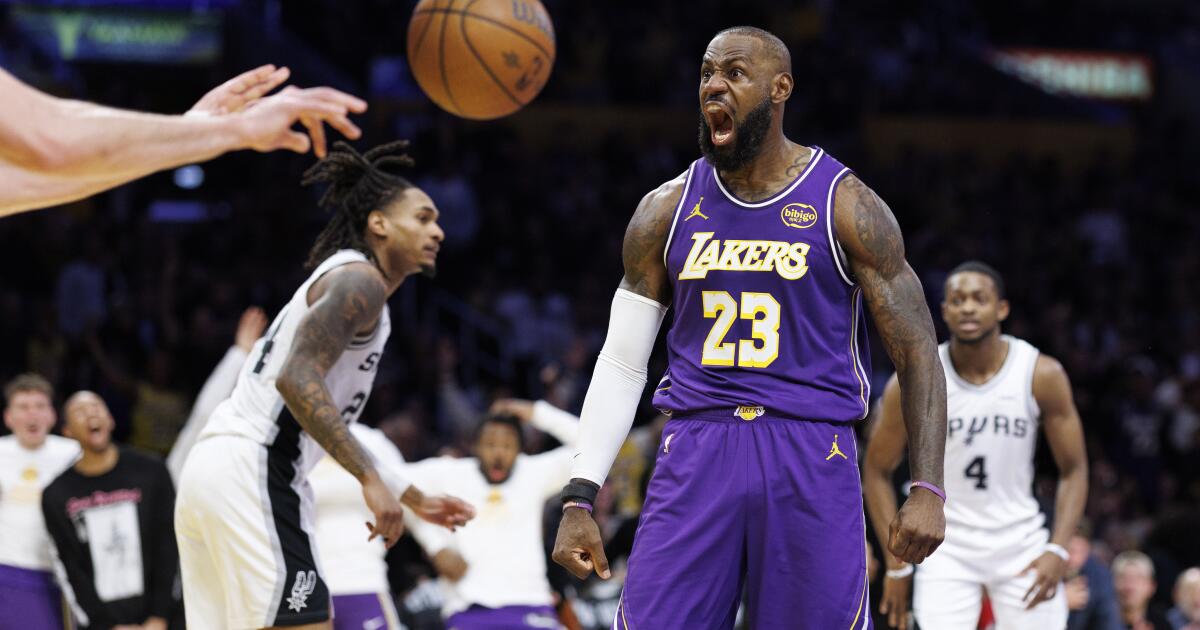
The Jerry Buss family in June agreed to sell its majority stake of the Los Angeles Lakers, a family-run business since 1979, to Dodgers’ controlling owner Mark Walter and TWG Global. The deal, which closed in October, valued the team at $10 billion — a record amount for a sports team.
NFL announced in August it would take a 10% ownership stake in Disney’s ESPN, a move designed to solidify ESPN’s relationship with the league for years to come. The two companies valued the stake at $2 billion.
Electronic Arts in September announced a $55-billion deal to be acquired by Saudi Arabia’s Public Investment Fund, Silver Lake private equity firm and President Trump’s son-in-law Jared Kushner’s Affinity Partners. The deal is expected to be the largest leveraged buyout ever.
Netflix has agreed to buy the Warner Bros. studios, HBO, HBO Max and the film studio’s historic lot in Burbank for $72 billion. Netflix also agreed to assume about $10 billion in Warner debt — pushing the deal value to $82.7 billion.
Netflix’s proposed takeover of Warner Bros., if approved, would reshape the industry.
“After years of expansion, the streaming market is decisively shifting toward scale and sustainability,” the PwC report found. “Netflix’s acquisition of Warner Bros. Discovery confirms that the stand-alone platform era is ending, with scale becoming the primary determinant of competitiveness.”
The deal is driven, in part, because the streaming market is reaching maturity and consumers aren’t interested in — or cannot afford — seven or more subscriptions to all the services available, PwC found. Streaming executives are trying to find ways to retain subscribers while increasing revenue, and consolidating with a competitor is one sure path.
The Netflix-Warner deal “sets a fresh highwater mark for streaming valuations,” the report found.
However, Paramount, which is backed by the billionaire Larry Ellison family, is refusing to accept defeat in the bidding war for Warner Bros. Paramount has bypassed Warner’s board and is appealing directly to shareholders in a so-called hostile takeover. asking them to accept $30 a share, which would value its purchase at $78 billion.
Paramount wants to buy all of Warner Bros. Discovery, including its linear cable channels, among them: CNN, HGTV and TBS. Netflix is only interested in the streaming and studios business. With debt, the enterprise value of Paramount’s proposal would top $108 billion.
The Warner auction may not be settled until early next year.
PwC found that investments in sports and acquisitions in the gaming space have been on the rise, and should continue to grow as live events draw big audiences. Money is flowing into team ownership, media rights and women’s leagues, the firm found.
“With a favorable M&A backdrop to 2026, we’re expecting a robust M&A market that should outpace the last several years,” PwC said in its report.
“Media organizations should also explore creative deal structures — including minority stakes, joint ventures, and content-sharing alliances — to secure access to essential assets and technologies without overextending their balance sheets.”