
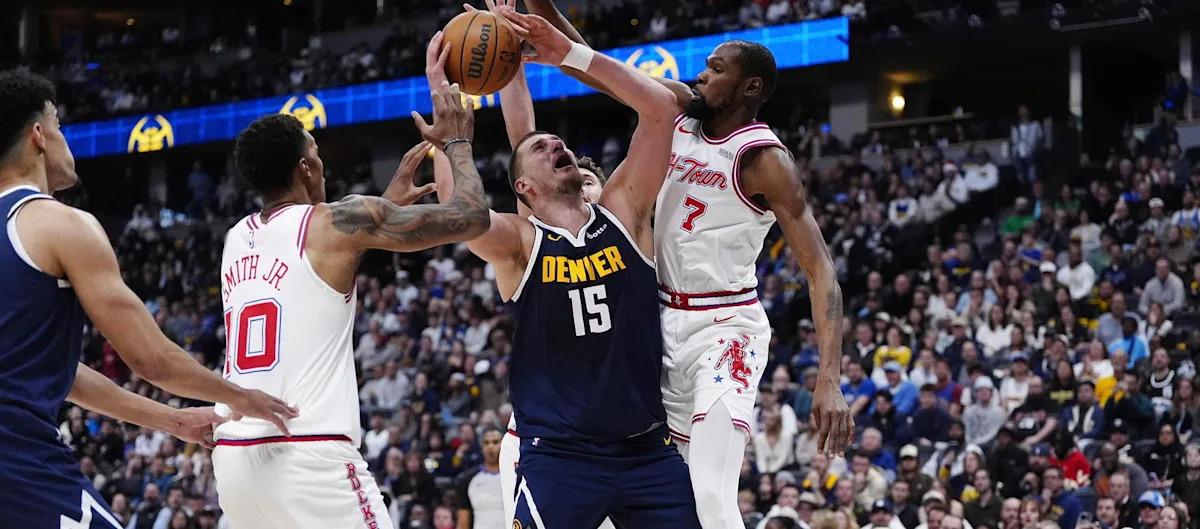
NBA teams are not typically throwing out compliments about opponents that make their night miserable. Respect doesn’t come in compliments. Rather, it will show up in adjustments, shortened rotations, and postgame comments about “physicality” and “pressure.” And right now, that’s exactly how the Rockets are being talked about within the league.
After Houston dragged Denver into overtime in an overly physical matchup, Nuggets guard Jamal Murray summed it up plainly in his postgame interview: “It’s tough for the refs to call both sides, like, dead even… they missed some calls on our end, and they missed some calls on their end.” It wasn’t praise, but it was acknowledgment- the kind that only comes from a game that felt heavy from start to finish.
Advertisement
Houston isn’t just winning games- they’re making them uncomfortable, even for top-ranking contenders.
The Rockets are sitting firmly in top-three Defensive Rating territory at 111.6 , and it looks exactly how it sounds- bodies on the ball, hands everywhere, and possessions that feel exhausting to survive. Nothing flows freely or even comes easy when faced with Houston. There’s real resistance in every set.
When teams prepare for Houston, the issue isn’t one matchup you can exploit, because there’s no one obvious soft spot. The Rockets rotate, recover, switch, and contest without giving relief. They also rank 6th in steals per game, which is how routine possessions suddenly turn into scramble situations. One lazy pass, and the entire possession flips.
Here’s the part that really gets noticed. They do all of this while playing slow. Houston ranks in the bottom five in pace, meaning opponents don’t get the comfort of speeding the game up to escape the Rockets’ pressure. It’s constant half-court stress, possession after possession.
Advertisement
That’s why the postgame language keeps sounding the same. It’s not necessarily praise, but it is consistently acknowledgment. Hearing coaches and stars say things like: “They were physical,” “They disrupted us,” “We had trouble getting into our sets,” tells quite the story about this young Rockets squad.
Houston keeps forcing teams to work for everything, and around the league, that kind of respect shows up long before the compliments ever do.
This is how playoff identities are formed long before April. Teams remember which opponents forced them into late-clock decisions and made them work for it from tip to buzzer. And they especially remember the ones that don’t need to dominate the score board to control the game.