
By Brendan Marks, C.J. Moore, Joe Rexrode and Justin Williams
San Antonio Spurs superstar Victor Wembanyama never played in college, so he never experienced the wrath of Duke’s Cameron Crazies or the mellifluous tones of Kansas’ “Rock Chalk, Jayhawk” chant.
But an idea from NBA commissioner Adam Silver on Tuesday could bring the NBA and college experiences together, in a way.
Before Tuesday’s NBA Cup final in Las Vegas, in which Wembanyama’s Spurs lost to the New York Knicks, Silver said the league was considering moving the site of the final in future seasons. In discussions with Amazon Prime, the media partner for the cup, Silver said “some storied college arenas” were suggested.
Where do we begin?
There is no shortage of options for the NBA if it wants to tap into the sport’s history or college basketball’s most hallowed venues. If this is the way the NBA wants to go, a few of The Athletic’s college writers have some recommendations.
(Venues are in alphabetical order.)
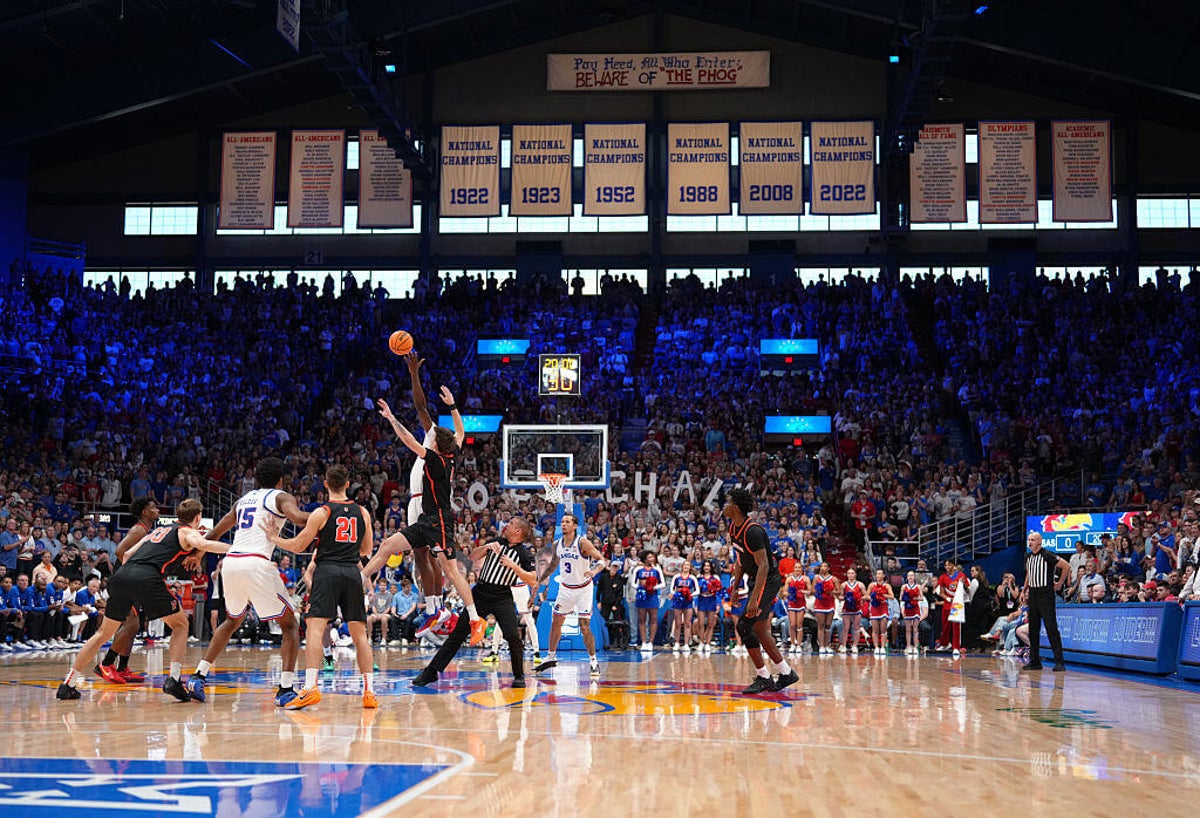
Allen Fieldhouse (Kansas)
“Allen Fieldhouse – It’s sort of like one of your best friends. And when they mention your best friend’s name, you know what you do? You smile.” -Former Kansas coach Roy Williams
For 70 years, Phog Allen Fieldhouse has been host to some of the greatest players and coaches in… pic.twitter.com/687gJO2yE9
— CBS Sports College Basketball 🏀 (@CBSSportsCBB) February 22, 2025
I’d argue it’s the greatest basketball venue in the world and a bucket-list place for any basketball fan. “The Phog” is now home to the original rules of basketball, and the place just oozes history. It’s equipped to host an NBA game, with an updated sound system and a recent facelift that improved the concourse area. It has also hosted preseason NBA games, including the Chicago Bulls during the Michael Jordan era.
With Kansas City a short drive down the road and with KC’s new airport, it’s a more inviting city to travel to than it used to be. This has to be at the top of the list. — C.J. Moore, staff writer
Breslin Center (Michigan State)
Breslin is the rare case of a storied college venue with pro arena features – it was built in 1989 with an upper deck, suites and a capacity of nearly 15,000. It replaced Jenison Fieldhouse, where Magic Johnson led the Spartans on a national championship run and where old timers will tell you the noise reached earsplitting levels that could not be replicated in Breslin. But this would work for the NBA Cup because of the amenities, while the closeness of the stands to the court still creates the potential for highly impactful fan behavior. — Joe Rexrode, senior writer
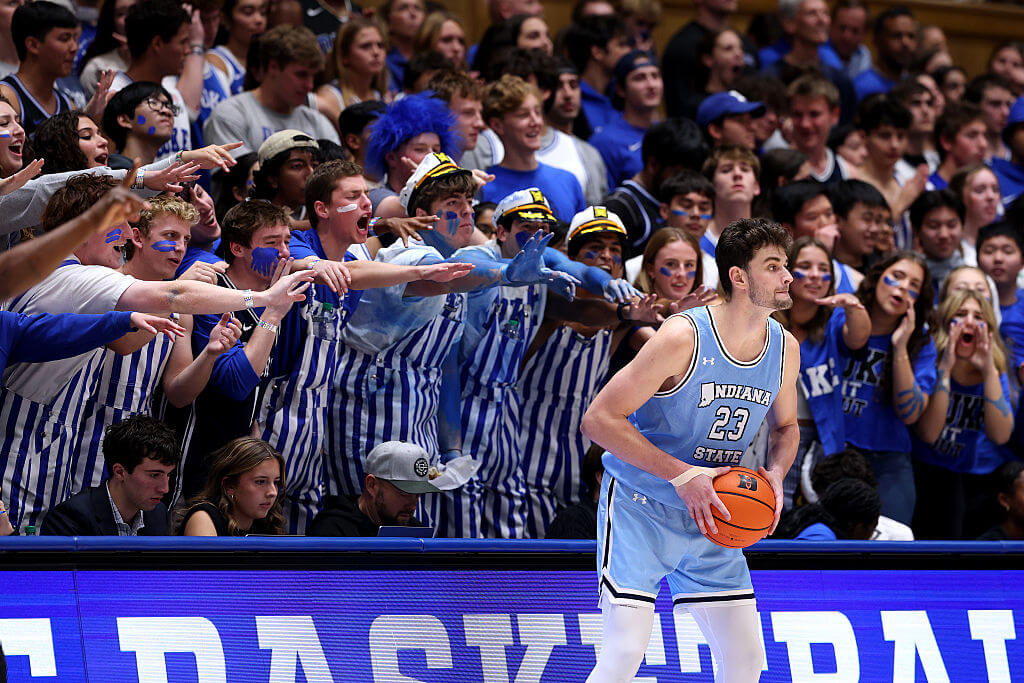
At Duke, fans are front and center. (Grant Halverson / Getty Images)
Cameron Indoor Stadium (Duke)
Maybe the most iconic venue in college basketball, and one intimate enough — with a capacity under 10,000 — to create a one-of-a-kind NBA atmosphere. For folks who’ve never visited, Cameron is a time capsule. There’s wood paneling everywhere, including around the jumbotron, and the wooden bleachers lining both sidelines are doused in decades’ worth of blue paint. And while the legendary gym did add air conditioning about 25 years ago, you can barely tell on the most raucous game days. Sign me up for the Cameron Crazies jeering NBA All-Stars during introductions, too: “Hi Wemby, you suck!” — Brendan Marks, staff writer
Hinkle Fieldhouse (Butler)
The sixth-oldest Division I arena still in use today (opened in 1928), walking into Hinkle is like entering another era. It’s like you’re playing the game in another era, too. The floor is not the original, but it’s from 1932, and there are actual dead spots. Inconvenience? Nah. It adds to the charm. It’s the former home of the Indiana state basketball tournament and where “Hoosiers” filmed the state tourney scenes. It also hosted games during the 2021 NCAA Tournament. That was not an ideal tourney — all the games were in Indianapolis and attendance was limited — but the coaches will tell you playing in Hinkle was one of the perks of that setup. — Moore
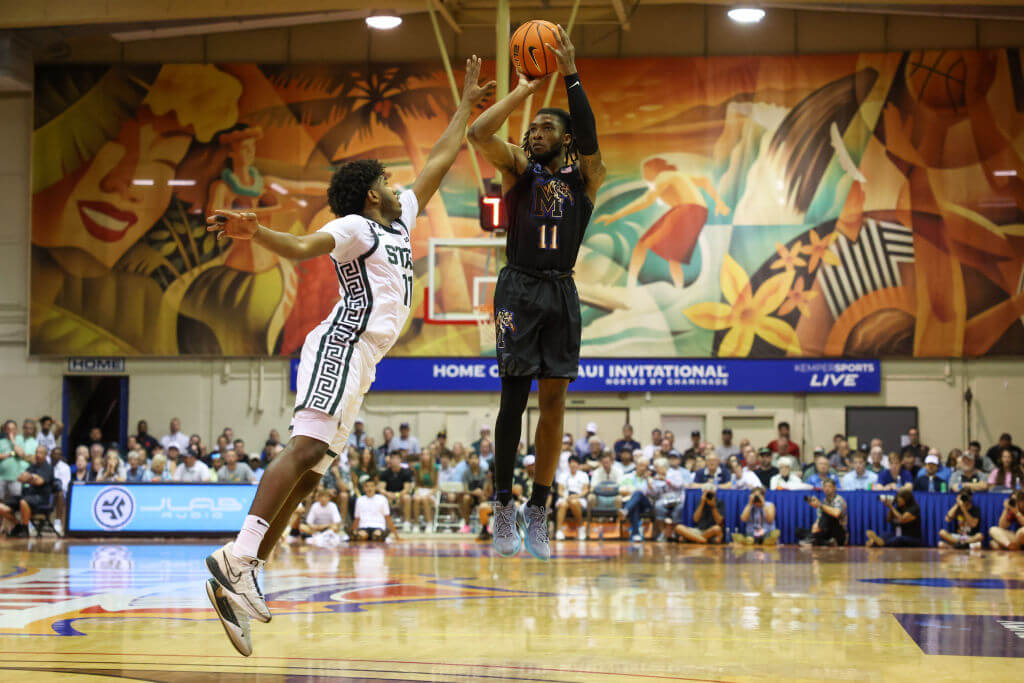
The Lahaina Civic Center, home to the Maui Invitational, would provide a unique getaway and cozy venue (2,400-seat capacity). (Darryl Oumi / Getty Images)
Lahaina Civic Center (Maui Invitational)
Other than the 2020 playoff bubble, when was the last time an NBA game was played in front of fewer than 2,500 people? But that’s the charm of the Lahaina Civic Center, the site of the annual Maui Invitational, one of college basketball’s most storied traditions. The venue, less than 200 yards from the Pacific coast, is the size of a high school gym, without any modern frills or luxuries. It’s a place for hoops in its purest form … and small enough that Wembanyama might have to bend at the hip to even get through the doorway. If “Maui magic” can turn random college basketball games into all-time classics, imagine how special it would be with some of the world’s best players. — Marks
Memorial Gym (Vanderbilt)
This unique, underrated basketball venue, built in 1952, creates a totally different experience for players and coaches because the benches are on the baselines. The entertainment value of watching NBA teams adjust to that would be reason enough to put an NBA Cup game in Memorial. The entertainment options provided by Nashville also count as a plus.
But if this is going to happen, some serious work will be needed. Vanderbilt has transformed much of its athletics campus, but Memorial’s seats demand refreshing. And a cramped press row way up in the rafters won’t do. — Rexrode

The Palestra will turn 100 years old in 2027. (Mitchell Layton / Getty Images)
The Palestra (Penn)
If the NBA wants “storied college arenas,” the Cathedral of College Basketball has to be on the list. Officially opened on Jan. 1, 1927, it’s the birthplace of March Madness, home of the Penn Quakers and decades of Philadelphia Big 5 matchups. The building has hosted more college hoops than any arena in the country, and tipped off the first NCAA Tournament — then operated by the National Association of Basketball Coaches — back in 1939. It’s a living museum, with history emanating from every square inch of the concrete bleachers and arched steel ceiling beams. Packing an old-school, 8,700-capacity venue in downtown Philadelphia would be quite a storyline for an event still looking to establish some roots. — Justin Williams, staff writer
The Pit (New Mexico)
If the NBA Cup is looking for vibes, roll the ball out at The Pit. The home of the New Mexico Lobos since 1966 is one of the most uniquely designed hoops venues in the country, with the court sitting 37 feet below street level — hence the name. It can make for a disorienting experience in perspective and volume. The tunnel from the locker rooms to the court actually slopes down in elevation, spilling out into a steep bowl of 15,000 seats reminiscent of European soccer stadiums. Combined with a low, flat ceiling, the sound ricochets and reverberates to deafening levels when the crowd gets into it. Famed hoops writer John Feinstein once compared players walking onto the court to “watching Roman gladiators emerging into a wall of sound.” — Williams