
Editor’s Note
This is the first part in a periodic series on the North Texas athletic department’s efforts to adjust to a new era as the rules in college athletics change.
There aren’t many people who have invested more in University of North Texas basketball, and the school’s athletics program in general, than Ernie Kuehne.
The longtime booster has his name plastered across the school’s basketball practice facility and an upgraded training room in the Super Pit, where he also joined with former Board of Regents Chair Brint Ryan to pay for a Jumbotron. These days, Kuehne — a man former UNT men’s basketball coach Grant McCasland called the “Godfather of UNT Basketball” after he donated in excess of $2.5 million to the program — is concerned about the path forward for the school’s athletics program, despite those improvements.
Kuehne, though, currently doesn’t plan to be a part of UNT’s attempt to deal with the new landscape that is set to arrive on July 1. A federal judge in the next few days is expected to approve the settlement in the House v. NCAA case that will usher in the revenue-sharing era in college athletics.

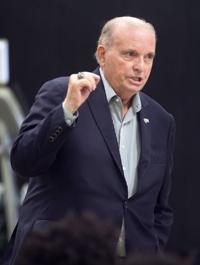
North Texas booster Ernie Kuehne has invested millions into the school’s athletics program but is considering his plans for the future as a new era approaches.
DRC file photo
“I’m not comfortable with the direction of college athletics at the present time and the disadvantage it has placed North Texas in,” Kuehne told the Denton Record-Chronicle. “I’m taking a step back and hoping that the university and the North Texas system decide to step up and allow us to be competitive. Once I’ve had an opportunity to evaluate the process, I will consider my options.”
Other longtime donors, including Denny Kalk, are optimistic and point to McCasland leading the Mean Green to an upset of Purdue four years ago in the NCAA Tournament as evidence of the program’s potential and reason to continue investing in it.
The contrast illustrates the challenge UNT faces as it looks to unite supporters behind its plan to field a competitive program.
“It’s as dynamic a time in college athletics as we’ve ever faced,” UNT athletic director Jared Mosley said. “We’re prepared. We’ve made an investment in athletics here over the last eight and a half years to put ourselves in a position to compete at the highest levels. We’ve got a road map that I think if we can stick to will serve us well.”
The Record-Chronicle spoke with more than a dozen people with ties to the program, including donors, school officials, coaches and athletes this spring to get a handle on where UNT stands and its prospects for the future.
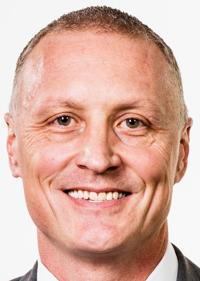
Jared Mosley
While there is no consensus on UNT’s outlook moving forward, those closest to the program agree — UNT’s ability to compete will depend on it adequately funding the program through revenue sharing and NIL opportunities.
“If we reach out to Dallas and Fort Worth corporations and build a stronger affiliation with the big money there, we could start to compete with the lower-level power conference schools,” Kalk said.
UNT laid out what it hopes is its path to that goal last week, when it announced changes to its fundraising structure, including setting up its Green Lights Fund. The fund was established to finance NIL activities for UNT’s athletes.
The school, beginning this summer, will manage NIL activities that were handled by booster-run collectives. UNT will have more to coordinate than ever before, including revenue sharing on top of providing scholarships.
UNT is targeting the American Athletic Conference’s minimum of sharing $10 million with its athletes over the next three years once the House settlement is approved. The school will face plenty of challenges as it looks to get there and field competitive teams in the AAC, a league it joined in the summer of 2023.
FedEx pledged $25 million over five years in NIL funding to Memphis, one of the standard-bearers in the AAC, in the spring of 2024. UNT also receives a smaller slice of the conference’s revenue than its long-standing members due to the parameters of its agreement to join the league.
UNT’s revenue share from the AAC was $4 million in the 2024 fiscal year, about half of the $7.8 million Memphis received, according to the schools’ financial reports to the NCAA. UNT’s share of conference revenue will gradually increase the longer it’s a member.
Mosley is confident UNT can ramp up fundraising to meet its NIL and revenue-sharing goals despite those challenges through several initiatives, including hosting concerts and events.
The school’s coaches pointed to those efforts as being critical for their programs.
“College athletics has always been an arms race,” UNT football coach Eric Morris said. “It used to be facilities. Everyone was pouring money into having the best of the best with that. It’s transitioned a bit to being able to reward kids with money in their bank accounts.”

Members of the North Texas men’s basketball team pose for a photo during an event with the Mean Green Collective in the fall of 2023. The group formed a name, image and likeness collective that bolstered the school’s basketball programs. The collective recently announced it will shut down as its donors shift their contributions to UNT’s in-house efforts to raise NIL funds.
Courtesy photo/GoMeanGreen.com
Making it work
UNT was forced to look for new avenues to fund its program over the last few months.
The school had two donor-run NIL collectives — the Mean Green Collective and the Light the Tower Collective — that funded NIL opportunities for athletes the last few years.
Kuehne and a group of boosters ran the Mean Green Collective. The Light the Tower Collective started as a booster-funded operation but later shifted to focus its efforts to soliciting businesses.
The NCAA’s decision to allow schools to share revenue and handle NIL operations has sent the groups in different directions.
UNT has encouraged donors who contributed to both collectives to move their donations to the school’s in-house efforts to fund NIL opportunities for athletes through the Mean Green Athletic Fund. That fund will allow donors to help cover UNT’s scholarship costs as well as contribute to the Green Lights Fund.
The Mean Green Collective, which has largely backed UNT’s basketball programs, announced its plans to shut down last week.
Former UNT football player JP Hadley serves as the head of sales and development for the Light the Tower Collective, which is run by TheLinkU. That collective is also shutting down, but Hadley plans to continue his efforts to better fund UNT athletics through an arrangement with the university.
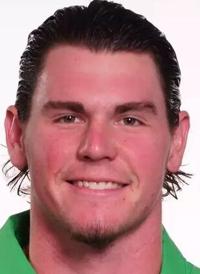
JP Hadley
“My role with the university will be finding unique and innovative ways to bring funding to the athletic program,” Hadley said. “I was offered a position to help directly with the MGAF [Mean Green Athletic Fund], but I felt my role as a boots-on-the-ground salesman for TheLinkU and our partner school UNT is a better fit.”
Hadley will work on partnerships with businesses that can save them money. Those businesses can then donate those funds to the UNT athletic department and receive a tax write-off.
Hadley pointed to companies that handle credit card transactions and donate a portion of the proceeds to a school’s NIL fund as an example of the kind of deals he will pursue.
The Light the Tower Collective enjoyed some success working with businesses in the past while having UNT athletes appear at events.
“I’m beyond proud of what we did,” Hadley said. “Maybe we didn’t raise the most money in the conference, but we had players who benefited from the hard work of myself and our staff.”
The Mean Green Collective distributed more than $500,000 to UNT athletes in two years with most of that money going to the school’s basketball programs. The Light the Tower Collective raised approximately $515,000 and wrote more than 300 marketing/NIL contracts over the year Hadley oversaw the group.
“Ernie and the other people who have helped with NIL have helped our program,” UNT women’s basketball coach Jason Burton said. “He’s always believed in North Texas’ ability to have elite golf and basketball teams.”
Desiree Wooten, one of the stars of UNT’s women’s basketball team, credited the school’s collectives with helping her thrive last season when she was named to the All-AAC second team.
“We have a lot of expenses as college students,” Wooten said late in the season. “It makes us feel good to be supported. NIL has helped me.”
A few weeks after Wooten talked about benefiting from NIL at UNT, she transferred to Colorado.

Forward Brenen Lorient was one of UNT’s most marketable players after last season and made the jump to West Virginia, which offered more money.
The challenges ahead
For those who worked on UNT’s NIL collectives, the departures of players like Wooten have been tough. It’s why some have lingering doubts about the school’s path to success.
Dozens of boosters provided thousands of dollars to athletes, and UNT was still pillaged by programs higher up the food chain in college athletics.
The school’s football team lost its last two starting quarterbacks — Chandler Rogers and Chandler Morris, to California and Virginia, respectively. Each of UNT’s last three first-team all-conference selections in men’s basketball who had eligibility remaining also transferred.
The schools that landed those players offered NIL deals UNT couldn’t match.
Brenen Lorient followed Ross Hodge to West Virginia after the Mountaineers hired Hodge as their new coach this spring. Jason Edwards landed at Vanderbilt and Tylor Perry at Kansas State the previous two years.
UNT boosters formed the Mean Green Collective after Perry departed in the hope of preventing similar defections. Those efforts haven’t stemmed the tide.
“It’s tough to see those great players walk out,” longtime UNT donor Virgil Strange said. “That was the problem I had with NIL to start with. You could get kids who come here for a year, someone offers them more money, and they’re gone. It’s like a bottomless pit. There’s no loyalty.”
The Mean Green Collective signed Lorient to an NIL contract. Those involved with the negotiations declined to disclose what the group was paying the star forward, but multiple people with ties to the program said Lorient received a $1.2 million offer from West Virginia boosters that UNT’s supporters couldn’t match.
Diann Huber recalled her conversation with a member of the UNT men’s basketball team at the semifinals of the National Invitation Tournament last season as an example of the downside of NIL.
The player was looking for additional money beyond what UNT had agreed to pay him late in the Mean Green’s postseason run.
“I explained to him that we’re not going to pay more and that we had met our commitment,” Huber said without identifying the player. “I told him that we had given him a national stage and to make the best of it. He did, and it was very lucrative for him.”
Kalk was among a few UNT donors who said they are optimistic that the school taking over management of NIL will help it lay out an advantageous path forward.
The challenge for UNT is to have the rest of its donors follow Kalk’s lead and buy into the program’s vision.
Mosley has often compared funding all the aspects of a college athletics program — improving facilities, hiring elite coaches and now handling NIL — to a puzzle. All the pieces are important. He has encouraged the school’s supporters to contribute to aspects of the total picture they are passionate about.
Mark Miller has long been an ardent supporter of the program and has contributed financially to its growth. He plans on moving his NIL contributions to UNT’s in-house efforts.
“I don’t like NIL, the theory or anything about it. Rick Villarreal said in our very first meeting that you have to look at this like it’s a part of the equipment now to play sports,” Miller said of the former UNT athletic director, who helped set up the Light the Tower Collective. “It’s like shoulder pads, cleats, a helmet or whatever. It’s something every team has to have. And, like it or not, it’s here to stay.”

North Texas is counting on a balanced approach appealing to recruits once revenue sharing in college athletics kicks off. UNT believes the combination of top coaches, great facilities as well as opportunities to benefit financially will appeal to players. That combination was what helped lure Sam Jose State transfer guard Will McClendon to UNT.
UNT athletics
Will it make a difference?
UNT has spent the last few years developing other aspects of its program while assembling the puzzle Mosley has talked about.
The school has invested millions in facilities, improved the operating budgets for its programs and increased coaching salaries.
The school’s hope now is that it can put enough in place with revenue sharing and NIL opportunities to round out what it offers athletes and allow its programs to thrive.
That well-rounded approach resonated with a few of the top players who committed to UNT in the last few months in a variety of sports, including Will McClendon. The San Jose State transfer guard was among the most highly regarded players to commit to join UNT’s men’s basketball program heading into its first season under new coach Daniyal Robinson.
“NIL wasn’t the main factor in my decision,” McClendon said. “It’s a part of the game these days. Everything had to make sense. I had no problem turning down larger amounts of money to come to North Texas to play for the staff.
“With my work ethic, my goals and the opportunities at North Texas, the money aspect of it will take care of itself.”
David Terrell Jr., a guard who transferred from UTEP to play for Robinson, and Ugonna Nnanna, an offensive lineman who transferred from Virginia to play for Morris, told similar stories about what led them to UNT.
“Coming here was about finding the best situation for me,” Nnanna said. “NIL was just an add-on piece. I wanted to come to a place with a family atmosphere.
“I trust coach Morris and believe in what he’s doing.”
Terrell said he didn’t want his decision to be just about money. Like McClendon, he turned down larger offers to play for UNT.
Whether UNT’s administration and coaches, as well as its fans and donors, have done enough to put the school in a position to succeed remains to be seen. What UNT has was enough to convince Robinson to leave Cleveland State to take over the school’s men’s basketball program following Hodge’s departure.
“I have great confidence in Jared and our university with the plan they’ve laid out,” Robinson said. “We’re ahead of the curve and are going to be creative. We’ll continue to dive into the community to grab the support we need, but I feel like we have everything we need here to be successful.”
UNT will soon find out if that is the case. The boosters who played a key role in the growth of the school’s athletics program over the years are anxious — and in some cases skeptical — about UNT’s ability to thrive in a new era.
“That’s the $64 million question,” Strange said. “I don’t know how anyone is going to compete except top-tier universities that have baskets of NIL funds from very large donors. UNT doesn’t have that.”