
Photo by Brian Fluharty/Getty Images
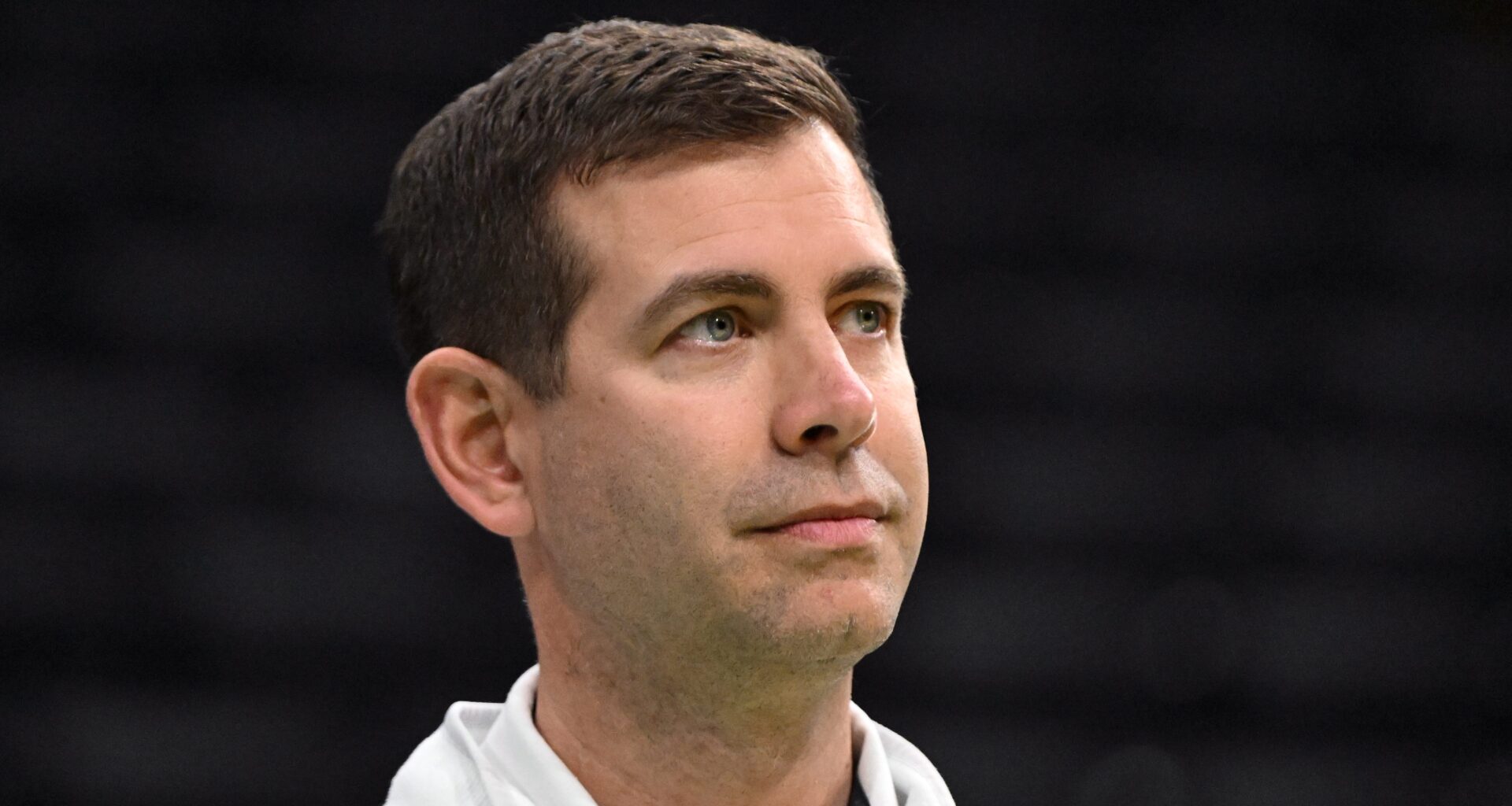
Brad Stevens, Boston Celtics
The Boston Celtics have forced the league to take notice. At 18–11, Boston sits third in the Eastern Conference after winning three straight games, most recently pulling off a 20-point comeback win against the Indiana Pacers. That surge has come during a season widely framed as a bridge year, and without franchise cornerstone Jayson Tatum.
Instead of drifting toward the middle of the standings, the Celtics have remained firmly in the mix near the top of the East. The consistency has been real, and the results are beginning to shape how the front office may approach trade season.
With Boston continuing to exceed expectations on the floor, attention behind the scenes has turned toward financial flexibility. Long-term positioning. Avoiding decisions that compromise what comes next.
That backdrop has brought one trade pitch quietly into focus.
Why Anfernee Simons Is Part of the Conversation
Anfernee Simons has not entered trade discussions because of his play.
His role has been stable, and Boston’s recent success has not hinged on any single addition. The Celtics have leaned on balance, defensive structure, and depth as they’ve climbed the standings.
The conversation surrounding Simons is tied to timing and contract structure.
As Boston navigates a bridge season while keeping an eye on future repeater tax penalties, the front office has remained mindful of how salary slots align moving forward. Simons’ deal represents one of the more movable contracts on the roster if the Celtics decide to adjust their financial positioning without touching their core.
That reality has placed his name on the edge of deadline discussions, particularly as teams outside the playoff picture begin to reassess their direction.
The Trade Framework Being Discussed by the Celtics
One trade pitch outlining that path was proposed by FanSided’s Jack Simone, who identified the Utah Jazz as a logical trade partner for Boston in a multi-team construction.
In the proposed framework, the Celtics would move Simons as part of a three-team deal involving Utah and the Phoenix Suns. Boston would take back Kyle Anderson and Nick Richards, a pair of versatile veteran defenders, in a move lowering its overall salary while maintaining roster depth.
Utah would receive Simons along with Chris Boucher and draft compensation, while Phoenix would move Georges Niang and add a second-round pick.
The appeal for Boston lies less in reshaping the rotation and more in what the structure accomplishes. The Celtics would shed roughly $15.8 million in salary, move below the luxury tax line, and preserve flexibility heading into the offseason.
Anderson’s contract, in particular, would give Boston a useful mid-range salary slot without committing to long-term money. Combined with existing deals already on the roster, it would provide the front office with optionality rather than restriction.
Kyle Anderson’s basketball IQ and leadership made up for the lack of point guard play on the Wolves
Why the Financial Angle Matters Now
Boston’s strong start has not altered the organization’s long-term priorities.
Even with the Celtics sitting third in the East, there has been little indication the front office plans to chase short-term upgrades. The roster has held together better than expected, allowing Boston to evaluate the season without pressure to overcorrect.
Getting below the tax line would protect Boston’s flexibility moving forward, particularly as the Celtics continue to align around their next championship window once Tatum returns to full health. That reality has made teams like Utah, with cap space and a longer view, natural facilitators in multi-team constructions.
Moves like this are not about maximizing the current season. They are about protecting the one that follows.
Final Word for the Celtics
This trade pitch does not suggest urgency. It reflects awareness.
Boston has shocked the league with its early-season performance, but the organization’s approach has remained steady. Measured decisions. Financial discipline. Long-term alignment.
If the Celtics act at the deadline, it is becoming increasingly clear what type of move they are willing to consider. Quiet. Calculated. And shaped by what comes next, not just what is directly in front of them now.
Keith Watkins Keith Watkins is a sports journalist covering the NBA for Heavy.com, with a focus on the Golden State Warriors, Boston Celtics, and Los Angeles Lakers. He previously wrote for FanSided, NBA Analysis Network, and Last Word On Sports. Keith is based in Bangkok, Thailand. More about Keith Watkins
More Heavy on Celtics
Loading more stories