
INGLEWOOD — For one night, the LA Clippers did the thing everyone’s been begging for: they played a complete game.
From the opening tip through the final horn, the Clippers controlled pace, protected the ball, and most importantly, didn’t disappear after halftime. In a 128–108 win over the Houston Rockets, the Clippers delivered one of their most cohesive performances of the season, led by a dominant night from the King of LA, Kawhi Leonard.
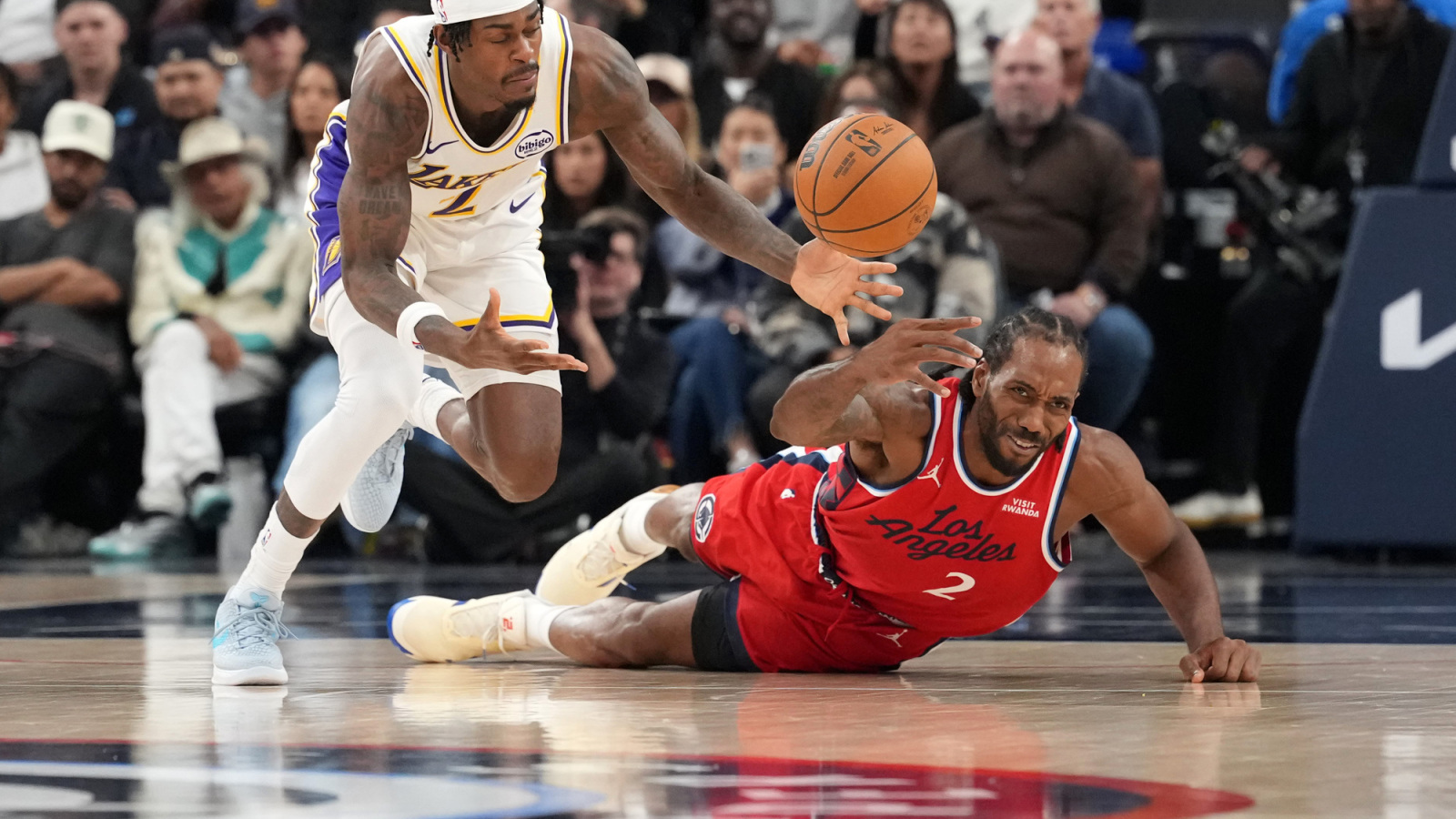
This win also marked the Clippers’ second straight statement victory against Western Conference competition. Just days earlier, they held the Los Angeles Lakers to just 88 points. Now, they followed it up by controlling Houston on both ends of the floor.
This wasn’t just a win.
This was a response.
First Half: Connected Basketball, Real Defense
The Clippers opened the game playing sharp, purposeful basketball—forcing Houston into tough shots and staying disciplined defensively.
The effort showed up where it usually doesn’t: decision-making.
They committed just two turnovers in the first half, a quiet stat that spoke loudly. Ball movement was crisp, rotations were clean, and the Clippers weren’t beating themselves.
Leonard set the tone early—facilitating, attacking mismatches, and doing the little things. He wasn’t forcing the moment; he was controlling it.
James Harden complemented that control perfectly, keeping pressure on Houston with downhill attacks, controlling the tempo, and getting the Clippers into their offense when things could have stalled.
Harden finished with 29 points, playing within the flow, making the right reads, and allowing Kawhi to stay aggressive without forcing anything.
Meanwhile, Kris Dunn brought his usual defensive intensity, disrupting lanes, applying ball pressure, and doing the thankless work that doesn’t always show up in headlines but absolutely shows up in winning basketball. Dunn added 11 points, but his defensive impact set the tone early. Little KD was making it difficult for big Jalen Green.
The Third Quarter Problem… Addressed?
Let’s be honest: the third quarter has haunted this team.
Every team in the league knows it. Fans know it. The Clippers know it.
But this time, they came out of halftime with urgency instead of hesitation. The ball didn’t stick. The defense didn’t soften. And the energy didn’t dip.
You even raised a real, honest question in real time: how much of the Clippers’ third-quarter struggles at home come from the crowd not being fully back in their seats yet? Not effort. Not preparation. Energy.
When the third quarter starts and the building isn’t full, the team doesn’t get that immediate jolt. It’s not an excuse — but it’s a factor. The message was simple: fans have to be back in their seats to start the third quarter if the Clippers are going to win at home.
Leonard elevated his aggressiveness, Harden kept the pace steady, and the Clippers turned what has been their weakest stretch into a period of control.
Kawhi Leonard: Just Doing Kawhi Things
Leonard finished with 41 points on 16-of-23 shooting, adding 8 rebounds and 5 assists, barely wasting a possession. Triple-teamed? He passed. Single coverage? He scored. Momentum moments? He owned them.
This wasn’t about chasing stats—it was about leadership.
When the Clippers needed calm, he gave them calm. When they needed force, he gave them force.
Supporting Cast Stepping Into Roles
This win wasn’t just about star power.
John Collins delivered important minutes, finishing with 13 points, filling multiple roles, battling inside, and scoring when needed. His presence helped stabilize lineups and gave the Clippers flexibility against Houston’s size and spacing.
Dunn continued to set the defensive tone, while younger players were able to get meaningful minutes late as the Clippers maintained control.
It wasn’t about who was missing—it was about who fit together.
That’s been the puzzle all season.
Pregame Perspective: Where the Optimism Comes From
That optimism didn’t come out of nowhere.
Before the Clippers’ win against the Lakers, I asked head coach Tyronn Lue in pregame—despite the record—what was keeping him optimistic.
He pointed first to health, noting the team had played better basketball in four of the last five or six games, but he was clear about the real issue.
Over the last 10 games, the Clippers were +3 in first halves but –18 in second halves, making the third quarter the clear swing point. His message was direct: whatever it takes to come out of the locker room better in the third quarter, that’s what has to change.
Against the Lakers, that change showed up defensively.
Against Houston, it showed up on both ends of the floor.
For the first time in a stretch, the Clippers didn’t just talk about fixing the third quarter—they played like it mattered.
Perspective Matters: Recovery Mode, Not Contender Talk
Let’s keep this grounded.
This doesn’t erase the rough start. The Clippers are still digging out of a hole, still recovering from a wasted portion of the season. They’re not in contender mode yet—they’re in recovery mode.
That matters.
This team has to take this one game at a time, without skipping steps or jumping ahead of where they actually are. There’s still work to do, still consistency to build, still habits that need to stick night after night.
But wins like this show how recovery can happen.
Health trending in the right direction, cleaner execution, shared energy, and joy in playing the game.
When the Clippers have fun, they win.
When they protect the ball, they win.
When Kawhi is healthy, everything looks different.
Recovery doesn’t mean settling.
It means building the right way.
Final Word
And yes — Clippers fans left happy.
Not just because of the win, not just because Kawhi dropped 41, but because The Wall did its job. When the opposing team missed two free throws in the fourth quarter, everyone in the building — Clippers fans and opposing fans included — earned a free Chick-fil-A sandwich.
That moment mattered.
The Wall brought the pressure. The misses followed. And the energy in the building shifted immediately. It’s one of those in-arena details that doesn’t show up in the box score but absolutely shows up in momentum.
This was one game — but it was the right kind of game.
A game where the Clippers looked connected.
A game where optimism finally had evidence behind it.
A game that showed what this team can be when habits align.
Game by game.
Energy over expectations.
How about them Clippers.