
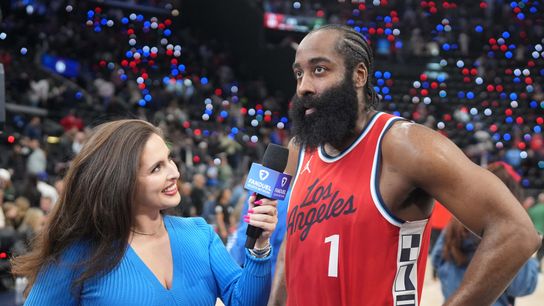
LOS ANGELES — FanDuel Sports Networks, the regional sports network group formerly branded as Bally Sports and once part of the Fox Sports regional empire, is at risk of shutting down in the coming months unless a proposed sale to global sports streaming platform DAZN is finalized by January, according to multiple reports. The potential collapse could dramatically impact how fans watch local broadcasts for the Los Angeles Clippers, Los Angeles Kings and Los Angeles Angels, three major professional franchises whose live games have relied on the networks for years.
Last year the Anaheim Ducks left the FanDuel Sports Networks to partner with the streaming service Victory+ and local over-the-air station KCOP-TV, making their games accessible to fans for free.
The crisis is the latest chapter in a turbulent era for regional sports networks, which have struggled to adapt as viewers shift from traditional cable and satellite television to streaming platforms. The FanDuel-branded RSNs have already endured several years of instability, including the bankruptcy of Diamond Sports Group, which previously owned and operated the Bally Sports networks before FanDuel acquired naming rights in October 2024. That acquisition was intended to stabilize the networks through expanded distribution and digital modernization, but financial uncertainty has persisted under Main Street Sports Group, the current operator of the networks.
The immediate alarm bell sounded earlier this month when Main Street missed a scheduled rights payment to the St. Louis Cardinals, a team whose local broadcast agreement was held by the same RSN umbrella. That missed payment triggered concern that other rights-fee obligations across the NBA, NHL and MLB could soon be in jeopardy as well. FanDuel Sports Networks collectively hold broadcast rights to 29 franchises across the NBA, NHL and MLB. If the DAZN transaction does not close by January, Main Street plans to wind down and dissolve the networks at the conclusion of the current NBA and NHL regular seasons. The NBA, according to reporting, is preparing for the possibility that the networks could fold even before the season ends, raising the specter of mid-season broadcast disruption.
For the Clippers and Kings, both of whom are in the midst of their seasons, a sudden dissolution would be unprecedented. The teams’ home games and many of their road broadcasts are carried not just on traditional television through FanDuel Sports Network’s linear channels, but also through the FanDuel Sports Network streaming app, which has served as the primary digital access point for in-market viewers without a cable subscription. The Angels, whose 2025 season broadcasts were also carried on the networks, would face similar disruption when spring training and the 2026 MLB regular season begin.
Industry analysts say the impact would extend beyond individual teams, striking at the foundation of the RSN model itself. Cord-cutting has eroded the subscriber base that once made regional sports television among the most profitable assets in local media. Sports-rights fees have continued to escalate even as distribution revenue has fallen, creating a widening gap that many networks can no longer bridge. Without DAZN’s acquisition — which would likely shift the RSNs to a streaming-first model under DAZN’s global infrastructure — the networks have no clear path to long-term solvency.
Should the networks shut down, the teams’ broadcast rights would revert to their respective leagues. In MLB, a similar scenario unfolded when the league assumed local broadcast production for six teams whose RSNs dissolved or entered bankruptcy. In those cases, MLB produced games in-house and made them available through league streaming platforms, while also securing local distribution via cable, satellite or over-the-air television for viewers unwilling or unable to stream. Sources familiar with league planning believe the NBA and NHL could follow a similar playbook if FanDuel Sports Networks dissolve. However, the transition would take time and could involve interim blackout periods, short-term sublicensing agreements or temporary streaming windows while leagues assemble new production and distribution pipelines.
The potential collapse also plays into Commissioner Rob Manfred’s long-stated vision for the future of baseball broadcasting. Manfred has advocated for consolidating local and national media rights into a single, league-controlled package by the end of 2028, when the league’s current national television agreements expire. His theory: selling local and national rights as one inventory block could yield a larger collective deal than the current model, in which clubs sell local rights independently while the league negotiates national rights separately. The notion has support in some corners of the industry, but opposition from top-market franchises is expected to be fierce. Teams such as the Dodgers, Yankees, Mets, Red Sox and Cubs all hold partial or complete ownership interests in their own RSNs or independent local broadcast ventures, a model that generates unequal revenue distribution but offers teams control and upside not guaranteed in a league-pooled structure.
The situation could spill into labor negotiations next winter as well, when MLB and the MLB Players Association meet for collective bargaining talks. Local media revenue affects the leagues’ overall economics, which in turn shape payroll trends, luxury-tax thresholds, revenue-sharing formulas and franchise valuations. If DAZN does not close its purchase, the leagues could be forced to determine short-term local broadcast models while simultaneously debating long-term centralization plans that could reshape sports television for decades. There is no easy resolution, and uncertainty remains high.
Fans who have relied on FanDuel Sports Networks to watch Clippers, Kings and Angels games are left in limbo as January approaches. The networks’ possible collapse would mark one of the most significant local media disruptions in recent U.S. sports history, a reminder that even essential sports-broadcast infrastructure is no longer immune to the financial pressures reshaping the media landscape.
With negotiations ongoing and deadlines tightening, teams, leagues and fans can only await developments.