
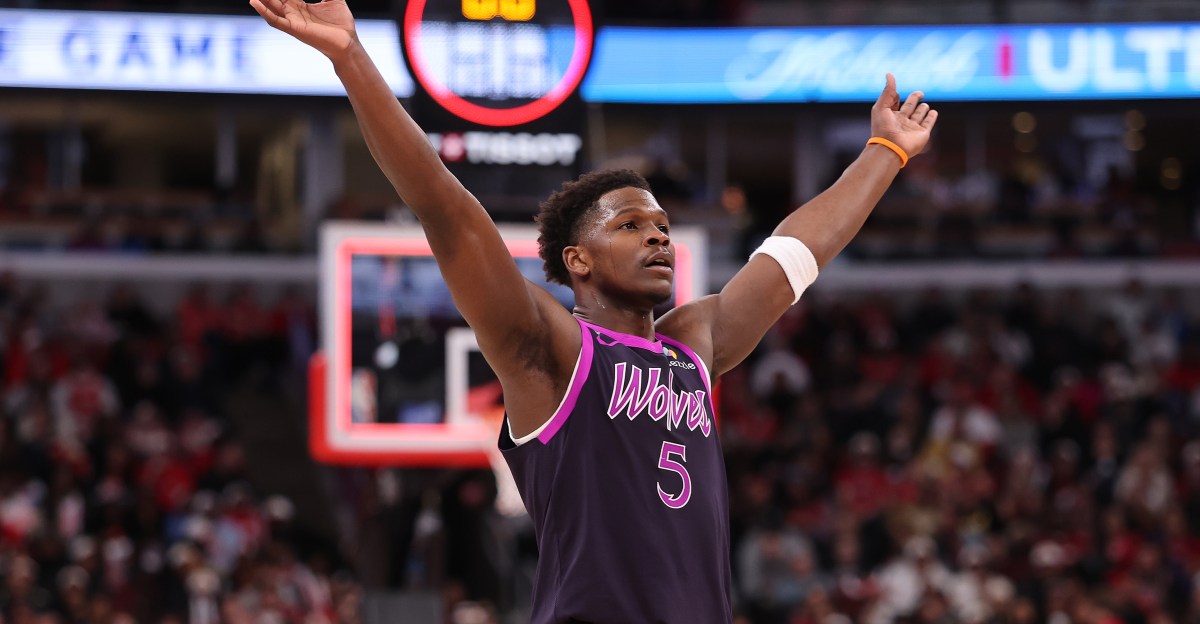
The Wolves at the Crossroads: The Season So Far and What Must Change in 2026
As the calendar turns from 2025 to 2026, it feels like the perfect moment to take a deep breath, step back, and assess what this Timberwolves season has actually been, not just in wins and losses, but in identity, trajectory, and possibility.
If you’ve been riding this season the way Wolves fans always do, you know the deal: this team doesn’t do calm. There is no steady middle ground. Minnesota exists in a permanent state of emotional whiplash, swinging from looking like a future champion one night to a team that can barely run the floor without tripping over its own shoelaces the next. It’s exhausting. It’s exhilarating. And at 33 games in, it’s starting to form a pretty clear picture of who these Wolves are and what still separates them from the league’s true elite.
The Promise of Continuity
The year began with something this franchise has rarely enjoyed: continuity. The Wolves entered the season staring at the second apron, with just enough financial breathing room to retain Julius Randle and Naz Reid. Nickeil Alexander-Walker became the unfortunate cap casualty, a painful but logical sacrifice given the team’s supposed guard depth. The theory was simple: this roster had just reached back-to-back Western Conference Finals, found its identity late last season, and was peaking at exactly the right time in March, April, and May. Keep the core intact, build on that momentum, and you might be staring at the best season in franchise history.
The blueprint depended on several pillars holding firm. Anthony Edwards continuing his climb toward superstardom. Julius Randle growing into his dual role as scorer and facilitator. Rudy Gobert staying healthy and anchoring the paint. And the young trio of Rob Dillingham, Terrence Shannon Jr., and Jaylen Clark not merely filling NAW’s minutes, but injecting even more energy and depth.
Fast-forward to today: the results are… complicated.
Minnesota currently sits sixth in the Western Conference, the very same place they finished after 82 games last season. But the path here has been very different. Last year they flirted with the play-in early dropping down into the 8th and 9th spot at times. This year they’ve lived in sixth almost wire-to-wire. And crucially, the margin for upwards movement is razor thin: the Wolves are only 2.5 games behind San Antonio for the No. 2 seed. A minor uptick in performance could radically alter their playoff path.
And that path matters. Avoiding the Oklahoma City Thunder side of the bracket is not a luxury; it’s a survival tactic. OKC, even through recent stumbles, remains in a class of its own. Delaying that playoff matchup as long as possible gives Minnesota its best shot at a deep run and perhaps even the franchise’s first Finals appearance.
So what’s holding them back from climbing?
The Schedule Tells the Story
Minnesota is 21–12, which puts them just shy of winning two-thirds of their games. They’ve become experts at something that once haunted them: playing inferior competition. This iteration of the Wolves is excellent at punching down, with only three losses to sub-.500 teams:
an overtime collapse in Sacramento,a lazy home loss to Memphis where they missed 31 threes,and the recent post-Christmas sleepwalk against Brooklyn.
Otherwise, when the Wolves hold the talent edge, they take care of business. But against the league’s real heavyweights? That’s where the ceiling appears. Against teams currently ranked in the top six of their conference, Minnesota is 4–7:
0–3 vs Denver0–2 vs Lakers1–1 vs OKC1–1 vs Knicks1–0 vs Spurs1–0 vs Celtics
Of those 11 games, I count five as close contests (OKC x2, BOS, LAL, DEN on Christmas) where perhaps one shot, one bounce, one whistle changes the outcome. Of the six non-close games, the Wolves went 2–4. Minnesota’s two sizable wins happened to come against teams fighting the injury bug, with the Wolves defeating the Spurs without Wembanyama and the Knicks without Brunson. On the flip side, two of the blowout losses came to Denver and New York when Edwards was out or limited returning from injury. Minnesota also lost to Denver on the second night of a back-to-back where the game was a 1-point affair after three quarters, only to have the wheels come off in the 4th, when the Wolves’ tired legs gave way. Only the second game of the season against the Lakers ended with Minnesota being handed a lopsided loss while at full strength.
While the Wolves’ record against teams with winning records isn’t pretty, they aren’t getting embarrassed. Rather, they appear to be a team that’s almost there, but not quite.
The Edwards Injury Factor
Anthony Edwards missed eight games with hamstring and foot issues, plus the visibly compromised return at Madison Square Garden. Their record in those nine games: 5–4. Respectable. With Edwards healthy, Minnesota has gone 17–8 for a .680 winning percentage, which, if maintained for the season to date, would place Minnesota neck-and-neck with Denver for the No. 3 seed.
Health matters. But Minnesota can’t hide behind it. They’ve benefited from plenty of injury luck too, playing a plethora of games against teams missing their biggest stars. Putting aside the Pacers without Halliburton and the Celtics without Tatum, as those are potentially season-long absences, the Wolves have notched eight wins against depleted opponents.
Kings without SabonisMavs without DavisSpurs without WembanyamaPelicans twice without Zion (surprise, surprise)Bucks without GiannisKnicks without BrunsonLast night’s Bulls game where White and Giddey exited early
And yet they’ve also stumbled badly in the opposite direction, losing to depleted teams:
Kings without SabonisSuns without BookerGrizzlies without MorantChristmas Day in Denver, where Jokic and Murray were healthy, but almost no one else was
In the end, the Wolves have likely benefitted from the injury bug more than they’ve been hindered. You can’t use Edwards’ absence as an excuse for underperformance, but if employee number five can stay healthy the rest of the way, it’s probably worth a handful of wins that Minnesota desperately needs to climb the Western Conference ladder.
The Ones that Got Away…
And now we turn our attention to the Phoenix and Sacramento meltdowns. Two scars of this early season that are the current difference between the Wolves holding the sixth seed and the third. These loses weren’t talent problems. They were execution and composure problems. Late-game possessions where Minnesota stopped trusting the offense, stopped trusting each other, and started making hurried, panicked decisions. Those losses weren’t flukes. They were stress fractures in the Wolves’ maturity.
Now contrast that with the Portland opener and the New Orleans comeback. Those are games that had no business flipping Minnesota’s way. The Wolves sleepwalked through much of both. Against the Pelicans they took the first three quarters off in the Big Easy. Against Portland they were out of rhythm, out of sync, and clearly not playing good basketball. And then Anthony Edwards decided the game was over.
That’s the thread that runs through this season. When the Wolves lose their nerve late, they give games away. When Ant asserts himself and drags the team into focus, they can steal games they don’t deserve. Two wins snatched. Two losses thrown. Call it even. But the pattern matters.
The Wolves are not losing because they are overmatched. They are losing because they haven’t yet mastered themselves.
And that’s the last wall between them and the tier they want to live in.
Where This Season Actually Stands
Add everything together — Edwards’ absences, the opponent injury luck, the blown leads, the miraculous comebacks, the wins against bad teams, the near-misses against great ones — and what emerges is not a flawed contender or a lucky pretender.
What emerges is a team sitting exactly at the edge of its current maturity.
The Wolves are capable of playing with anyone in the NBA.
They are not yet reliable enough to beat everyone they should.
They don’t need to learn how to compete.
They must learn how to close.
That is the final exam of this phase of their evolution.
What It Will Take to Level Up
This next step is not about schemes or rotations. It’s about the hardest thing in pro sports: consistent professional behavior under pressure.
It means not missing twelve free throws against Oklahoma City.
It means not blowing a nine-point overtime lead against Denver.
It means not allowing Austin Reaves to walk into your house and take your soul at the buzzer.
It means turning those five “coin-flip” games against elite teams into three or four wins instead of two.
Those are not talent issues.
Those are maturity issues.
And the terrifying thing, for the rest of the league, is how fixable they are.
Because when the Wolves play their best brand of basketball, anchored by Edwards’ force of will, Randle’s bully scoring and facilitation, Gobert’s authority in the paint, and role players like DiVincenzo and Reid consistently punishing defenses, this is a roster that no one wants to see in a seven-game series.
But it also doesn’t all fall on the Wolves’ stars. Chris Finch and the coaching staff need to harness the youth of Jaylen Clark, Bones Hyland, Terrence Shannon Jr., and Rob Dillingham, and turn them into the new glue pieces to replace the role that Nickeil Alexander-Walker once held.
If Minnesota can get their starters playing at their top level and fill in the gaps with the youngsters, then the structure of a contender suddenly becomes very real.
The Timberwolves have not played like a championship team yet.
But they have played like a team that is one layer of composure away from becoming one.
The foundation is built.
The window is open.
The talent is undeniable.
Now comes the hardest part: choosing to cross the line from potential to inevitability.
Between now and April, the Wolves don’t need reinvention. They need elevation.
They need to climb the standings, position themselves smartly, avoid the Thunder side of the bracket, and enter the playoffs believing, not hoping, that they belong in the final four of this league.
Because when you strip away the noise, the luck, the injuries, the meltdowns, and the miracles, the conclusion is simple: There is no team in either conference the Timberwolves cannot defeat when they are locked in.
And there is no excuse left for them not to find that version of themselves in 2026.