
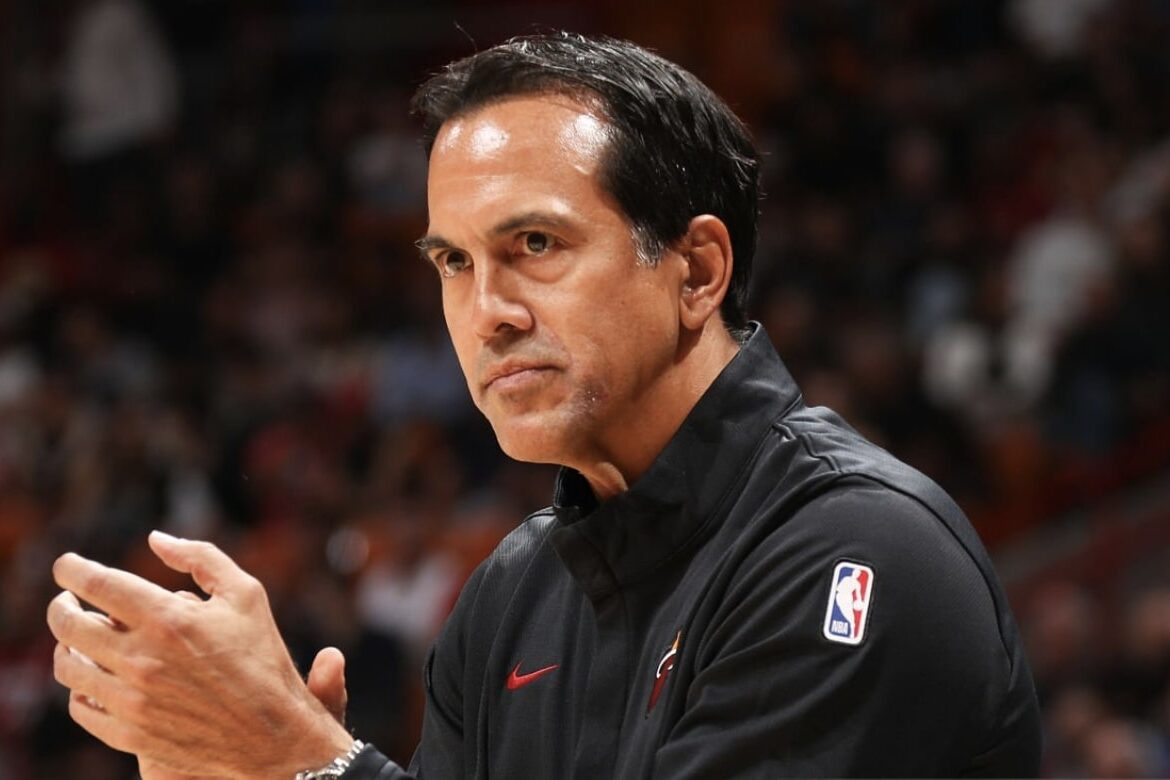
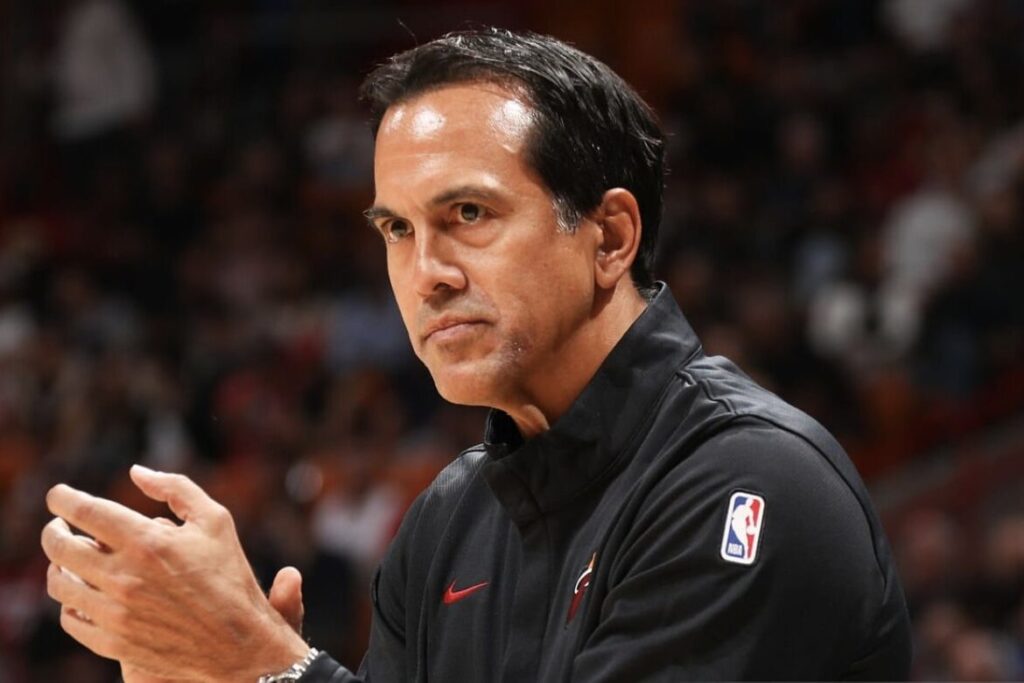
 The Minnesota Timberwolves, one of the best of the West, thumped the Miami Heat this week by 28 points. (Mandatory Credit: Issac Baldizon/NBAE via Getty Images)
If you witnessed the Miami Heat’s 28-point loss to the Minnesota Timberwolves, you likely saw its worst loss of the season to date.
But the loss continued a long-standing trend.
For most of the season, the Miami Heat have beaten up on bad teams. They’ve flexed their muscle — their fast-paced, relentless offense paired with a top-5 defense — against weaker competition. And that’s what they should do.
But their loss against Minnesota — their second in four days to them — continued to reinforce a truth that’s been the case for three years: When pinned against longer, deeper, more athletic teams, the Heat can’t overcome the hurdle in front of them.
Recent exceptions to the rule are the Denver Nuggets — who were without Nikola Jokic for the second half — and the Detroit Pistons. Those were good wins — very good wins.
But for every one of those wins, they have at least three or four more discouraging losses, where they weren’t able to climb the mountaintop. Miami is 7-15 against teams .500 or better this year and 13-2 against teams below .500. That comes after going 12-30 against teams .500 or better last season and 19-27 in 2023-24.
That’s a 38-72 record (and counting) over three years — a 28-win pace over 82 games. Yikes!
Better yet, each of the Heat’s last seven losses has come to teams with a winning record. All but one have come by double digits, with two by 20-plus points.
They re-found their identity to close the 2025 calendar year. Yet, as we’ve seen time and time again, when the pace begins to slow down, the Heat’s offense can’t consistently function. That largely happens against good teams. And that happened again versus the Timberwolves.
Miami was excruciatingly bad in the paint — it shot 19-of-47 (40.4 percent), including 13-of-26 at the rim — but it coughed up the ball 17 times and posted a measly 85.6 offensive rating in the halfcourt (17th percentile).
That’s not good enough.
There were possessions where Tyler Herro and Norman Powell were making something out of nothing. But the Heat’s offense was largely stagnant, unable to create consistent advantages that bore fruit.
As long as these same troubling trends are wiped away, the Heat are going to find themselves exactly where they’ve been: In the middle. I do credit head coach Erik Spoelstra for reinventing the team’s offense and trying his best to make lemonade from store-brand lemons.
The simple truth is that they’ve wobbled against sturdier competition this season. Their offense still isn’t quite good enough, and their defense still can’t quite get enough stops when it matters.
And that’s a reflection of their outlook the last three seasons: Good, but not good enough, especially against good teams.
***
To check out our other content, click here.
Follow Hot Hot Hoops on Twitter/X here!
Follow Hot Hot Hoops on Instagram here!
Check out Hot Hot Hoops on Facebook here!
Subscribe to our YouTube channel here!