
Doctor Bradley is officially in office, and from the jump, the message rings loud, clear, and legally binding: broken systems and unchecked power can no longer sideline talent. Before anything else, before Bradley ever stepped back onto the hardwood, he had to battle for his eligibility. In fact, the SWAC Preseason Defensive Player of the Year and Preseason All-SWAC First Team selection — and one of HBCU basketball’s most impactful two-way players — took on the NCAA itself just to earn the right to play.
Rather than focusing solely on basketball, Bradley found himself fighting a system designed to stall him.
According to Bradley’s representation, Darren Heitner, the ruling came straight from the bench:
MAJOR WIN. The judge ruled against the NCAA. His representation will be drafting a proposed order so Bradley can finally suit up for Bethune-Cookman. We could possibly see him as soon as Saturday (1/10) vs. Grambling
? MAJOR WIN: Judge ruled from the bench against the NCAA in our case for Doctor Bradley. We will be drafting a proposed order so Bradley can play in Bethune-Cookman’s next game on Saturday.
Highlights:
– Judge compared NCAA to acting as “prosecutor, judge, jury, and… https://t.co/t6K2JGIRyW
— Darren Heitner (@heitner) January 7, 2026
Bradley’s return places Bethune-Cookman, one of the SWAC’s flagship HBCU programs, back in the national conversation.
However, the real story lies not just in the outcome, but in how the court reached that decision.
To begin with, the judge blasted the NCAA for operating as “prosecutor, judge, jury, and executioner.” As a result, athletes receive no voice, no real appeal, and no meaningful opportunity to submit their own waiver requests. More importantly, the court recognized that without immediate relief, Bradley’s eligibility clock would expire before a final hearing. In other words, the system would have locked him out of the Division I labor market altogether.
That distinction matters.
Not only did the court criticize the process, but it also ruled that the NCAA’s denial restrains the relevant labor market for Division I college sports, not just basketball. Put simply, the NCAA blocks athletes from earning, competing, and capitalizing on their careers.
Even more telling, the ruling went further. Specifically, the judge declared that the NCAA applied its process “unfairly and arbitrarily.”
Then, the case delivered its knockout punch.
Despite the fact that Bradley never formally pleaded the issue, the court determined that he is likely to succeed on claims of breach of contract and tortious interference with NIL agreements.
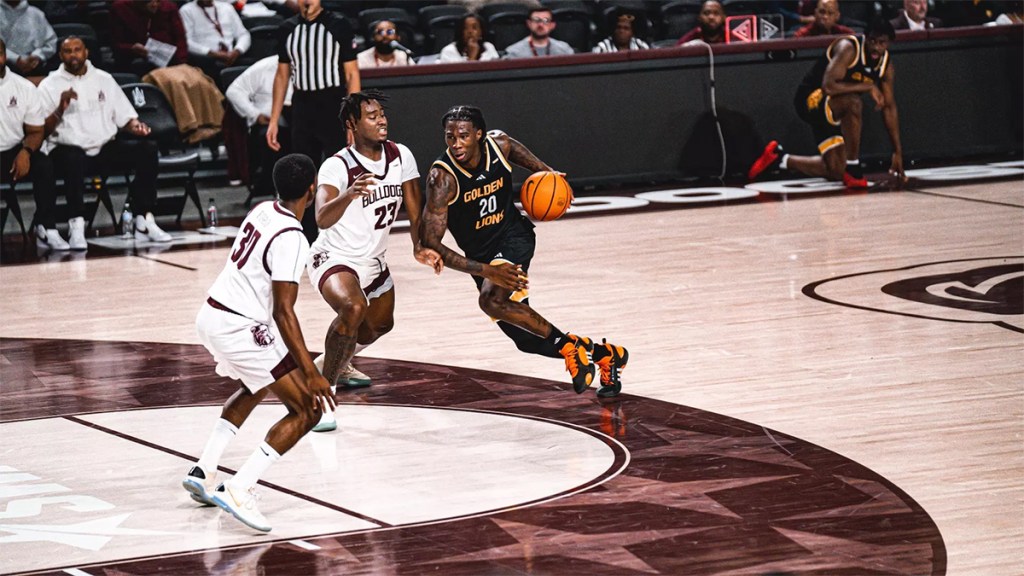
The HBCU Star the NCAA Tried to Sideline
Last season, at Arkansas Pine-Bluff, Bradley didn’t just perform — instead, he dominated.
Throughout his senior season (2024–25 | UAPB):
First, he started 18 games
Next, he averaged 19.6 points, 9.5 rebounds, and 4.5 assists
Meanwhile, he logged 35.4 minutes per game
Additionally, he recorded multiple steals in 16 of 18 games
Ultimately, he led the Golden Lions in:
353 points
171 rebounds
51 steals
18 blocks
Even then, the box score barely tells the story.
For example, he dropped 35 points in just his second game vs. Alabama State.
Soon after, he poured in 30 points on 11-of-18 shooting vs. Alabama A&M.
Later, he posted a 22-point triple-double against Jackson State.
After that, he scored 26 points on 9-of-13 shooting vs. Mississippi Valley State.
Along the way, he grabbed six steals, tying the SWAC single-game season high, vs. Alcorn.
Finally, he ripped down 16 rebounds, added seven assists, and blocked two shots vs. Texas Southern.
Clearly, this isn’t a role player.
Likewise, this isn’t a fringe contributor.
Instead, this is a program-altering force — the type of talent that has long defined elite HBCU basketball.
Ultimately, Doctor Bradley didn’t ask for special treatment. Rather, he demanded fair treatment, and a federal court agreed. In doing so, the judge didn’t just tell the NCAA it was wrong. Instead, the ruling made clear that the organization’s entire approach cannot withstand scrutiny when real livelihoods hang in the balance.
In the end, the NCAA tried to freeze him out of the game.
Instead, the court put the ball back in his hands.
Doctor Bradley is in office.
Related