
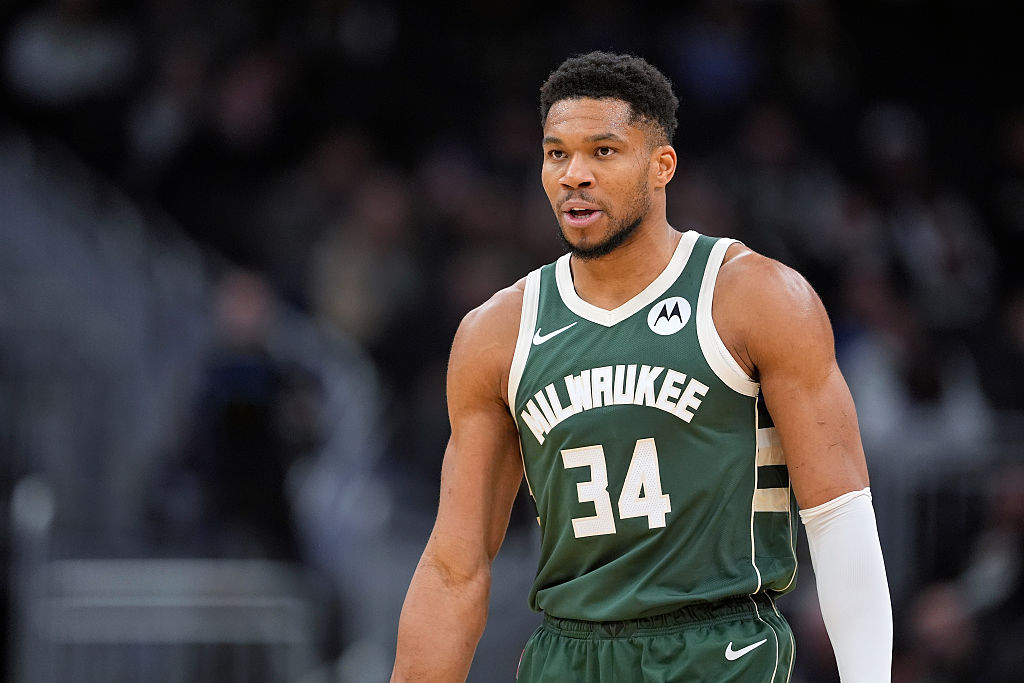
Typically, there’s one unmistakable big fish on the NBA trade market. This cycle is no different. The largest name looming over the league — by a wide margin — is Giannis Antetokounmpo. An in-his-prime MVP candidate rarely becomes even theoretical trade fodder. Players of Antetokounmpo’s caliber almost never shake loose while still operating at the peak of their powers. And yet, year after year, speculation around the Milwaukee Bucks superstar has refused to die down. At this point, the constant churn has shifted perception: what once felt unthinkable now feels, at minimum, plausible.
Whether that inflection point arrives this summer remains difficult to project. NBA markets are inherently volatile, and transactions involving a top-five player carry layers of complexity — competitive timelines, cap mechanics, asset valuation, and ownership appetite — that go far beyond standard star trades. Even when mutual interest exists, aligning all parties is rarely straightforward.
What adds intrigue this time is the broader landscape around Milwaukee. The Bucks find themselves drifting toward the middle of the Eastern Conference pack rather than sitting comfortably among the elite, a reality underscored by the standings. In a conference where teams like Detroit, New York, Boston, and Toronto have established separation near the top, Milwaukee’s positioning raises uncomfortable questions about ceiling, sustainability, and how long the current core can realistically contend.
Individually, Antetokounmpo has given no indication of decline. He is averaging 29.5 points, 10.0 rebounds, and 5.5 assists through 23 games, continuing to impose himself physically and tactically on both ends of the floor. The issue is not his production — it is whether the surrounding infrastructure is strong enough to justify pushing further into the future with limited flexibility.
That uncertainty is what fuels hypothetical frameworks like the one below, which sends Antetokounmpo to the Golden State Warriors. Such a deal is not about a single swap; it is about cascading consequences across multiple rosters, cap sheets, and competitive windows.
If Antetokounmpo truly becomes available, the ripple effects would reshape the league. The question is no longer whether teams would line up — they would. The real question is whether Milwaukee ultimately decides that holding the biggest fish in the market is less valuable than the haul it could command.
Golden State Warriors Land Giannis Antetokounmpo In Trade Proposal
Boston Celtics Receive:
Milwaukee Bucks Receive:
Golden State Warriors Receive:
Why the Boston Celtics Do the Deal
From Boston’s perspective, this trade is an exercise in precision rather than aggression. The Celtics are not chasing a star; they are optimizing margins.
The primary motivation is financial housekeeping. Anfernee Simons is on an expiring deal, while Draymond Green carries an additional year. That slight extension matters. It allows the Celtics to roll a mid-sized contract into next season without compromising long-term flexibility, preserving optionality in a cap environment that will only become more restrictive. In effect, Boston is converting a short-term expiring asset into a contract that can be deployed in future trade constructions if needed.
There is also a basketball argument — modest, but real. Simons has struggled to consistently impact winning this season, particularly on the defensive end. Boston’s profile already skews heavily toward offense, with an elite Offensive Rating (122.3) that significantly outpaces its Defensive Rating (114.3). That imbalance has surfaced in high-leverage moments against top competition.
Green, despite being past his physical prime, remains one of the most intelligent defensive players of his generation. His anticipation, communication, and schematic versatility would immediately raise Boston’s defensive floor. Even in reduced minutes, his ability to quarterback coverages and organize lineups has value on a roster built to contend deep into May and June.
Importantly, the Celtics are not overcommitting. They are facilitating a larger transaction, upgrading one rotation piece into another while paying a modest price in draft capital. If the deal does nothing more than stabilize their defense and preserve future flexibility, it still accomplishes its goal.
From Boston’s vantage point, that is a worthwhile exchange.
Why the Milwaukee Bucks Do the Deal
This is the uncomfortable part of the process — but it is also the necessary one. Trading Giannis Antetokounmpo is not about winning the transaction outright. It is about securing market value in a scenario where holding firm no longer serves the franchise’s long-term interests.
The return reflects the reality of modern superstar trades: a volume-based package of young players and draft capital rather than a single blue-chip replacement. It may not inspire emotionally, but it aligns with precedent — and precedent matters.
Jonathan Kuminga is the swing piece. His athletic tools and two-way upside give Milwaukee a developmental pillar. If he realizes his ceiling, this deal will be reframed entirely in hindsight. If he does not, the Bucks are still insulated by the surrounding assets.
Simons provides immediate offensive creation and a tradable salary slot, while Ryan Rollins offers low-cost depth and optional upside. More importantly, the draft capital — particularly from outside Milwaukee’s own future — restores flexibility the franchise otherwise lacks.
That caveat is critical. The Bucks’ limited control over their own draft picks restricts a clean teardown. This deal compensates by injecting external draft equity, allowing the organization to rebuild on its own terms rather than remaining stuck between timelines.
It is not a perfect package. But perfection is not the benchmark. Control, flexibility, and reset potential are — and this deal checks each box.
Why the Golden State Warriors Do the Deal
For Golden State, this is about confronting reality — and acting decisively.
The Warriors are no longer a dynasty in motion. They are a dynasty in decline, operating within a narrowing competitive window defined by Stephen Curry’s remaining prime. Incremental moves will not meaningfully change that trajectory. Only a transformational one can. This qualifies.
Pairing Curry with Antetokounmpo creates the most devastating inside-outside combination in basketball. Curry’s gravity bends defenses beyond the arc; Antetokounmpo’s force collapses them at the rim. There is no clean way to guard both simultaneously.
The cost is steep — and intentionally so. Championships are rarely won without risk. The Warriors would be sacrificing future draft control to maximize the present, but that has been the franchise’s operating philosophy before, and it delivered multiple titles.
With this move, Golden State is not merely staying relevant; it is re-entering the championship conversation. In a league dominated by the Oklahoma City Thunder, this gives the Warriors a credible path to contention rather than a slow fade into irrelevance.
When a franchise icon like Curry still has championship-caliber basketball left, opportunities like this do not come often. Landing the biggest fish on the market is not just justified — it is imperative.
This is the swing worth taking.
Latest NBA News & Trade Rumors