
The Los Angeles Lakers returned to the 2004 NBA Finals as a team built for redemption.
After a disappointing early exit the year before, they reloaded with Hall of Fame firepower. With four future Hall of Famers in the starting lineup — Shaquille O’Neal, Kobe Bryant, Karl Malone and Gary Payton — the mission was to reclaim championship gold and restore the dominance that defined their early-2000s dynasty.
But standing in their way was a Detroit Pistons team that didn’t flinch.
Coached by Larry Brown and anchored by the most unselfish and bruising starting five in basketball, the Pistons were gritty, efficient and absolutely unrelenting on the defensive end.
Piston’s dominance
The Lakers had fought back to tie the series after a clutch overtime win in Game 2, thanks in part to Bryant’s iconic 3-pointer that sent the game to overtime. But when the series shifted to Detroit, the Purple and Gold were taken out of reach.
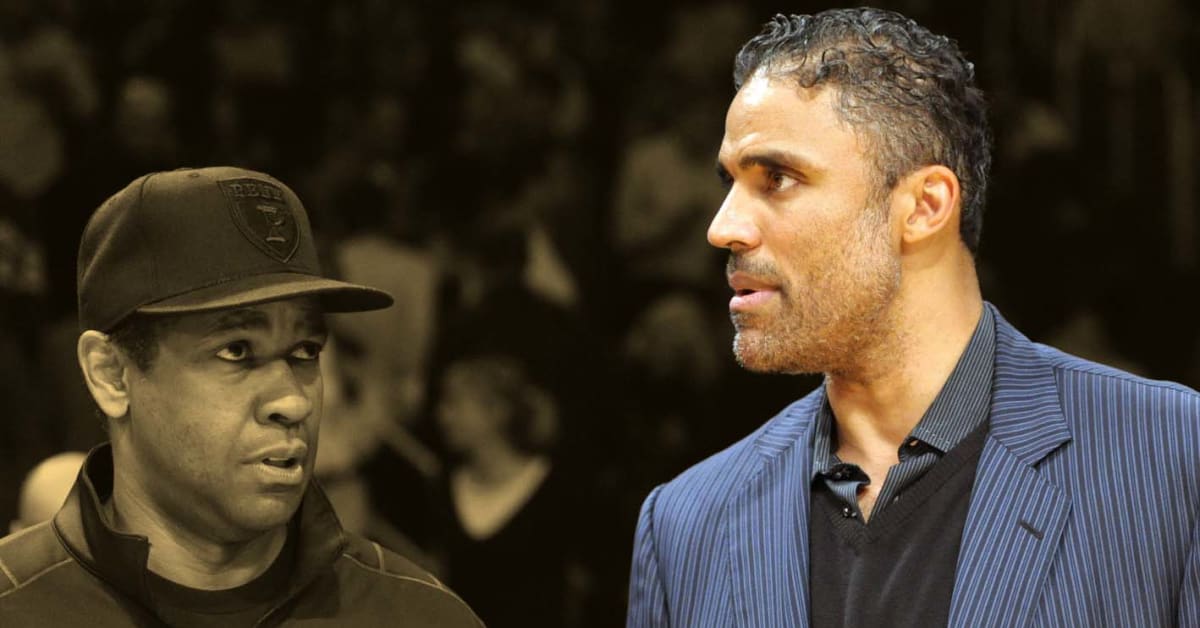
“By the time they beat us down by that third game as bad as they beat us, we were shell shocked,” former Lakers star Rick Fox said. “You can tell in the film room, we were going to the film and guys would just point fingers and the wheels came off so quickly.”
Game 3 was the first real sign of unraveling.
The Lakers posted just 68 points, their lowest total in a Finals game since the shot clock era began. Detroit’s defense, built around the long arms of Tayshaun Prince, the interior muscle of Ben Wallace and the high-IQ rotations of Chauncey Billups and Rip Hamilton, humiliated the Lakers.
Over the five-game series, LA only scored more than 90 points once. Detroit held them under 80 points three different times. The Pistons defense-oriented style wasn’t flashy, but it was surgical.
What made it even more jarring for Los Angeles was how quickly the series spiraled. That Game 3 blowout wasn’t just a bad night. It became a tipping point. The team began to fragment internally and by the time Game 5 arrived, the Lakers looked nothing like the force they were on paper.
Lakers’ terrible fall
The 2003–04 Lakers had all the ingredients of a superteam.
O’Neal and Bryant were still in their prime, and with the offseason additions of Malone and Payton, Los Angeles had assembled one of the most decorated rosters in league history. The expectations were enormous. The spotlight, unavoidable.
But the reality beneath the surface told a different story. Injuries and chemistry issues hovered all season. “Mailman” missed 40 games due to a knee injury and “Glove” never quite adapted to the triangle offense. Internally, the tension between the team’s two biggest stars had reached its boiling point.
“In a depth, I thought Karl would at least try to play,” Fox said. “He’s like, ‘Nah I’m good.’ Hey man, this is your last run. He started hunting in Game 4.”
The moment was a gut punch. One of the most durable players in NBA history, Karl had chased that elusive ring for nearly two decades. But in that Finals series, even he seemed to accept defeat early. Detroit had not only won the physical battle — it had broken LA’s will.
Game 4, like the rest of the series, wasn’t close. Detroit outworked, outran and outclassed Los Angeles from tip to buzzer. That loss effectively sealed the Lakers’ fate.
Game 5 brought the official curtain call. With a 100–87 victory at home, the Pistons closed the series and claimed their third NBA title. Billups, the steadying hand and cerebral floor general, was named Finals MVP after averaging 21 points and five assists across the series.
For the Lakers, the collapse dismantled an era. Phil Jackson left. O’Neal was traded. Malone retired. Payton moved on. And the superteam that once promised total dominance ended up as one of the league’s most infamous implosions.