
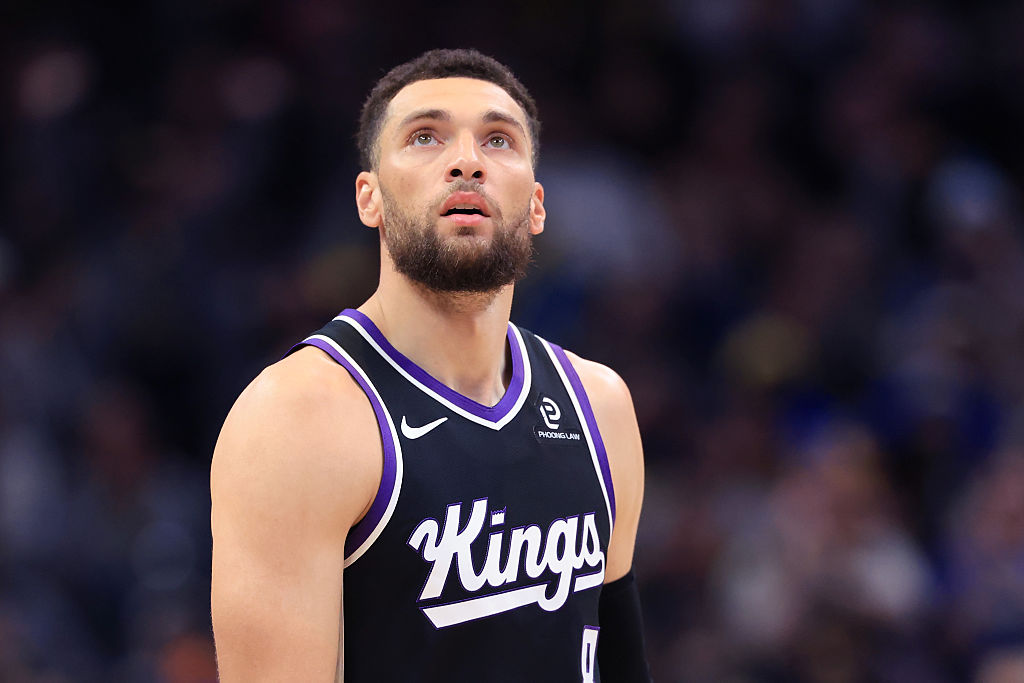
Nobody said managing an NBA team was easy. The Milwaukee Bucks learned that lesson the hard way after reaching the mountaintop. Building a championship roster around Giannis Antetokounmpo in a small market was a genuine accomplishment. Sustaining that success has proven far more difficult. Milwaukee has gradually slipped out of the East’s top tier, caught between staying competitive and lacking the assets required to meaningfully retool.
That uncertainty still leaves them in a stronger position than the Sacramento Kings.
Sacramento’s issues are more fundamental. The Kings have spent years chasing incremental improvement without establishing a sustainable foundation. This season, they find themselves near the bottom of the Western Conference, buried behind teams that are either ascending or decisively rebuilding. With limited draft capital and few desirable trade chips, Sacramento’s margin for error is razor thin.
That context makes the following proposal worth considering.
Milwaukee Bucks Land Zach LaVine in NBA Trade Proposal
Sacramento Kings Receive:
Milwaukee Bucks Receive:
Why the Sacramento Kings Do the Deal
The Kings are operating in a buyer’s market, and that reality cannot be ignored. Recent trades around the league have reinforced that sellers are no longer commanding premium returns, even for established names. That makes Sacramento’s position uncomfortable, but it does not make standing pat any more logical.
This deal represents a shift toward flexibility rather than an attempt to salvage short-term competitiveness. Moving LaVine allows Sacramento to reset its timeline without fully bottoming out. Cole Anthony, still just 25, has had an inefficient season from deep but remains a controllable guard with creation ability. Bobby Portis is a productive veteran on a reasonable contract who could either stabilize the rotation or be flipped later. Kyle Kuzma’s value has dipped, but his scoring profile and contract structure still offer optionality.
None of these pieces solve Sacramento’s problems outright. What they do provide is breathing room—something the Kings have lacked for years.
Why the Milwaukee Bucks Do the Deal
Milwaukee’s dilemma is more complex.
Ordinarily, a team in this position might consider a teardown. For the Bucks, that would mean moving Antetokounmpo, a perennial MVP candidate and the face of the franchise. That path is neither realistic nor desirable if the organization believes it can still compete.
If Milwaukee is committed to maximizing Antetokounmpo’s prime, it needs another scorer who can consistently create offense when defenses collapse. LaVine fits that need cleanly. He remains an efficient, high-volume perimeter shooter who can generate his own shot without requiring an offense to be built entirely around him.
There are legitimate concerns about LaVine’s defensive impact and overall versatility. However, playing alongside Antetokounmpo changes the calculus. The Bucks would not be asking LaVine to be a foundational piece—only a secondary option capable of relieving pressure in critical moments.
In that role, this becomes a defensible risk.
Bigger Picture
Neither the Bucks nor the Kings benefit from market prestige. The difference is that Milwaukee once embraced patience and development, building deliberately through the draft before cashing in on contention. Sacramento, by contrast, has spent years chasing shortcuts, often paying a premium for marginal gains.
This trade would not guarantee success for either side. What it would do is force alignment.
Milwaukee would be choosing to push forward, accepting risk to remain relevant in a crowded Eastern Conference. Sacramento would be acknowledging that its current path has run its course and that flexibility, not familiarity, offers the best chance at eventual progress.
In the modern NBA, clarity is often the most valuable asset a franchise can acquire.
Latest NBA News & Trade Rumors