
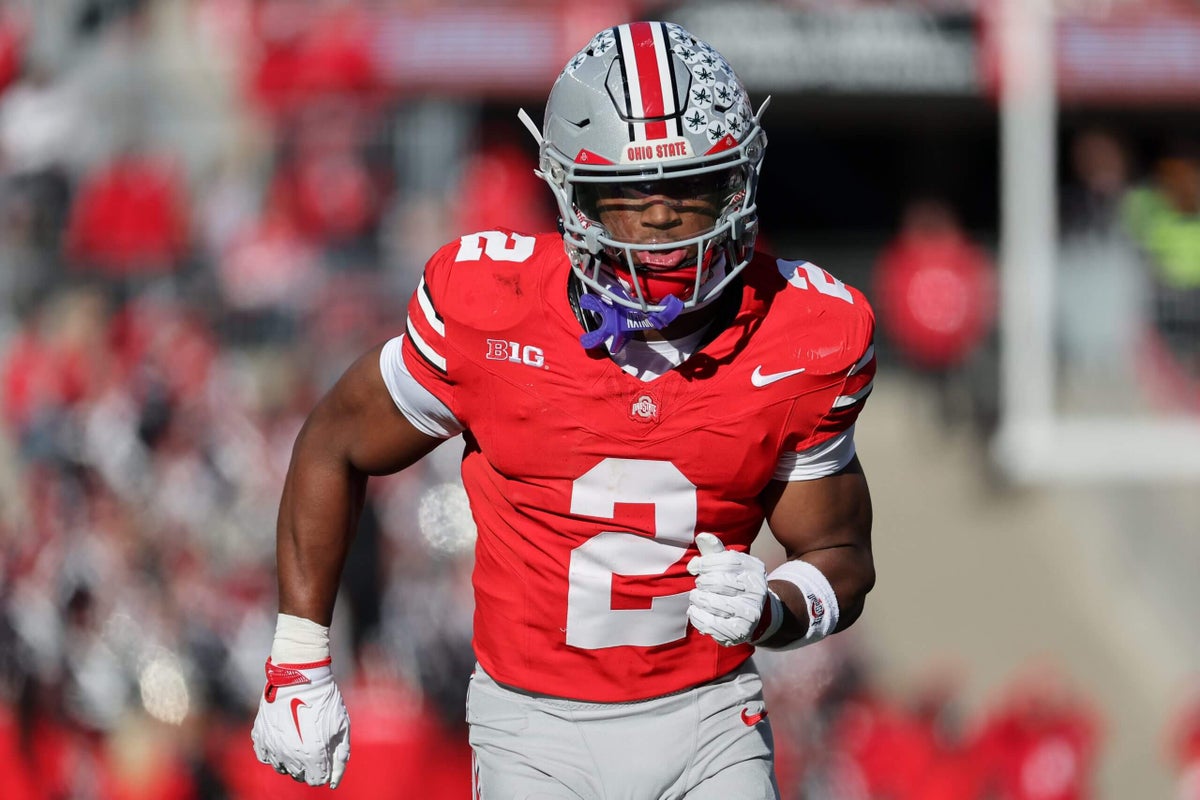
The Athletic’s Dane Brugler released a new first-round mock draft on Thursday, and in it, he had the Chiefs selecting Ohio State safety Caleb Downs with the ninth pick.
Let’s analyze that prediction and whether it would be a good fit for the Chiefs.
The argument for Caleb Downs
Brugler quickly acknowledges in his mock draft that there’s a case to be made for the Chiefs to go with receiver or tight end with their first top-10 pick since they took quarterback Patrick Mahomes in 2017.
In the end, though, he called Downs a “difference-maker,” both on the field and with team culture.
“One could argue that he is the best safety prospect since Eric Berry, a top-10 pick of the Chiefs 16 years ago,” Brugler wrote.
On the surface, Downs’ selection might make sense. Grinding The Mocks’ data, for instance, has Downs’ expected draft position at 6.5, meaning he’d likely need to experience a draft slide to make it to the Chiefs at No. 9.
Safety would also be somewhere on the team’s list of needs. Bryan Cook is an unrestricted free agent this offseason, and while he told The Athletic he’d been open to a reunion, he’s likely to be priced out of the Chiefs’ budget after a career year in 2025.
All that, though, doesn’t exactly match current team vibes or on-the-ground feelings about this Chiefs team following a disappointing 6-11 season. Chiefs defensive coordinator Steve Spagnuolo and defensive backs coach Dave Merritt also have a long history of turning late-round and undrafted players into solid contributors in the Chiefs’ secondary, so using a high pick on the position likely wouldn’t be an ideal use of resources.
In short, the Chiefs have bigger needs than at safety.
And they also aren’t likely to use a once-a-decade resource on someone who doesn’t play a premium position.
What Chiefs are likely thinking
We can’t ignore a team’s past when predicting how it might act in the future.
The Chiefs — famously now — went with a “luxury” first-round pick in 2020 when taking running back Clyde Edwards-Helaire.
That decision backfired. Yes, Edwards-Helaire was never the same after some injuries, but the Chiefs saw firsthand the pitfalls of what happens when a top non-premium-position draft pick fails to produce to expectations.
Since then? The Chiefs have used their first-round picks on cornerback, defensive end, defensive end, receiver and left tackle — all positions that command among the most money in free agency.
General manager Brett Veach, in other words, seems to have completely bought into the notion of surplus value in the draft, correctly realizing that the upside of hitting on an early-round player at a premium position pays much greater dividends based on draft picks’ lower salary structure.
Per Spotrac, this year’s No. 9 selection is expected to make $5.6 million next season, with that number increasing to $9.8 million by Year 4.
Getting an above-average safety at $9.8 million is … fine. OverTheCap lists 21 safeties as getting more than that amount on their current deals.
But what if that $9.8 million fourth-year contract was being used for an above-average receiver? Or defensive lineman?
That would be more valuable, given the market and the higher salaries those guys command in free agency.
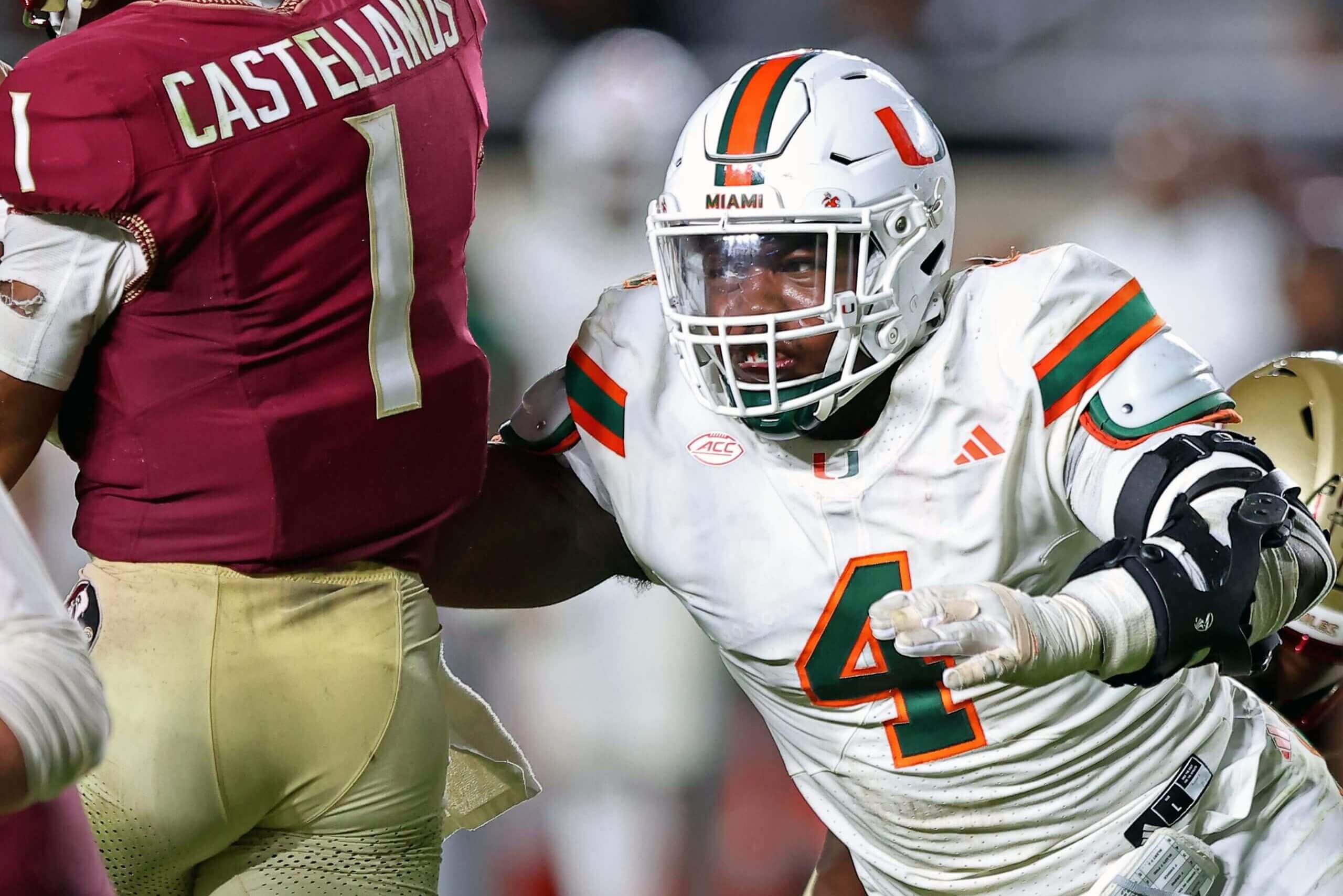
A defensive lineman like Miami’s Rueben Bain Jr. would make a lot of sense for the Chiefs at No. 9. (Jason Clark / Getty Images)
So, who would make sense instead?
The Chiefs are coming off a season in which their pass rush desperately needed one more body. Defensive tackle Chris Jones was dominant at times and defensive end George Karlaftis battled through a thumb injury to provide a complementary threat.
One more disruptor there could’ve had a multiplier effect on the team’s pass defense, though. And Jones is also entering his age-32 season, which means it’s not too early to plan for a future without him.
Miami pass rusher Rueben Bain Jr. — he went No. 10 in Brugler’s mock draft — could be a target if Spagnuolo can overlook a preference to take defensive ends with longer arm length. That’ll be the biggest knock on Bain, though K.C. also would love his inside-outside versatility in a scheme that moves its defensive linemen often.
Texas Tech edge David Bailey (seventh in Brugler’s mock) would definitely deserve a look if he slipped one more spot, as would Auburn pass rusher Keldric Faulk (15th) if he was still on the board. The Chiefs also should do plenty of evaluation on Clemson defensive tackle Peter Woods (19th), with the potential to take the draft’s top player at that position.
Another spot the Chiefs could seriously consider is receiver, as they struggled to beat man coverage late in the season when going against physical defenses.
Might Ohio State’s Carnell Tate (fourth in Brugler’s mock draft) or Arizona State’s Jordyn Tyson (fifth) be available if their stock drops slightly? Or could the Chiefs find themselves enamored with USC’s Makai Lemon (16th), whom The Athletic’s Nick Baumgardner described as “the draft class’ most QB-friendly receiver”?
Any of those seems more logical than the Chiefs turning toward a non-essential position with the type of top-10 resource they so rarely get.
The Chiefs will face significant pressure to hit on this year’s first-round pick, given current salary-cap restrictions and limited ability to reshape the roster beyond their draft class.
It’s why the expectation should be that the team has a defensive lineman or receiver at the top of its wish list come April.