
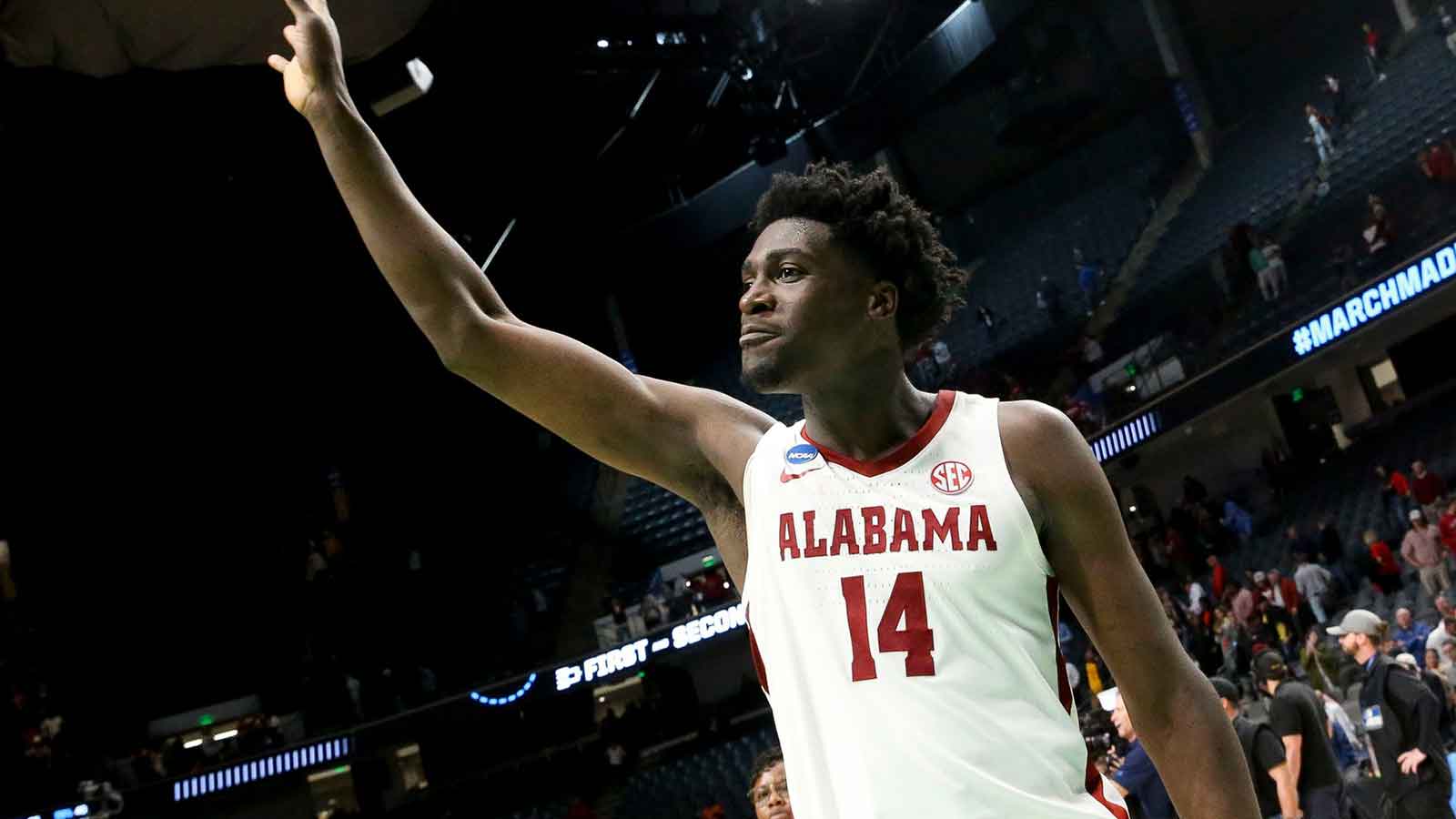
The NCAA has formally responded to the lawsuit filed by former Alabama basketball center Charles Bediako, and the statement casts serious doubt on any path back to college basketball for the Crimson Tide alum.
On Tuesday, the NCAA acknowledged the legal action in a public response addressing Bediako’s eligibility challenge. In the statement, the organization made its stance clear.
“The NCAA is aware of media reports about a lawsuit filed against the NCAA by Charles Bediako,” the NCAA said, via Ross Dellenger of Yahoo Sports, who posted the statement on X, formerly Twitter. “Mr. Bediako signed three NBA contracts after competing in college for two seasons. The NCAA has not and will not grant eligibility to any prospective or returning student- athletes who have signed an NBA contract. Eligibility rules ensure high school students get a shot at earning scholarships, and we will continue to consistently apply and defend these rules.”
Bediako had reportedly filed a lawsuit against the NCAA in hopes of regaining eligibility to return to Alabama for the 2025–26 season. The former Crimson Tide center played in Tuscaloosa during the 2021-22 and 2022-23 seasons before declaring for the 2023 NBA Draft, where he went undrafted.
Since then, Bediako has pursued a professional career in the NBA G League, signing contracts and spending time with the Austin Spurs, Grand Rapids Gold and most recently the Motor City Cruise. Those professional contracts are at the heart of the NCAA’s firm opposition. NCAA president Charlie Baker has previously stated that signing G League or NBA contracts permanently ends college eligibility.
Bediako’s lawsuit, filed in Tuscaloosa Circuit Court, seeks both temporary and permanent injunctive relief. Even a temporary ruling in his favor could allow him to suit up for Alabama this season — a notable development for a team that has struggled with rebounding and interior defense. However, the NCAA’s response suggests such relief will be strongly contested.
In its broader defense, the NCAA also pointed to its legal track record, noting that out of 52 eligibility-related lawsuits, 26 preliminary injunctions have been denied, 10 granted, eight dismissed voluntarily and eight still pending.
The case also ties into a growing national debate about whether professional players, particularly from the G League or international circuits, should be allowed to return to college basketball.
For now, with Alabama set to face the Tennessee Volunteers this weekend, the lawsuit looms as a high-profile test case. And, the outcome could influence future eligibility challenges, but the NCAA has made clear it is prepared for a lengthy legal fight.