
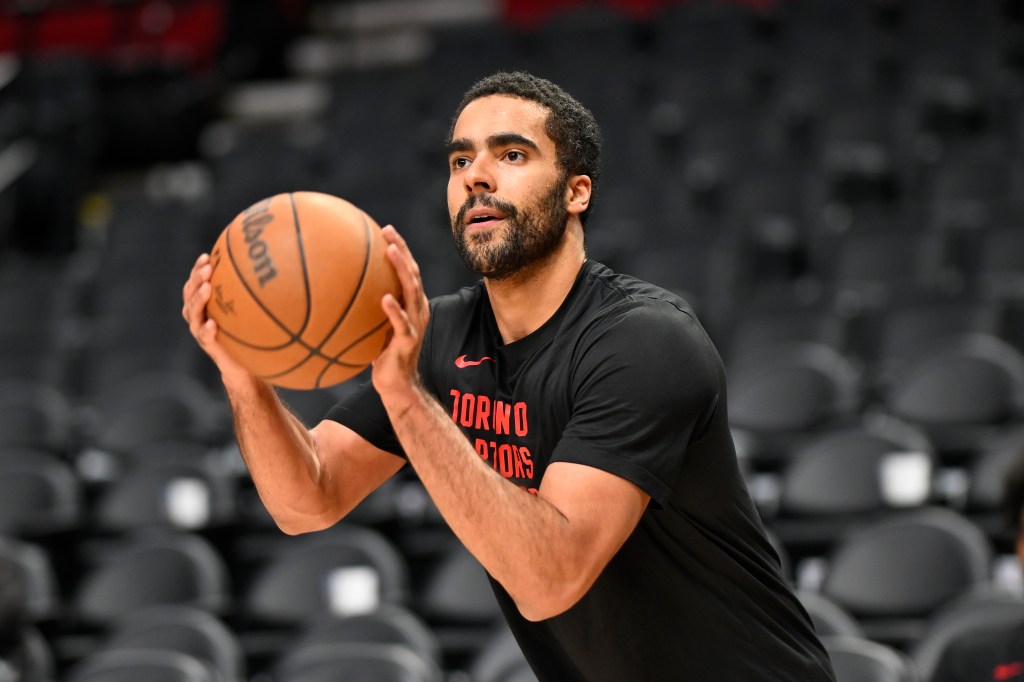
A gambling addict who took part in a sweeping plot to bet on fixed NBA games got a two-year prison sentence Wednesday, with the Brooklyn Federal Court judge in his case saying that the scheme undermined the integrity of professional sports.
Timothy McCormack, 38, became the first defendant sentenced in the sports-betting scandal — a year after he pleaded guilty to conspiring with a group of gamblers who placed wagers knowing since-disgraced Toronto Raptors player Jontay Porter would leave his games early.
“There is no question that this is a serious crime…. It is about sports generally, what do sports mean to this country?” Judge LaShann DeArcy Hall said before handing down the sentence, pointing out that fans, herself included, see their own lives and struggles reflected in the efforts of pro athletes.
“They are supposed to be the best of themselves, and we all root for these teams,” she said, adding, “This undermines that.”
The judge’s connection to sports isn’t just that she’s a fan — she was married to late NFL center Courtney Ceaser Hall.
McCormack was a low-level player in the betting scheme, prosecutors said, as part of the alleged masterminds’ network of straw bettors.
The conspirators would be given money to bet on the performance of individual players, spreading the scheme’s wagers out through multiple gamblers, and each participant would get an overall cut of the collected profits. McCormack’s cut was 4%.
“Without people like the defendant, these schemes can’t exist,” Assistant U.S. Attorney David Berman said. Prosecutors were asking for a sentence of between four and five years.
Though he never met or communicated with Porter, McCormack was a longtime friend of co-defendant Ammar Awawdeh — who also played a key role in a separate, mob-tied conspiracy to use NBA stars to lure high-roller card players to a rigged underground poker game, the feds allege.
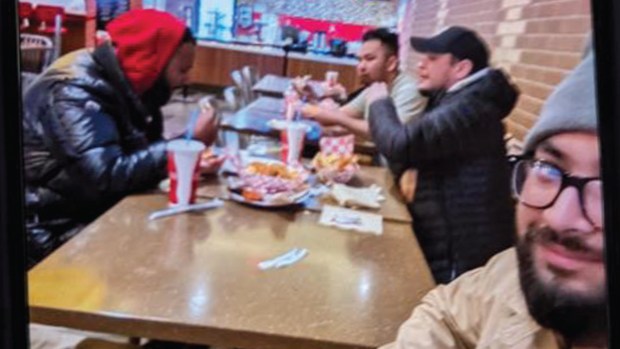 From left: Ammar Awawdeh, Long Phi Pham, Timothy McCormack, and Mahmud Mollah. (U.S. District Attorney’s Office)
Porter agreed to the scheme because he had owed Awawdeh a large gambling debt, the feds allege. The former Raptor took a plea deal last year and awaits sentencing.
McCormack also conspired with Instagram sports betting influencers Shane Hennen and Marvus Fairley, both of whom were charged in a separate sports betting case in Brooklyn involving Charlotte Hornets player Terry Rozier and Cleveland Cavaliers player and coach Damon Jones.
The two influencers face yet another indictment in Pennsylvania, accused of running an NCAA college hoops betting scheme involving 39 players on 17 teams.
In McCormack’s case, he bet on a March 2023 Charlotte Hornets game where team member Rozier tipped off a pal that he’d be leaving the game early, and $7,000 and $8,000 on two games in 2024 where Porter agreed with another conspirator to leave early due to a purported injury, according to federal prosecutors. McCormack also wagered on a second game in March 2023 that’s not included in his guilty plea, according to prosecutors.
McCormack joined three of his co-conspirators in Atlantic City to bet on that second Hornets game, on March 20, 2024, betting more than $12,600, and winning nearly $57,000. Once everyone else’s winnings were tallied, his cut of the pot totaled about $44,000.
“With his gambling addiction, he went to the blackjack table and lost all the money in 15 minutes,” his lawyer, Jeffrey Chartier, said.
Chartier tried to throw the spotlight on legal gambling platforms like FanDuel and DraftKings, telling the judge, “You can’t go to a sports arena without seeing gambling advertisements in big bold letters…. If you have a gambling addiction, it’s everywhere. It’s hard to hide from.”
DeArcy Hall, who oversees several other defendants in the scheme, including Porter, steered Chartier away from that argument, saying that it wasn’t persuasive at sentencing.
Outside the courtroom, Chartier had more to say, suggesting that the platforms’ ads are unavoidable, and they don’t do enough to mitigate the harms caused to gambling addicts. “The betting platforms don’t operate without preying on those addicts,” he said.
McCormack apologized to the judge and said he let down his family and his young son.
“I’ve been a compulsive gambler for more than half my life,” he said. “I’ve made many mistakes in my life, and the worst has been putting gambling first and my own family second.”
He added, “No amount of money is worth not being able to wake up to my child’s smile.”
McCormack is scheduled to start his sentence April 20.