
The Los Angeles Lakers stunned the NBA world when they acquired Luka Dončić. Not because the move itself was difficult to understand — elite players of Dončić’s caliber fit anywhere — but because few around the league believed he would ever become available.
Yet, here the Lakers are, with Dončić operating in Hollywood and firmly positioned as the franchise’s long-term centerpiece alongside Austin Reaves. With that foundation in place, the next logical step is roster construction around Dončić’s strengths. Specifically, finding a big man who can grow with him and unlock his pick-and-roll versatility feels like the clearest path forward.
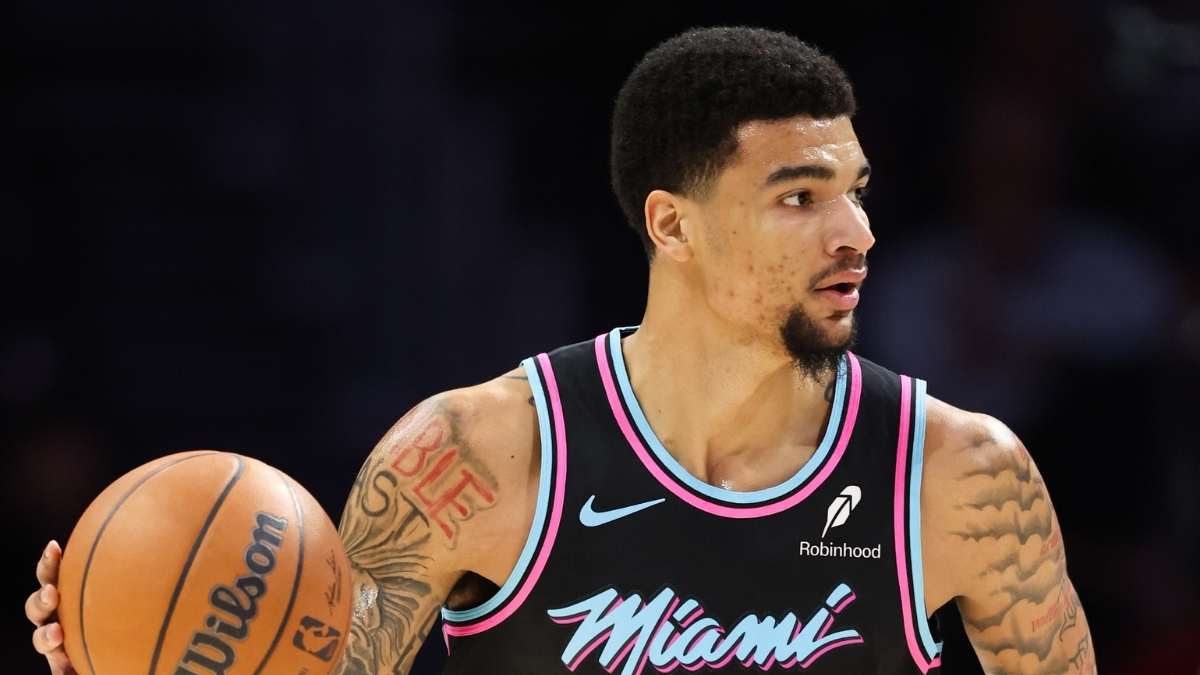
One intriguing possibility: Kel’el Ware of the Miami Heat.
Los Angeles Lakers Land Ke’el Ware in NBA Trade Proposal
Miami Heat Receive:
Los Angeles Lakers receive:
Why the Miami Heat Do the Deal
Ware’s talent is evident, but his role in Miami has quietly diminished. He logged just nine minutes against Boston on Thursday, a usage pattern that suggests the Heat may be reassessing his place in their rotation.
That context gives weight to the pre-draft questions surrounding Ware’s consistency and effort level. While he remains a highly functional modern big — capable of spacing the floor and finishing plays — Miami has rarely hesitated to move off young talent if it believes the fit is imperfect.
In this deal, the Heat pivot to Dalton Knecht, a different type of developmental bet. Knecht has struggled during his sophomore season, but as a rookie he shot 37.6% from three-point range while flashing secondary shot-creation ability. His offensive portability is valuable in Miami’s system, where spacing and off-ball movement are essential.
The draft compensation also matters. While the 2031 pick is lottery-protected, the presence of Dončić significantly lowers the likelihood that Los Angeles will bottom out anytime soon. For a Heat team that often values flexibility over long rebuild timelines, that future asset still carries strategic appeal.
Why the Los Angeles Lakers Do the Deal
This is where Ware’s production — not just his archetype — strengthens the case.
Through 43 games this season with the Miami Heat, Kel’el Ware has averaged 11.6 points, 9.8 rebounds, and 1.1 blocks in 23.8 minutes per game, while shooting 54.0% from the field and 41.5% from three-point range. His 63.2% true shooting percentage underscores just how efficient his offensive contributions have been within a limited role.
That blend of efficiency and floor spacing is especially relevant next to Luka Dončić. Ware’s ability to threaten defenses as both a roll man and a pick-and-pop option forces opposing bigs to defend higher at the level of the screen — a scenario Dončić has punished consistently throughout his career. Even in Miami’s offense, Ware has shown comfort drifting to the arc or diving decisively, rather than lingering in no-man’s land.
Defensively, Ware’s impact has been uneven, but the tools are evident. His 1.1 blocks per game reflect functional rim protection, and his rebounding rate — nearly 10 boards per game — addresses a persistent Lakers need when lineups skew smaller around Dončić.
Ware is not a finished product. But bigs who can space the floor at volume, finish efficiently, and provide baseline rim deterrence rarely come cheaply. For the Lakers, betting on that skill set — particularly one that aligns so cleanly with Dončić’s strengths — represents a calculated move rather than a speculative one.
Bigger Picture for Kel’el Ware
Since acquiring Dončić, the Lakers have entered a transitional phase. They are still winning — now 26–16 and fifth in the Western Conference — but they are also clearly straddling eras as LeBron James approaches the end of his career. In that context, prioritizing players who can grow alongside Dončić is less about short-term urgency and more about structural alignment.
Ware fits that vision.
Miami’s direction is less defined. The Heat sit eighth in the East, competitive but not fully positioned for a deep postseason run. If the organization views itself as waiting for the next major swing — whether via trade or free agency — incremental, rational moves carry value.
Flipping Ware for Knecht and a future first may not excite everyone, particularly Ware’s supporters. But from a risk-management standpoint, it improves Miami’s flexibility without sacrificing competitiveness.
And for the Lakers, it represents another step toward building a roster that maximizes Luka Dončić — not just now, but for the next decade.