
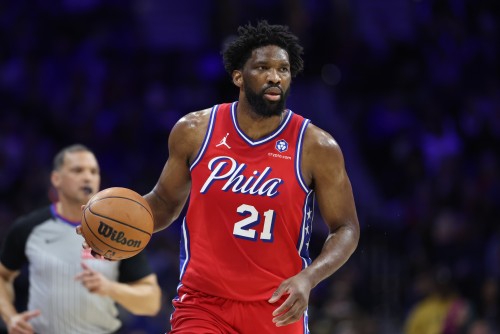
After tackling the Best Value NBA Contracts earlier in the week, we’re going to look at the deals on the other side of the ledger. It’s time to look at the Worst Value contracts in the NBA. As always, we have a few notes!
Let’s start with the fact that this list has consistently gotten harder to put together over the years. There simply aren’t as many truly awful contracts as there used to be. When I first started putting this list together over a decade ago, I would start with a list of 40-50 deals and struggle to trim it down to 20 or so. Now, it’s getting harder to get all the way to 20.
What has caused this? Great question, with a few contributing factors making up the answer.
First, teams have simply gotten smarter about the deals they hand out. We no longer see them acting like Oprah handing out new cars with “You get a max! And you get a max!”. Teams have begun to reserve max deals, especially the 30% and 35% of the cap max contracts, for the true superstars. They’ll still give out 25% of the cap max to guys who they hope will grow into true max players (ESPN’s The Hoop Collective refers to this as the “Fun Max”), but the bigger max deals – the ones that can ruin your cap sheet – are being held for the best of the best.
Second, the NBA’s Apron Era has forced teams to be, if not smarter, more cautious. And, in some cases, teams simply aren’t able to stack up bad deals because the apron-related restrictions don’t allow for it. That’s led to less risky roster-building approaches of three max players and filling out with minimum deals. Teams are spreading the wealth more than ever.
Lastly, teams are less likely to extend or re-sign a player to avoid simply losing that player. As everyone has gotten smarter about cap management, that has put the brakes on the idea that if you don’t sign a guy to a big contract that someone else is sitting there waiting to. Rebuilding teams no longer just throw contracts at players. They’d rather keep their cap flexibility to eat bad contracts in exchange for future assets.
Now, to be very clear, that doesn’t mean that the league is completely free of bad contracts. There are still some floating out there. Before we get to the Worse Value contracts, here are some rules we stood by when compiling this list:
No Rookie Scale contracts. Even if a player has been a relative bust (Note, for what it’s worth: NBA teams are generally loathe to make any kind of non-injury declarations on players until they have completed at least three years in the league), rookie deals simply don’t pay enough to ever trip into the bad money realm.
No Second Round Pick Exception contracts. Same as the above. These contracts aren’t big enough to be bad.
No Minimum contracts: Read the above two notes. Even if you get nothing from a minimum player, it’s rarely going to hurt you on your cap sheet.
No expiring contracts. Even if a player was on the full max possible and in as good of shape as The Black Knight from Monty Python and the Holy Grail, an expiring deal would still hold value as a trade chip to get out of future money.
Maximum contracts can be included. This is different than on the Best Value list. If you’re on a max deal and it’s turned sour, you’re fair game for this list.
Pretty straight forward, right? Good! Let’s take a look at the 20 Worst Value deals in the NBA!
1. Joel Embiid – Philadelphia 76ers
Four years, $243.5 million remaining, $60.8 million AAV (player option final season)
39-of-82. 19-of-82. 24-of-43 (as of this writing).
That’s how many games Embiid has appeared in over the last two-plus seasons for the Sixers. No matter what level Embiid is playing at, that’s not returning nearly enough value on one of the largest contracts in the NBA. And Embiid’s level of play has been pretty uneven the last two years when he has played. Even if we write off last season due to the extensive knee issues (we shouldn’t), Embiid’s play has slipped. He’s shooting just 26.3% from behind the arc this season. He’s grabbing the fewest rebounds per game of his career, and doesn’t move well enough to provide plus rim protection any longer. Philadelphia can manage Embiid enough to get solid production out of him, but they aren’t paying him for solid production.
2. Paul George – Philadelphia 76ers
Three years, $162.4 million remaining, $54.1 million AAV (player option final season)
When George signed with Philadelphia, we talked about how he was an ideal fit between Joel Embiid up front and Tyrese Maxey in the backcourt…if he could stay on the court. A year-plus in, George has missed 60 of 125 games. He’s also been limited in several other games. Unlike Embiid, who still the 76ers can pull solid production out of, George has been, well, fine. He no longer gets to the rim, or even really into the paint very often, because George can’t beat his man off the dribble to get in close any longer. That’s left him shooting a lot of midrange and long-twos, as well as nearly half of his shots from distance. George is still a good ball-mover and ok rebounder, but like with Embiid, the Sixers aren’t paying Goerge to be good or ok or fine.
Five years, $123.1 million, $24.6 million AAV (final season at least $5 million guaranteed)
Did you know Poeltl has never played more than 30 MPG in a season? Did you know that since returning to Toronto, he’s played in 50, 57 and 21 (as of this writing) games? Poeltl is a good player. He’s solid on the boards and at protecting the rim. He’s a better-than-you-think passer. He can finish in the paint. Poeltl was even very fairly paid at $19.5 million this season and next. It’s the three-year extension, which pushes close to $30 million AAV, where things get sideways. And that’s before we factor in that Poeltl is dealing with a persistent back injury. A big man in his 30s with back issues and a long-term deal? That’s a recipe for disaster.
Four years, $72 million, $18 million AAV (final season player option)
It’s really hard to rank a deal that averages less than $20 million per season on this list at all, never mind being this high on the list. That’s how bad things have gone for Williams and the Bulls on this contract. He no longer starts, and probably never will again (at least not on any regular basis), for Chicago. Williams also can’t stay healthy from year to year. He’s essentially become a three-point specialist forward who offers little else. That’s a marked falloff from the role the Bulls expected Williams to grow into.
Three years, $94.3 million, $31.4 million AAV (player option final season)
This one is really about injuries and lack of any upside. Murray kind of stagnated after being an All-Star in 2022. He was fine with the Hawks, but never fully fit with Trae Young. His first season with the Pelicans was wrecked by injuries, including a torn Achilles’ which Murray hasn’t made it back from yet. Before that injury, he wasn’t shooting well, and his defense had never been as good as his Spurs days. Coming off arguably the worst possible injury for a guard, Murray has a lot to prove to come off this list. And if he does make it back, then that player option in a couple of years means Murray has control. Just bad all around for the Pelicans.
6. Jerami Grant – Portland Trail Blazers
Three years, $102.6 million, $34.2 million AAV (player option final season)
Grant has been better this year…when he’s been on the court. A persistent case of Achilles’ tendonitis has caused Grant to miss a lot of time this season. But being better still isn’t enough to justify more than $34 million AAV remaining for Grant. He’s not the impactful defender he once was. He’s no longer really good with the ball his hands either. He’s a fine rotation forward, but Portland is paying him to be a lot more than just a rotation guy.
Three years, $136.4 million, $45.5 million AAV
You might notice a theme on this year’s list: overpaid big men. The old NBA adage of “size gets paid” is really starting to be put to the test. Or it should be at least! Sabonis is a good example. He’s productive as a scorer, playmaker and rebounder. But he can’t protect the rim well enough to anchor a good defense. He can’t shoot enough from the outside to play the four full time. And at $45.5 million AAV, you can’t be a tweener that you team needs to work around. Sacramento is open to moving Sabonis, and they may find a trade, but most of the reported offers involve the Kings taking back some questionable money themselves. That tells you all you really need to know about where this contract stands.
Three years, $175.4 million, $58.5 million AAV (player option final season)
This one is a combination of a lot of factors for Davis’ place on this list. Davis is still really good when he’s healthy, but those days are getting fewer and further in between. Everyone knows Davis is a center…except for Davis himself. That makes putting together a roster around him tricky. And it’s well known that Davis wants an extension. He may not get another max deal at his age and with his injury history, but Davis isn’t reupping on any kind of serious discount either. All of that together is a bad combo, both now and down the line.
9. Ja Morant – Memphis Grizzlies
Three years, $126.5 million, $42.2 million AAV
We’re starting another theme with Morant: guards with injury and/or production issues. When Morant is right, he’s still an electric player. He’s the closest thing to Allen Iverson as far as a super tough, explosive small guard that we have in today’s NBA. Unfortunately, Morant is rarely ever healthy long enough to show that. His shot has all but disappeared, and as the injuries have mounted, Morant isn’t quite the sky-walking rim threat that he once was. When the Grizzlies recently made it known that Morant was available, the offers were far from plentiful and robust. That gives you a sense of how the veteran point guard and his contract are seen around the NBA.
10. LaMelo Ball – Charlotte Hornets
Four years, $168.7 million, $42.2 million AAV
Ball is basically in the same place as Morant (And, for what it’s worth, Trae Young would have been in a somewhat similar spot too) as being an oft-injured, inconsistent point guard. Ball still makes a ton of flashy plays, but he’s terrible on defense and his shooting remains inconsistent. The Hornets have taken to trying to manage his minutes while bringing him off the bench for some games. Not exactly the return Charlotte wanted less than two years into Ball’s max extension.
11. Jrue Holiday – Portland Trail Blazers
Three years, $104.4 million, $34.8 million AAV (player option final season)
Holiday was terrific for Boston when he earned this extension. He helped lead the Celtics to the 2024 NBA title. Last season, Holiday got hit by injuries, his shooting took a major dip and his defense started to fall off. This season has continued that slide. At age 35, it’s hard to see Holiday getting back to being the kind of player who returns positive value at nearly $35 million AAV.
Four years, $130 million, $32.5 million AAV
When Quickley signed this deal, it looked fair. His contract ranked around the middle of the pack for point guards. Quickley looked like he was improving and would be a solid starter for the Raptors. Then, last season was injury-impacted, and this season Quickley’s efficiency has fallen off. He now looks like a low-end starter, who might be best as a high-end sixth man on a good team. That’s not enough production to justify a deal north of $32 million per season.
Four seasons, $108.8 million, $27.2 million AAV, (player option final season)
It’s the rare first-year contract appearing on this list! When Turner signed this deal in July, the biggest question was: Is Myles Turner worth roughly $50 million per year? That’s the cost of Turner’s deal, plus the waived-and-stretched cap hit for Damian Lillard. Now, the question should be turning to: Is Myles Turner worth $27 million per year? Turner has fallen off big-time this season. A whipping 61% of his shots come from behind the arc, which is way above the 41% Turner has been at since he became a regular three-point shooter in 2019-20. Maybe that change is for the best, since Turner is down to 61% shooting at the rim and 37% in and around the paint. In addition, Turner’s rim protection is down as well. Maybe it’s a one-year blip, but these are signs of a falloff for a soon-to-be-30-years-old player the Bucks have a lot invested in.
Four years, $110.7 million, $27.7 million AAV
Like Jakob Poeltl, this contract is being pulled down by Allen’s extension. When he was making $20 million a year, Allen was returning surplus value. On his extension, Allen will get paid over $30 million AAV. That jump is too much. Add to it, Allen has had some recurring injury issues, which has likely played a part in causing him to go from leading the league in field goal percentage to being a below-average finisher and rim protector.
Three years, $105.8 million, $35.3 million AAV (player option final season)
This was a weird contract when Green signed it with the Houston Rockets and it looks just as odd over a year later. The immediate downside is that Green has been hurt a lot this year. So, we really have no idea how he really fits in Phoenix. If Green can get healthy and his efficiency improves, this contract will probably be fine. Of course, then he’ll have only one year left because he’ll opt out for a bigger deal. If he keeps being hurt and can’t find some shooting efficiency, then the Suns are stuck with a big contract. There’s little to no upside on this deal and lots of potential downside.
16. Jordan Poole – New Orleans Pelicans
Two years, $65.9 million, $35.3 million AAV
Poole’s contract is the shortest deal on this list. That should give you a sense of how rough it is. When Poole signed this contract with the Warriors, he looked like a good scorer, who hit his shots at a decent clip and had some playmaking upside to develop. A really messy year in Washington was followed by a semi-bounce-back year with the Wizards. This year has been a complete mess. Poole can’t make a shot, the playmaking upside never panned out and he offers nothing defensively. The only bright spot? At least this will be an expiring contract next year.
Four years, $105.6 million, $26.4 million AAV
This is where the list tells the story of how hard it is to find truly bad contracts now. Is Vassell’s deal bad? In a vacuum, no. Is it bad for the Spurs? Possibly. San Antonio is loaded with better guards in De’Aaron Fox, Stephon Castle and Dylan Harper. They’ve tried to play Vassell up as a small forward as a result, but that’s been sort of iffy. The Spurs defense improves with Vassell off court, but the offense takes a dip. In theory San Antonio needs Vassell’s shooting, but Julian Champagnie has more than filled that designated shooter role for roughly 1/10th of the cost. That’s why Vassell shows up here, even if his deal on its own isn’t really that bad.
Three years, $69.4 million, $23.1 million AAV
Claxton is another example of a deal that isn’t really bad by itself, but doesn’t really fit the team he’s on. That fact that other teams know that makes it hard to get any kind of surplus value for Claxton in a trade either. Claxton has been a good, but never truly great defender. He’s a solid rebounder, but that’s fallen off some over the last couple of seasons. The same is true of Claxton’s finishing around the rim. If those are signs that he’s experienced a drop in athleticism, that’s a problem for a guy who relies on being quicker and a better leaper than other centers.
Four years, $69.5 million, $17.4 million AAV (team option final season)
This is another big man contract that is about his extension than his current deal. At his current $10.8 million salary, Carter is probably underpaid. On a three-year extension that averages $19.5 million, Carter is overpaid. After years of potential, Carter never became the playmaking stretch five that we all hoped he would. His outside shot remains iffy, and the playmaking hasn’t been there. Carter is also a good defender, but not special on that end. And he’s missed a decent chunk of time due to injuries in recent seasons. Add all of that to the fact that Magic are becoming wildly expensive due to other extensions, and this deal stands out like a sore thumb. At least the final season is a team option for Orlando.
Three years, $37.3 million, $12.4 million AAV (player option final season)
Normally, a contract is below the Non-Taxpayer MLE amount wouldn’t feature here. However, Vanderbilt just hasn’t lived up to this deal at all. He’s been hurt, never fulfilled the defensive stopper potential the Lakers hoped for and he’s really bad on offense. That makes this a really unnecessary overpay. And given that Los Angeles has really big cap space dreams this summer or next, only makes Vanderbilt’s deal look even worse.