
The Golden State Warriors’ rise to dominance rewrote the NBA’s offensive playbook. Fast-paced ball movement, deep-range bombs and small-ball versatility turned them into a dynasty. But not everyone was completely sold on the volume of threes — even within the organization.
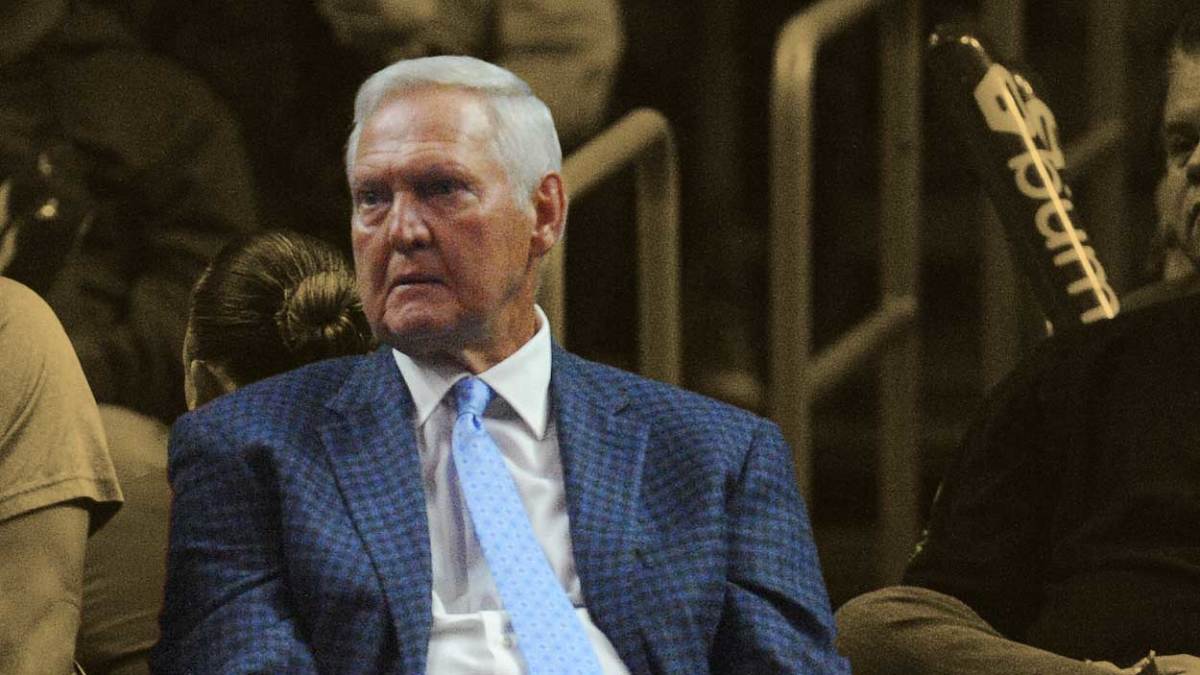
Jerry West, the legendary executive and basketball mind who served as a consultant for the Warriors during their championship runs, had his reservations about how much Golden State leaned on the 3-point line.
West uncertainty
West’s fingerprints are all over some of the greatest teams in history, and he watched from the front office as Stephen Curry, Klay Thompson and Kevin Durant rained 3-pointers at a historic rate while going to three straight NBA Finals. The results were multiple titles, but the legendary point guard saw cracks beneath the surface of sharpshooting.
Advertisement
“The other thing is, I think coaches have changed the game,” the late West, a 14-time All-Star and 1972 champion, said. “People value the 3-point line so much. You see shots taken, particularly when there’s a lot of time left on the shot clock, that I don’t think should be taken. I don’t think they’re good shots because it jeopardizes your defense when you take a quick shot from the corner and teams run out against you.”
His unease wasn’t about whether Curry and Thompson could make those shots; they were the best in the business. It was about the ripple effect. Taking quick threes early in the shot clock meant fewer opportunities to set the defense. A missed deep shot often turned into a fast break the other way. In the mind of the late executive, that imbalance wasn’t sustainable over the long haul.
Golden State’s success was built on breaking the traditional rules of basketball. Before Curry and Thompson became household names, the idea of winning a title while leaning heavily on 3-pointers seemed risky.
When the Warriors won their first championship in 2015, they attempted 2,217 3s during the regular season — the second-most in the league behind the Houston Rockets. They hit 39.8 percent of those shots, the highest mark in the NBA.
Advertisement
But with high volume came high variance. The Warriors’ 2016 NBA Finals collapse against the Cleveland Cavaliers exposed the dangers of living and dying by the perimeter shot.
In the decisive Game 7, Golden State shot just 15-for-41 (36.6 percent) from deep, while the Cavs breezed their way to 48 points in the paint. The 3s weren’t falling and without a consistent inside presence, the Warriors struggled to generate offense.
The 3-point game
West saw the risks in real time. Even after Durant arrived in 2016 and lifted the Warriors to two more titles, the superstar executive’s philosophy remained grounded in balance. The long ball has always been valuable and fun to watch, but over-relying on them, especially early in possessions — created defensive vulnerabilities.
Advertisement
“But it’s fun and creates fan interest,” West once said. “I know here in Golden State we have two guys in the backcourt who can really give our fans fun evenings with their shooting ability. But at the end of the day this is all about winning.”
West’s career, both as a player and executive, was defined by winning. He built “Showtime” with the Lakers in the 1980s, blending flair with structure. He helped craft the early-2000s dynasty around Shaquille O’Neal’s dominance and Kobe Bryant’s skill. His vision of championship basketball combined versatility and control, not just firepower.
The Warriors, of course, thrived despite — or perhaps because of their 3-point obsession. Curry and Thompson became the most prolific shooting duo in league history. Durant’s arrival made them nearly unbeatable. But West’s caution wasn’t misplaced. After the 2014 MVP’s departure in 2019 and Thompson’s injuries, the Warriors spent years recalibrating their identity before their championship in 2022.