
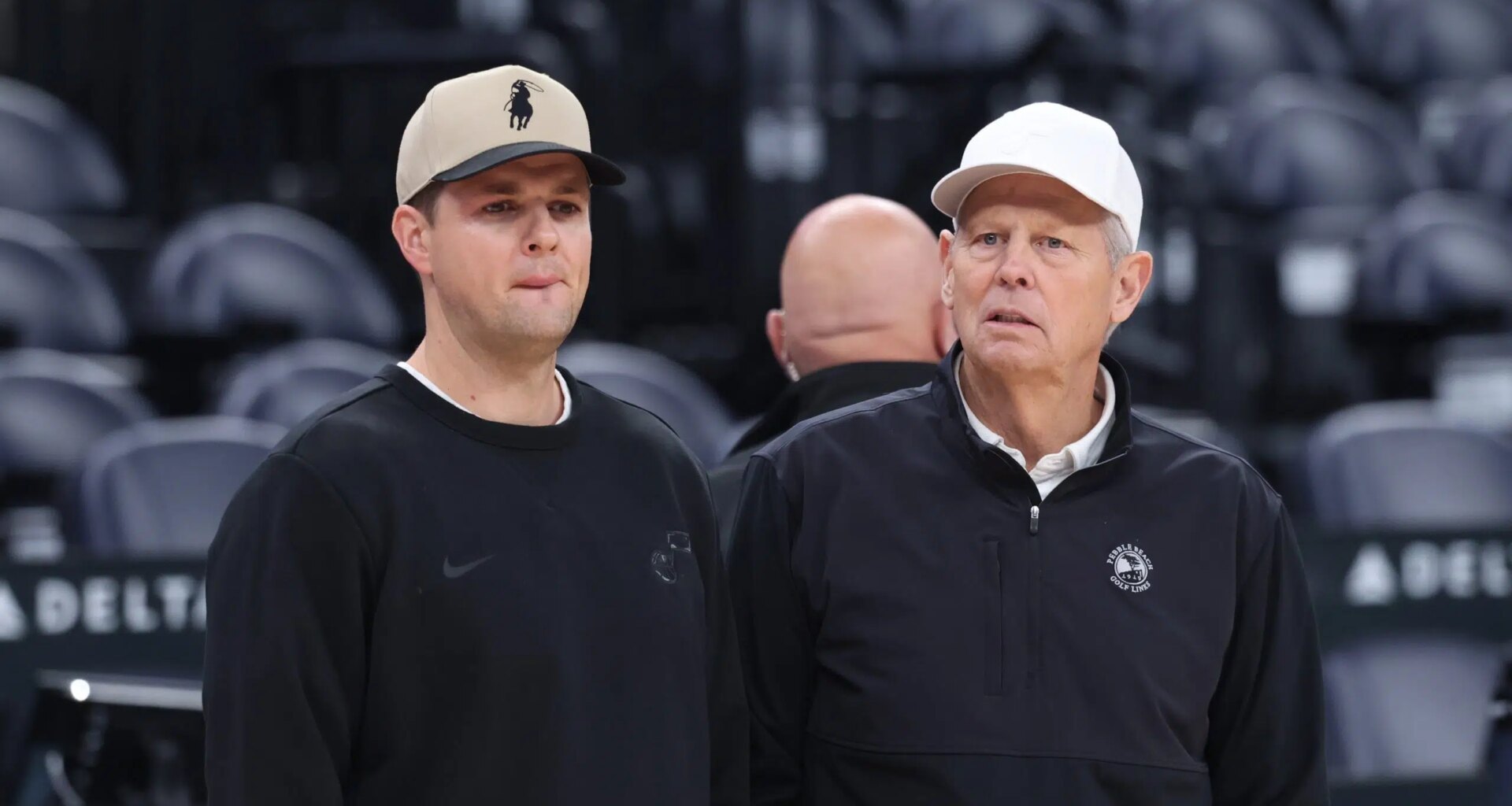
The Utah Jazz are popular in the media these days for all the wrong reasons. They have become the poster child for the tanking problem in the NBA. Fanbases across the internet have called for the Jazz to be investigated or punished for their endeavors.
For anyone curious, the Jazz aren’t the only, nor the first, team to tank in the NBA.
The Philadelphia 76ers are one of the most famous organizations to champion the concept of tanking. “The Process” began in 2013, when the 76ers traded would-be star Jrue Holiday for Nerlens Noel to start losing games.
For many years, the 76ers threw away seasons to draft quality players in hopes of ultimately winning a championship. To this day, The Process hasn’t truly ended – even though they drafted players like Joel Embiid, they never made it to the championship. With teams like the 76ers and now the Jazz reportedly sitting players to improve their draft position, the league’s attention has been drawn to the longstanding issue.
Number 6️⃣ in our Top 🔟 “WHAT IF” moments in Philly sports history…
What if the Sam Hinkie was able to finish “The Process”❓ pic.twitter.com/R4AXgMEHcR
— PHLY Sports (@PHLY_Sports) July 16, 2025
When Did Tanking Start?
According to NBA reporters, tanking in the NBA truly started in the year 1984. At that time, the draft would coin flip for the bottom two teams in the league to see who got the No. 1 pick. The rest of the draft order would be decided by the bottom teams’ records. Each iteration of the draft the NBA put out still faced the same issue: Teams figured out how to throw a season for a draft pick.
The most recent change in the draft odds happened in 2019 where the NBA flattened the odds for the bottom teams in the draft. The top three teams each have a 14% chance to win the first pick, and the odds get decreasingly lower from there.
Why Are the Jazz Tanking?
In 2021, the Jazz hired former Boston Celtics general manager Danny Ainge. Seeing the Jazz’s current core fall in the first round to the Dallas Mavericks in 2022 was the final straw for Ainge and the rest of the Jazz front office.
Losing to the Mavericks was among the many playoff failures in the Donovan Mitchell and Rudy Gobert era. So, Ainge decided to make a big change for the team’s long-term success. Utah traded both key pieces, Gobert and Mitchell, in 2022.
Ainge is known for making big trades and rebuilding teams quickly. He did this in Boston when he traded Isaiah Thomas and drafted Jayson Tatum and Jaylen Brown. His rebuild led to a Celtics championship in 2024. Jazz owner Ryan Smith fully supported Ainge’s approach to rebuilding teams.
“We’re not afraid to tear things down if they’re not working, and we’re always trying to climb,” said Smith in an early interview. “Is our goal to be really good or is our goal to win a championship? In Utah specifically, we are trying to win a championship.”
Can’t Be Ninth
For Jazz Nation, the rebuild has been a long, arduous process. Without being a major free agent destination, is there any surprise they’d resort to the measure of tanking? The NBA has a problem in that their culture is constantly bagging on smaller markets. Tanking offers another way teams can find blue-chip talent that wouldn’t come to them otherwise.
What hasn’t helped this year is that the Jazz owe their protected lottery pick to the Thunder if it falls outside of the top-eight selections, since former Jazz general manager Justin Zanik traded Derrick Favors and the pick to OKC for a salary dump.
The Jazz hope their rebuild can mirror the Thunder’s. The Thunder made good trades and tanked so they could gain talent like Chet Holmgren and Jalen Williams. It led the Thunder to their first championship in 2025.
Many could argue that it worked for the Jazz previously when they drafted the likes of Karl Malone and John Stockton. Even though it painfully didn’t lead to a championship, they acquired their talent via the draft.
Unintended Consequences
Tanking has become a heavily discussed topic in NBA meetings. Fans of the sport have been complaining for years now for the league to fix the issue. The Jazz unintentionally helped this narrative get pushed in said meetings.
In the 2022-23 season, the Jazz started with a 10-4 record in their first 14 games. Even though the front office tried stripping the team down to the studs, players like Lauri Markkanen broke out, making the team better. Halfway through the season, the Jazz traded away key veterans like Mike Conley to get worse, which they did. They tanked enough to keep their picks. The same thing happened in the 2023-24 season as well.
Recent Utah Jazz Regular Season Accolades
23-24 Keyonte George All-Rookie
22-23 Walker Kessler All-Rookie
22-23 Lauri Markkanen MIP
22-23 Lauri Markkanen All-Star
21-22 Donovan Mitchell All-Star
21-22 Rudy Gobert All-Star
What’s the next award a Jazz player will win? pic.twitter.com/5zq4tmkq6n
— Jazz Lead (@JazzLead) September 18, 2024
Then the 2025 season rolled around, and the Jazz completely gave up. That year they sat so many players, like Markkanen, again. Eighth-overall pick Taylor Hendricks also broke his leg that year and rookie Cody Williams struggled heavily in the NBA.
All those factors aided the Jazz in having the worst record in the NBA the 2025 season, and what pick did Utah land? All that losing gave the Jazz the fifth-overall pick while the Dallas Mavericks leaped frogged everyone to get the first-overall pick.
In a way, the flattened lottery odds did their job at creating a more luck-driven draft. Though that hasn’t stopped teams like the Jazz or Washington Wizards from tanking this year.
Any Bright Tanking Ideas?
So, the NBA has proposed a few ways to curb tanking: solidifying lottery positions on March 1 every season, limiting pick protections, and disallowing teams from picking in the top four consecutive years.
Limiting pick protections may cause teams to not want to engage in trade talks with the threat of losing draft capital to others. Having the draft positions decided on March 1 is interesting. The only issue there is that teams may still sit players to help them stay healthy for next season.
Of those suggestions, the one that could work is making sure teams don’t draft in the top four consecutively for multiple years. Major League Baseball already has a rule in place like this to mitigate its own tanking. The rule can get complicated, but small market teams can pick in the lottery two years in a row while big markets can only do so once. After that, teams cannot pick in the lottery; they can only pick at tenth or higher in the draft. Once that consecutive picking streak is broken, teams can once again pick high in the lottery.
This could work in the NBA, but the league would have to be careful not to hurt small-market teams’ chances at acquiring better talent. The years that they are incentivized to win could mean better Play-In tournament races. Instead of the same three teams constantly playing in the Play-In, the NBA might build diversity to help gain more interest in this preliminary round of the playoffs
The Mess You Made
As of right now, tanking is a necessary evil the NBA has to deal with in order to help bad teams become competitive again.
While the Jazz haven’t necessarily flourished in the lottery, the draft has helped them gain talents like Keyonte George and Ace Bailey.
The NBA is now forced to either make a change to its culture or the draft. A consecutive-drafting law could help their plight. Something else they can do is prop up and talk better about their smaller markets.
If the NBA could show off all of their markets, more players could be incentivized to go to different places besides New York or Los Angeles, hopefully helping other teams acquire better talent in the process.