
The 3-and-D archetype will always have value in the NBA. That value, however, is rarely static. When the three-point shot slips, the margin for error narrows quickly, and players who once felt indispensable can suddenly look more situational than foundational.
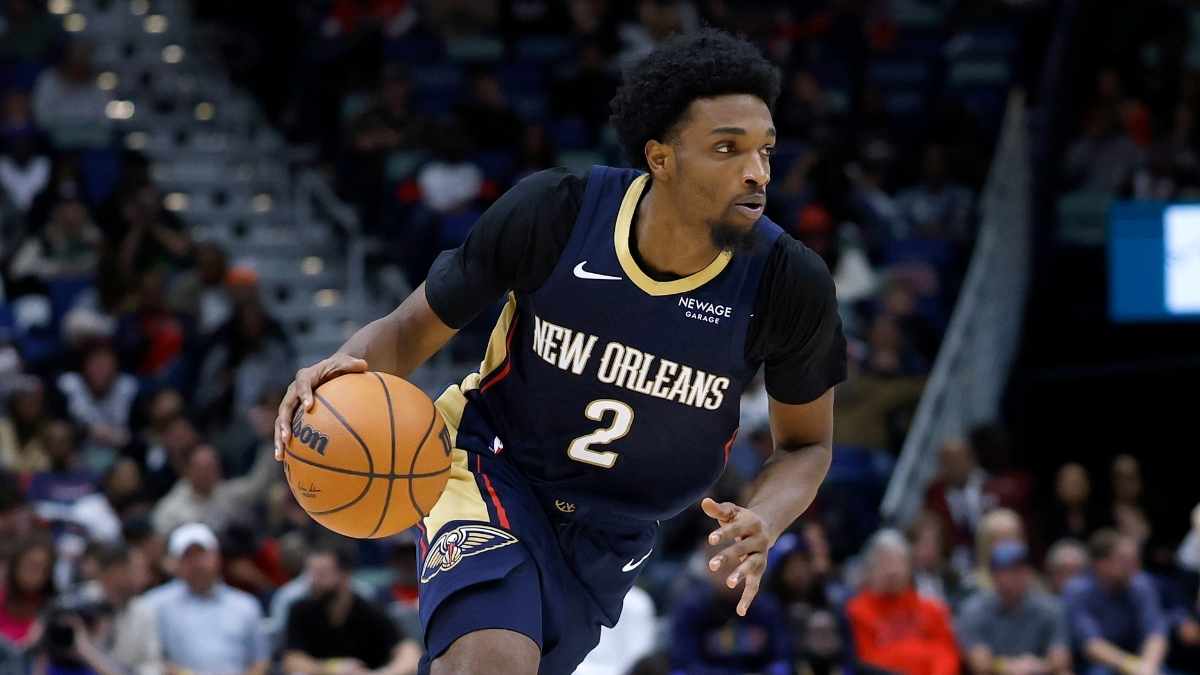
That tension sits at the center of the New Orleans Pelicans’ evaluation of Herbert Jones.
Last season, Jones connected on 41.8% of his three-point attempts, elevating him into the conversation as one of the league’s most reliable two-way wings. That efficiency helped justify a long-term extension and positioned him as a core piece. This season, the shot has cooled. Jones is hitting 30.4% from three through 26 games, while averaging 9.1 points, 3.5 rebounds, and 2.5 assists in 28.1 minutes per game.
That dip hasn’t erased his value. Jones remains an elite defender and a high-end rotation player. But for a Pelicans team spiraling toward the bottom of the Western Conference, it does reopen a difficult question: is this the right timeline to prioritize a ceiling-raiser?
That uncertainty makes a call from the Los Angeles Lakers at least worth entertaining.
Los Angeles Lakers Land Herb Jones in NBA Trade Proposal
New Orleans Pelicans Receive:
Los Angeles Lakers Receive:
Why the New Orleans Pelicans Do the Deal
Jones’ individual impact hasn’t translated into wins. New Orleans sits at 12–37, last in the Western Conference, with a minus-6.8 point differential and one of the league’s least stable offensive profiles. That reality isn’t an indictment of Jones—it’s a reflection of roster context.
Jones is a multiplier. He amplifies stars. He does not create offense. On a team whose foundation is still forming, that distinction matters.
The Pelicans’ focus now tilts toward long-term alignment around rookie Derik Queen and future flexibility. Jones would be a seamless complement next to Queen eventually, but the timeline mismatch is hard to ignore. New Orleans already has significant money committed to Zion Williamson, Dejounte Murray, and Trey Murphy III. Jones is owed $13.9 million this season, with his salary escalating through 2029–30.
In that light, converting a premium role player into an unprotected Lakers first-round pick carries real appeal. The 2031 pick sits far enough out to capture downside risk in Los Angeles, making it one of the league’s more attractive future assets.
Jarred Vanderbilt and Gabe Vincent help make the math work. Vanderbilt is averaging 4.9 points and 5.1 rebounds in 19.5 minutes, while Vincent has contributed 4.8 points and 1.3 assists across 26 games. Neither is a long-term cornerstone, but both are movable contracts that preserve flexibility.
Why the Los Angeles Lakers Do the Deal
The Lakers occupy a different economic and competitive reality. At 28–18, they sit fifth in the Western Conference, firmly in the playoff mix behind a core built around Luka Dončić and LeBron James.
Draft capital matters less in Los Angeles than fit and immediacy. The Lakers already carry one of the league’s highest payrolls, with Dončić under long-term control and James still commanding a max salary. This is a window roster, not a development one.
Jones fits that mandate cleanly.
Defensively, he provides exactly what the Lakers lack on the wing: a point-of-attack stopper who can absorb the toughest assignments and reduce the burden on Dončić. Offensively, even with the dip in shooting, Jones still spaces the floor enough to function alongside a primary playmaker. His value isn’t volume—it’s connectivity, effort, and defensive cover.
Moving Vanderbilt and Vincent clears redundancy while consolidating talent into a single playoff-caliber piece. The outgoing salaries—$11.6 million for Vanderbilt and $11.5 million for Vincent—allow Los Angeles to absorb Jones’ $13.9 million without structural disruption.
The Bigger Picture for Herb Jones
Three-and-D wings don’t carry teams. They carry the players who do.
Dončić is an offensive engine capable of bending defenses on his own. What he needs are teammates who convert advantages and handle the invisible work—defensive assignments, rotations, and energy plays that don’t show up in usage rate.
Jones checks every one of those boxes.
For New Orleans, the logic cuts the other way. Jones is valuable, but value peaks when paired with established offensive engines. Until Derik Queen—or someone else—reaches that level, Jones’ impact will remain muted by circumstance.
Flipping him now for draft capital doesn’t close a window. It acknowledges that one hasn’t fully opened yet.
And if the Pelicans hit on that future pick?
They might draft the next great 3-and-D wing—this time on the right timeline.
Latest NBA News & Trade Rumors