
CLEVELAND, Ohio — There’s a saying that goes ‘if ain’t broke, don’t fix it.’ But in the NBA, good doesn’t mean you can’t get better.
The Detroit Pistons are a perfect example of that.
Just two seasons removed from setting the NBA record for the longest losing streak the Pistons (33-11) are sitting atop the Eastern Conference standings with the All-Star break right around the corner.
Built on the same rugged defense that has been a staple of every great Pistons team, Cade Cunningham’s emergence into a full-fledged star and the willingness of the group to embrace head coach J.B. Bickerstaff’s system has Detroit basketball in a place it hasn’t been in nearly two decades.
But inefficiencies from 3 could limit the Pistons’ ceiling come playoff time.
The Pistons rank 27th in the NBA in three‑point attempts per game (32) and 21st in three‑point percentage (35%).
The loss of Malik Beasley and Tim Hardaway left the Pistons without two of it’s best shooters from last season. While Duncan Robinson and Tobias Harris have been a sufficient answer, their reliance on Robinson is extreme.
He’s hitting 40.3% from deep on 120 total makes, far ahead of every other Piston, while Cade Cunningham sits at just 32.1% from three and their third‑leading shooter, Javonte Green, has only 48 made threes all season
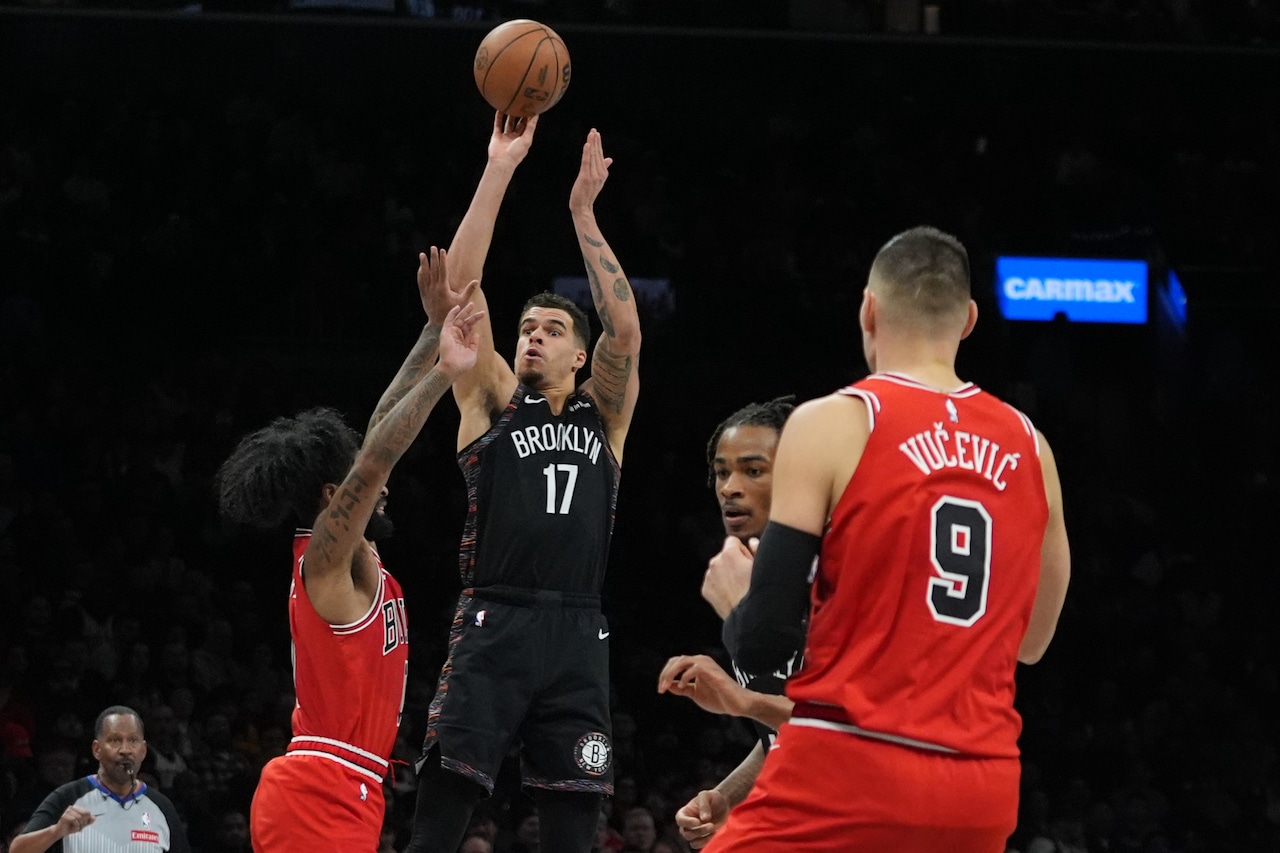
A move for a high-volume, high-efficiency shooter like Michael Porter Jr. from the Brooklyn Nets could unleash Detroit’s offense to heights it hasn’t seen and change how opponents approach the Pistons defensively.
Porter is in the middle of a career year, with 137 3s on a 38.9% clip. He’s third in the NBA in 3s made per game (3.7) and is averaging 24.9 points per game.
The fit goes beyond shooting. Porter is on a contract that pays him $38,333,050 this season and $40,806,150 next year as part of a maximum rookie extension that runs through 2026‑27.
That timeline aligns perfectly with Detroit’s competitive arc. Cade Cunningham and Jalen Duren are ascendant now, and Ausar Thompson’s development curve points toward the prime years of Detroit’s new window. Porter gives them a win‑now No. 2 scoring option whose contract ensures he stays in that window.
Trading Tobias Harris and Ron Holland is what makes the construction possible and strategically clean.
Harris, despite being a steady veteran presence, profiles more as a stabilizer than an elevator on a team chasing the top of the East, and he’s on an expiring contract. His skillset overlaps with pieces Detroit already has, but without the game‑breaking gravity Porter provides.
Holland, meanwhile, represents the type of young forward prototype rebuilding teams covet. His timeline is simply longer than Detroit’s needs right now. Including him in the deal gives Brooklyn a developmental asset while clearing runway in Detroit’s rotation for win‑ready contributors.
Porter’s arrival not only fills Detroit’s largest statistical hole it transforms the geometry of their offense. The Pistons are 23–5 when they make 10 or more threes this season, but only 7–5 when they shoot below 30%.
Insert Porter’s volume shooting, deep range, and ability to hit contested looks, and the ripple effects become obvious: defenses can no longer overload Cunningham, Duren gains more clean rolls to the rim, and Detroit’s drive‑and‑kick game becomes sustainable.
Porter is entering his prime at the exact moment Detroit moved from rebuilding to contending. In Detroit, Porter doesn’t just fit a need; he becomes the player who unlocks the next layer of the Pistons’ ceiling.
The last time a Pistons teams was in contention and made a move for a 6-foot-10 shooter it was Rasheed Wallace, and that turned out pretty well.
There’s still more than a week until the trade deadline, so while we wait and see if the Pistons do something to address their outside shooting woes here are a few other trades teams should make before the February 5 trade deadline.
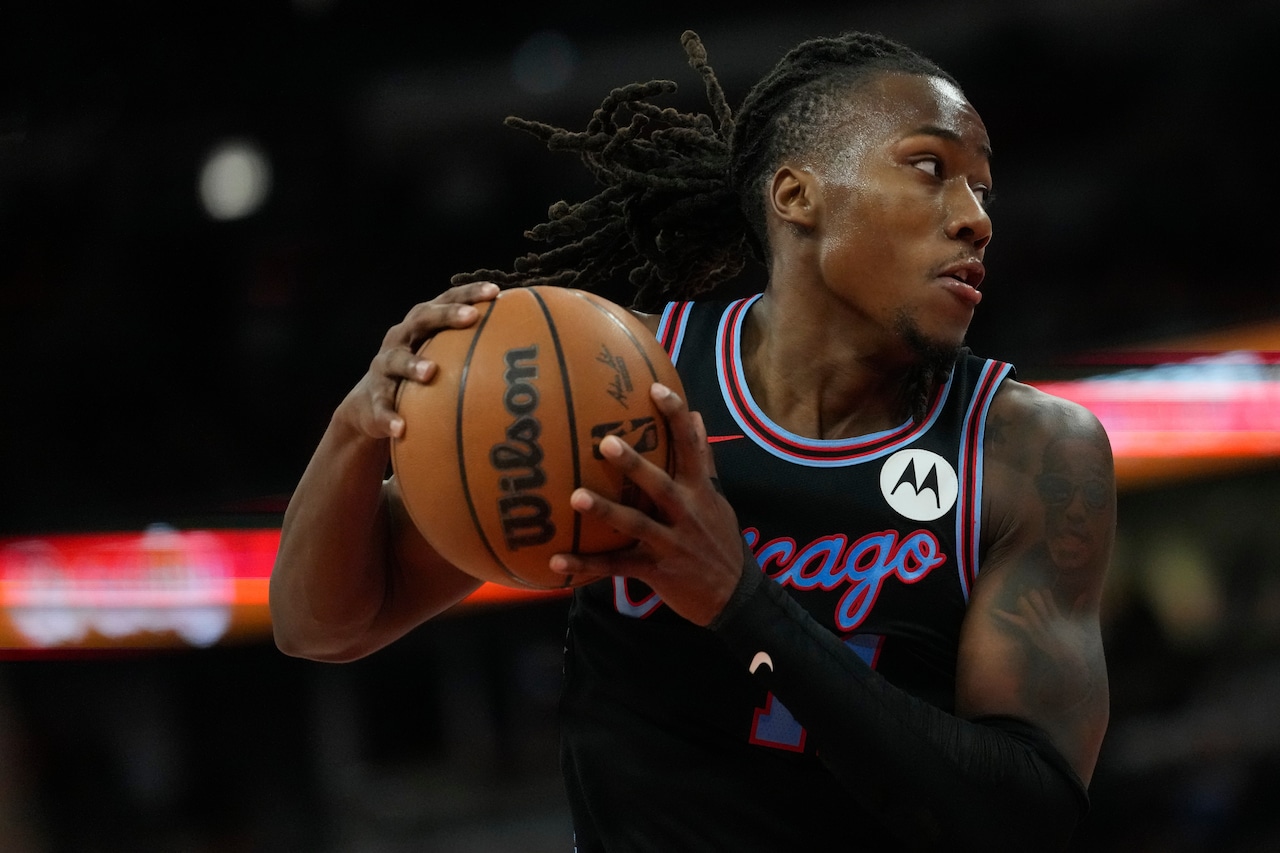 Chicago Bulls guard Ayo Dosunmu.APTimberwolves get their PG
Father time, it appears has caught up with Mike Conley, Rob Dillingham has not been able to crack the rotation and Bones Hyland is too much of a wildcard.
Yes, the Minnesota Timberwolves are in the market for a point guard.
Fortunately, the Chicago Bulls may have point guards for the choosing in, Coby White, Ayo Dosunmu and Tre Jones (if he’s available).
White presents the most offensive upside of the three guards but comes with complications. As a pending free agent, he could command a significant contract this offseason.
Dosunmu, also a pending free agent, offers a more affordable alternative. He provides strong perimeter defense and shoots 45.7% from 3-point range.
Jones brings different strengths to the table, averaging 5.8 assists per game with two years remaining on his contract.
Minnesota essentially has its pick of the litter, but Ayo Dosunmu is the answer to their backcourt problems that makes the most sense.
He gives the Timberwolves a ready-made solution for life after Mike Conley at the best value, turns the ball over the least of the three and is the most versatile defender of the group. He doesn’t need the ball in his hands to be a factor on the floor and can thrive in an off-ball guard role or as an initiator on the offensive end.
Dosunmu is a seamless fit next to a star like Anthony Edwards. He currently plays out of position oftentimes because the Bulls put him and White on the floor together. Being in Minnesota would allow him to move back to playing point guard full time and gives the Timberwolves a younger, athletic, defensive guard who can play 30 minutes a night and hold his own.
If the Bulls would move Dosunmu for a package that includes Rob Dillingham, the eighth pick in the 2024 NBA Draft, and a pair of second-round picks, that should be a no-brainer from the Timberwolves standpoint.
Dillingham gets the opportunity to continue to develop, the Bulls move on from one of their seven expiring contracts and the Timberwolves get an a point guard for the future. Everybody’s happy.
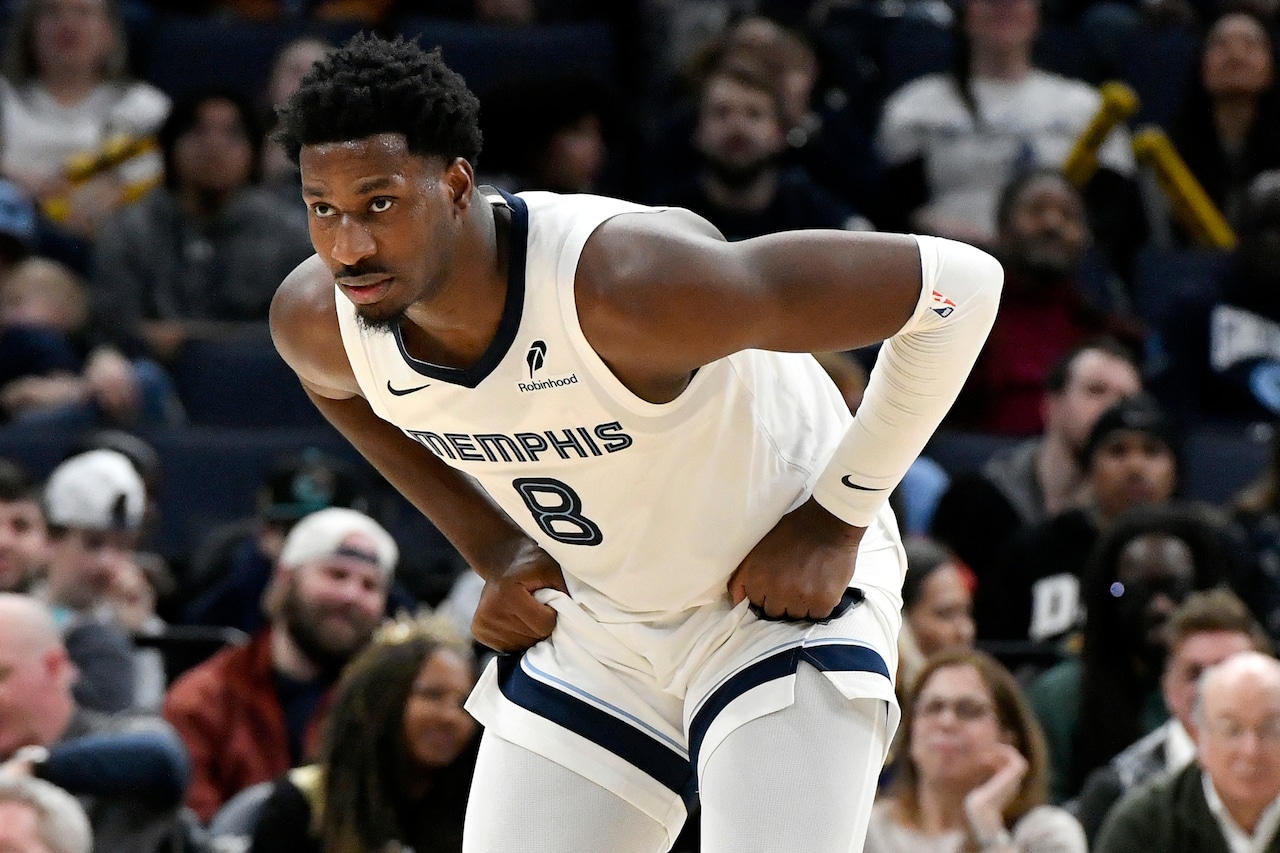 Memphis Grizzlies forward Jaren Jackson Jr.APBoston adds a big piece to their frontcourt
Just because Jayson Tatum is injured does not mean this is a lost year for the Boston Celtics.
Jaylen Brown is a genuine MVP candidate this season and the Celtics lead a tight race for second in the Eastern Conference. But how long can they sustain that success without the big bodies needed to rebound effectively in the Eastern Conference.
Neemias Queta has been solid, averaging 10 points and eight rebounds in 24 minutes per night, but is not yet someone the Celtics can rely on to anchor the frontcourt for a playoff run.
Queta also isn’t the only big body already on the roster, but each has their flaws. Queta is young and still developing, Luka Garza is a depth piece and Xavier Tillman is more role‑player than centerpiece.
In the ideal world for a Celtics fan, the luck of the Irish would bring Ivica Zubac to Beantown and the Celtics would put the east on notice, adding one of the league’s best rebounders to a team that already has championship DNA.
Zubac, 28, is double-double for a second straight season 14.8 points on 60.3% from the floor and is third in the NBA at 11 rebounds per game.
But the Clippers have won 16 of their last 19 games and are surging out of the the depths of the Western Conference standings. Trading your franchise center in the middle of an upswing doesn’t make a lot of sense.
But another Western Conference big may be an even better fit.
Jaren Jackson Jr. checks virtually every box the Celtics are trying to fill in their frontcourt.
The 26-year old, brings elite defense, shot‑blocking instincts and switchability, the exact traits Boston has lacked this season. He’s a former Defensive Player of the Year, and is one of the league’s most disruptive bigs at the rim and in space, giving Boston the kind of defensive backbone that elevates high‑end playoff teams.
Jackson is averaging 18.9 points, 5.7 rebounds, 1.9 assists, 1.7 three-pointers made and 1.5 blocks, while shooting 47.9% from the field and 36.3% from 3.
He stretches the floor as a reliable pick‑and‑pop threat, forcing opposing bigs to step away from the rim to guard him on the perimeter, and playing next to high‑gravity creators, like Jaylen Brown (and eventually Jayson Tatum), would generate cleaner looks than he sees in Memphis’ injury‑ravaged ecosystem.
He’s like a fusion of former Celtics bigs Kristaps Porzingus and Robert Williams that’s right at the beginning of his prime.
The challenge is long‑term. Jackson’s salary escalates to an average north of $50 million over the next three seasons, which, when combined with the rising deals for Tatum, Brown, and Derrick White, would push Boston deep into the second apron with limited roster‑building flexibility.
In the short term, however, the Celtics can make the money work through an Anfernee Simons‑centered outgoing package.
Simons, some combination of Sam Hauser, Jordan Walsh and Hugo González’s contracts and some picks would be the place to start to actually get a deal done.
Teams have shown willingness to swallow tax penalties when the incoming player is a top‑flight frontcourt anchor. If Boston believes Jackson is the missing piece to reestablish themselves as an elite contender and prepare for Tatum’s eventual return, the contract math is tight but attainable.
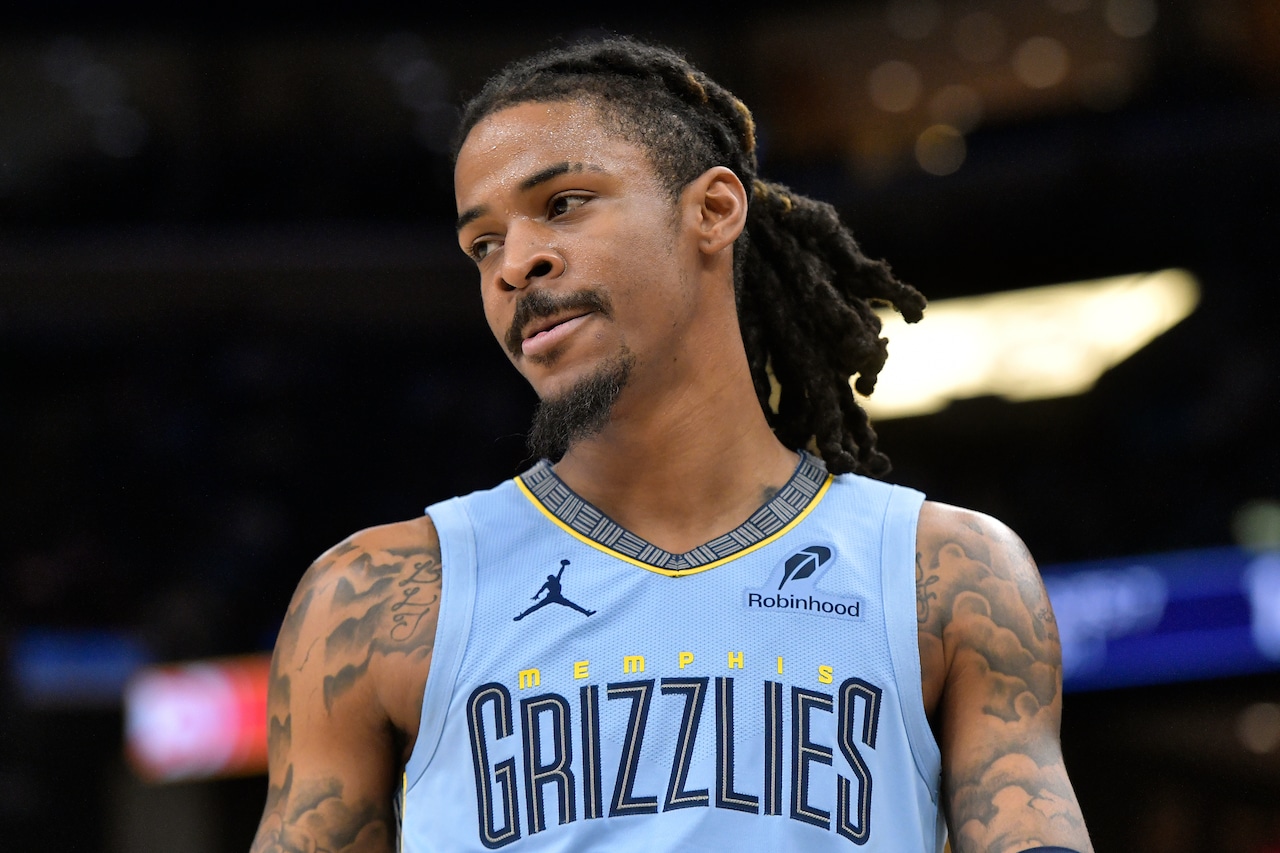 Memphis Grizzlies guard Ja Morant.APGuard swap sends Morant to South Beach
We may be living in the era of ‘positionless’ basketball, but it still helps to have clearly defined roles.
In a nutshell, that addresses why the Miami Heat have a serious problem on their hands.
The Heat have managed to claw their way into position for a spot in the play-in tournament without maybe the NBA’s most important role: a starting point guard.
Davion Mitchell is a pesky defender, a knockdown shooter and a legitimate facilitator, but he’s best in a backup role as a solid rotation piece.
Mitchell and Kasparas Jakučionis are the only point guards on the Heat roster that have gotten any significant playing time.
Their other guards include Norman Powell, who leads Miami at 23.1 points per game, Pelle Larson, Dru Smith and Tyler Herro.
Herro has missed 36 games so far this season. Ja Morant has missed 24.
Herro has become increasingly unreliable for the Heat due to persistent injuries. With Powell and Andrew Wiggins on the wing the Heat have satisfactory options for life without Herro, but Miami needs a true lead guard.
Morant, despite his own turbulent season, is a former All‑NBA offensive engine averaging 19.0 points and 7.6 assists when available. He gives the Heat rim pressure, shot creation and structure at the point of attack that Herro, even when healthy, doesn’t provide.
With Powell and Andrew Wiggins on the wing Miami has an answer on the perimeter without Herro. What they don’t have is a lead guard that can offer what Morant can.
On the other side of the coin Herro checks off all the boxes that the Grizzles could want in return for Morant.
He gives the Grizzlies a young, high‑level perimeter scorer under long‑term team control. Herro can be the offensive focal point who can space the floor, create shots, and carry usage without needing the same system infrastructure that Morant requires.
His All‑Star production last season (23.9 points, 5.5 assists per game) shows he can scale up offensively when healthy, and his contract aligns with the Grizzlies’ timeline as they approach what appears to be a full rebuild.
Miami gets the superstar upside swing they’ve been missing, and Memphis gets a clear organizational reset. The swap that serves both teams’ long‑term goals.
Financially, Miami can make the contracts match. Morant earns $39.4 million this season on his designated rookie max extension. The Heat could construct a workable package centered around Tyler Herro, whose salary aligns with Morant’s, and a young role player or a first‑round pick.
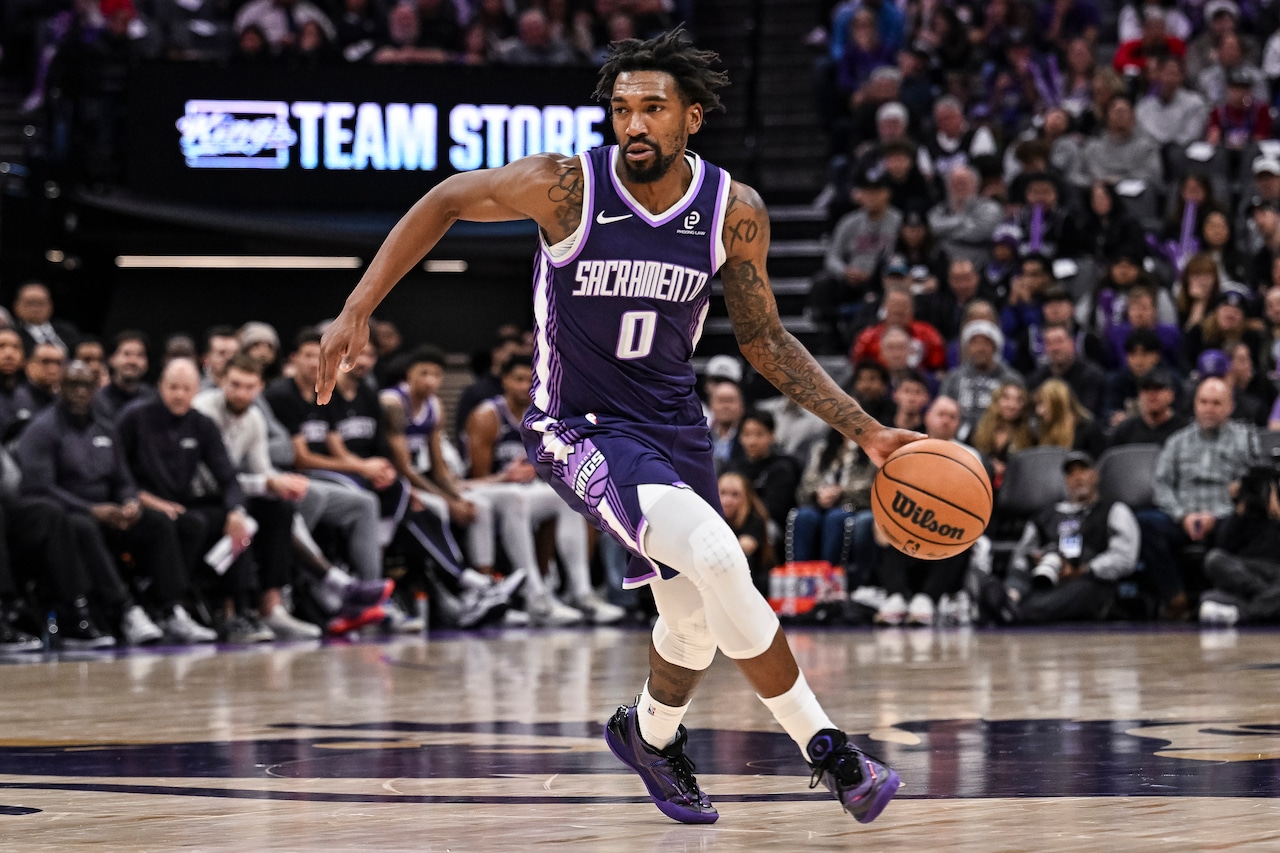 Sacramento Kings guard Malik Monk.APClippers acquire Kings guard
Bradley Beal has had a rough season between injuries and not looking like the player he was a couple years ago. He was acquired after Norman Powell, who had the best year of his career last season before one-upping himself this year, left for Miami.
That has left the Los Angeles Clippers without a consistent, reliable third option during the minutes that James Harden and Kawhi Leonard are not on the floor.
The Clippers, meanwhile, have won 16 of their last 19 games, clawing their way into play-in contention, but without another a second‑unit scorer and creator who can keep the offense afloat they can only go as far as Leonard and Harden can take them.
Enter Malik Monk.
The 2024 Sixth-man of the Year runner-up, Monk gives the Clippers help now without compromising potential plans for the future.
A high‑end microwave scorer, Monk can run bench offense, create off the bounce and is a great bail out option on late-clock possessions.
Monk is averaging 12.5 points, 2.5 rebounds and two assists in just over 22 minutes per night. That’s coming off a season in which Monk averaged a career highs with 17.2 points, 5.6 assists and 3.8 rebounds.
Part of his problem is that there are so many guards and ball handlers on the Kings’ roster that he doesn’t have the luxury of doing what he does best on a consistent basis.
A move to Los Angeles would greatly benefit Monk, the Clippers and the Kings, who could get one of their many cooks out of the kitchen.
Monk is earning $18.8 million this season on a deal that runs through 2026‑27 with a 2027‑28 player option.
If the Clippers flip Bogdan Bogdanović’s $16.02 million expiring‑ish salary, plus a small contract like Kris Dunn and two second‑rounders for Monk, they keep their 2026 cap space intact while staying compliant with first‑apron trade rules.
On the court, Monk gives the Clippers a second unit engine that, as of right now, they lack entirely. For a Clippers team running out of time, money, and picks, Monk is the rare upgrade who’s actually attainable, and is exactly the burst they’re missing.