
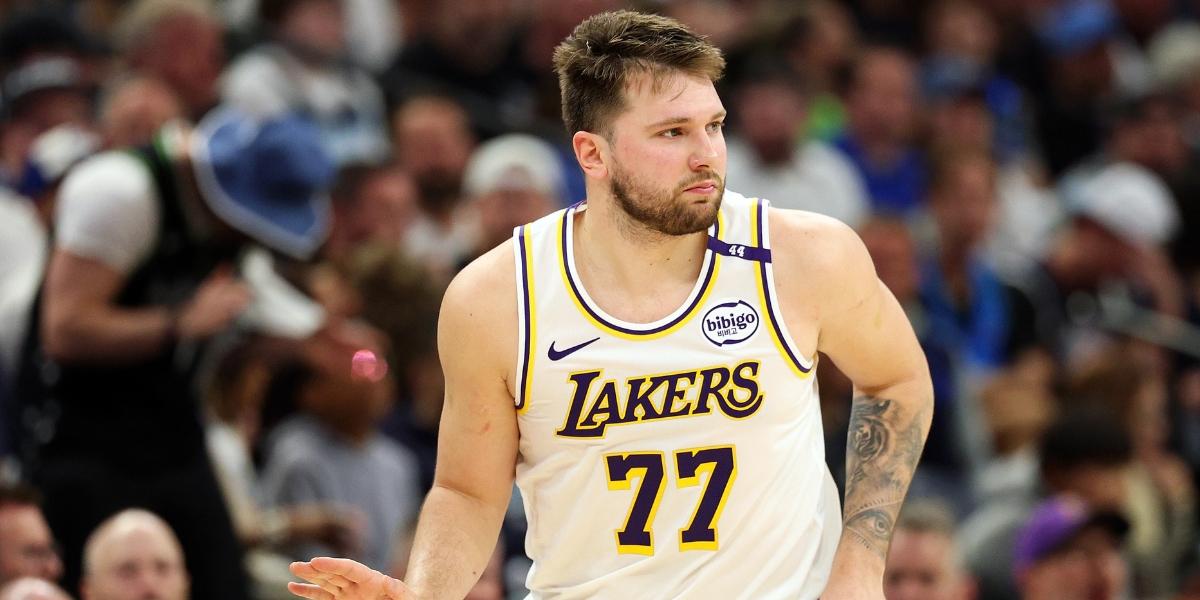
It is Christmas Day 2024, but for Luka Dončić a brutal January is only just beginning. The former Real Madrid star suffers a calf strain during a Dallas Mavericks game against the Minnesota Timberwolves and is ruled out for at least a month.
Mavericks general manager Nico Harrison is already uneasy. In one of those quiet, behind-the-scenes conversations with ESPN reporter and Dallas insider Tim MacMahon, he begins to sketch out what would become a dramatic wake-up call for his franchise star, an episode MacMahon recalled just days ago.
“It’s always the same issue, it’s always the same issue…,” Harrison says, frustrated, referring to Dončić’s physical condition.
“And what can you do about it?” MacMahon replies, already sensing where this is heading: another attempt to plant a story about Luka’s weight, with the executive staying safely in the shadows.
“Listen, man, I’m tired of being the bad guy,” MacMahon fires back. “I’m tired of always being the one reporting on his conditioning while you never put your name on it. If you want to complain, put your name on it, because I’m tired of taking all the heat. So what are you going to do?”
“If I have to trade him, I’ll trade him,” Harrison replies.
“Yeah… suuuure you will,” MacMahon answers, barely hiding his disbelief.
He did. Just after midnight on the U.S. East Coast, between February 1 and 2, 2025, Shams Charania posted on X that the Dallas Mavericks were trading Luka Dončić to the Los Angeles Lakers, with Anthony Davis as the centerpiece of the return.
Charania, who admitted his hands were shaking as he typed, had to follow up to confirm it was real. Dallas was sending Dončić to Los Angeles in one of the most shocking trades in NBA history. When Charania reports something, it’s gospel.
Across the world, fans woke up and stared in disbelief at their phone screens. Dončić, meanwhile, hurled his phone to the floor in a mix of devastation and rage.
The Slovenian felt betrayed, exiled from Dallas, stabbed in the back by the very franchise he had embraced since 2018 and carried to the NBA Finals just months earlier.
Dallas was left emotionally shattered and materially gutted by Harrison’s still-inexplicable decision. In exchange for a generational talent entering his prime at 25, the Mavericks received an injury-prone center nearing 32, Max Christie, and a single 2029 first-round pick.
Maxi Kleber and Markieff Morris also went to Los Angeles, while Utah briefly entered the deal to acquire Jalen Hood-Schifino and two second-round picks. But those details barely mattered in what many immediately labeled the most jarring trade the league had ever seen.
In Los Angeles, the reaction could not have been more different. It felt like a savior had fallen from the sky, the next superstar destined to join the pantheon of purple-and-gold legends: Magic Johnson, Jerry West, Kobe Bryant, Kareem Abdul-Jabbar, Shaquille O’Neal, Pau Gasol.
Dallas surrendered its future to a Lakers team with little runway left, built around a 40-year-old LeBron James. A franchise increasingly focused on spectacle and business (selling the Hollywood story of a father and son playing together) rather than on long-term basketball sustainability.
LeBron was no longer the sole face of the franchise. On a bleak night for Dončić, while dining with his family in New York after facing the Knicks, he received a call from Lakers GM Rob Pelinka welcoming him to Los Angeles.
In one of those script-perfect NBA ironies, the Lakers faced the Knicks again hours later, Dončić’s first game at Madison Square Garden as a Laker.
Two of the greatest offensive minds in basketball sharing the floor was box-office gold. Yet the real drama lay elsewhere: the sudden, brutal breakup between the Mavericks and the blond prodigy once expected to deliver a championship to Dallas, just as Dirk Nowitzki had.
Dončić had just come within striking distance of a title in the 2024 Finals. Harrison, however, focused not on the achievement but on the failure—Dallas losing 4–1 to Boston. In his eyes, Dončić’s defensive shortcomings raised a fundamental question: could he truly be the centerpiece of a championship team? That doubt shaped everything that followed.
From questioning a $345 million supermax extension to dismantling Dončić’s inner circle, Harrison initiated what felt like a quiet war against his own star. Reports claimed Luka reached 269 pounds early in the 2024–25 se
ason. Leaks painted a picture of beer, hookah, and poor habits.
All the while, Harrison kept his plans airtight. No leaks. No rival bidders. Only the Lakers.
And when he finally revealed his hand to Pelinka in a January 7 meeting at a Dallas hotel, the Lakers executive pounced. Framed as a favor—taking on a flawed generational talent—Pelinka made clear he wouldn’t overpay. Anthony Davis, and little else.
Pelinka left smiling. Dallas ownership, initially incredulous, ultimately stood by the move—Patrick Dumont delivering a statement that only poured gasoline on the fire.
“If you look at the greats… Michael Jordan, Larry Bird, Kobe Bryant, Shaquille O’Neal—they worked relentlessly to win,” Dumont said. “If you don’t have that, it doesn’t work.”
Dončić denied the accusations during his Lakers introduction. Calm. Measured. Hurt.
“I thought I would spend my whole career there. Loyalty is a big word for me,” he said.
Dallas exploded. Protests. Chants. Front-page headlines. “Luka was ours.”
The Mavericks became the league’s punchline. Injuries piled up. Kyrie Irving went down. Anthony Davis barely lasted a game. The season ended in the play-in. And yet, somehow, fate intervened.
Against all odds, Dallas landed the No. 1 pick in the draft—Cooper Flagg. A 1.8% miracle. Harrison called it destiny. Critics called it conspiracy.
Dončić, meanwhile, rebuilt himself. Physically. Mentally. Publicly. He showed up to Los Angeles in the best shape of his life, silencing critics and landing on the cover of Men’s Health.
The Lakers committed to him. Three years. $165 million. LeBron was left in limbo.
Eventually, Dallas fired Harrison. The chants never stopped. Even Flagg couldn’t drown them out.
One year later, the trade still divides the league. Harrison lost his job but left behind a future. Dončić found a new home, and new joy, playing MVP-level basketball while vowing to bring championships to Los Angeles.
The Mavericks’ return, meanwhile, has been a disaster. Davis remains injured. The standings are unforgiving. The trade looks worse by the week.
Yet the final verdict remains unwritten. Because for all the noise, the excuses, the betrayal and the redemption arcs, judgment will come down to one thing only: Whether Luka Dončić wins a ring. That is the only sentence that will close this story.