
1. Reestablish Identity and Composure from the Opening Tip
In Game 3, OKC came out flat while Minnesota played with urgency, pace, and physicality “from jump,” as Caruso put it. The Thunder never fully recovered. Daigneault emphasized the importance of staying emotionally balanced after a loss like that, and Caruso reinforced the idea of staying rooted in who they are rather than letting the opponent set the terms. The Thunder have played with purpose, spacing, and tempo all year. When they control pace and dictate style early, it allows their half-court offense and layered defense to take hold. Get into offensive flow early to avoid letting Minnesota set the tone physically.
2. Bring Physicality
Daigneault said Minnesota “outplayed us thoroughly in every area” in Game 3. Caruso admitted it “hurt our pride.” That loss wasn’t due to tactical mismatches it was effort, focus, and physical presence. The Timberwolves played like a desperate team. OKC didn’t. Playoff basketball demands constant physical engagement. Minnesota dominated the rebounding battle in Game 3, leading to numerous second-chance opportunities. The Thunder must prioritize boxing out and securing defensive rebounds to limit the Timberwolves’ extra possessions. Improved rebounding will also facilitate Oklahoma City’s transition game, where they have been effective throughout the season.
3. Shrink the Floor Defensively and Stay Connected Against Anthony Edwards
Context:
Edwards had his most comfortable game of the series in Game 3. Daigneault acknowledged that OKC defended him “on our terms” in Games 1 and 2, but in Game 3, it was “on his terms.” Caruso added that stopping a scorer like Edwards is a “five-man job.” Edwards is the key to Minnesota’s offense. When he gets downhill early or hits tough shots in rhythm, the Wolves’ confidence skyrockets. Slowing him down is less about one-on-one defense and more about connected, collective disruption.
4. Protect Possessions — Turnovers Are Momentum Killers
Alex Caruso pointed out that Game 3 was the first time OKC lost the turnover battle this postseason. It led to runouts and early offense for Minnesota, and more importantly, disrupted OKC’s defensive structure and half-court rhythm. Turnovers are especially damaging against a team like Minnesota that thrives in transition and wants to keep the game fast and chaotic. The Thunder can’t afford to fuel that fire with sloppy ball control.
5. Elevate Shai Gilgeous-Alexander’s Impact
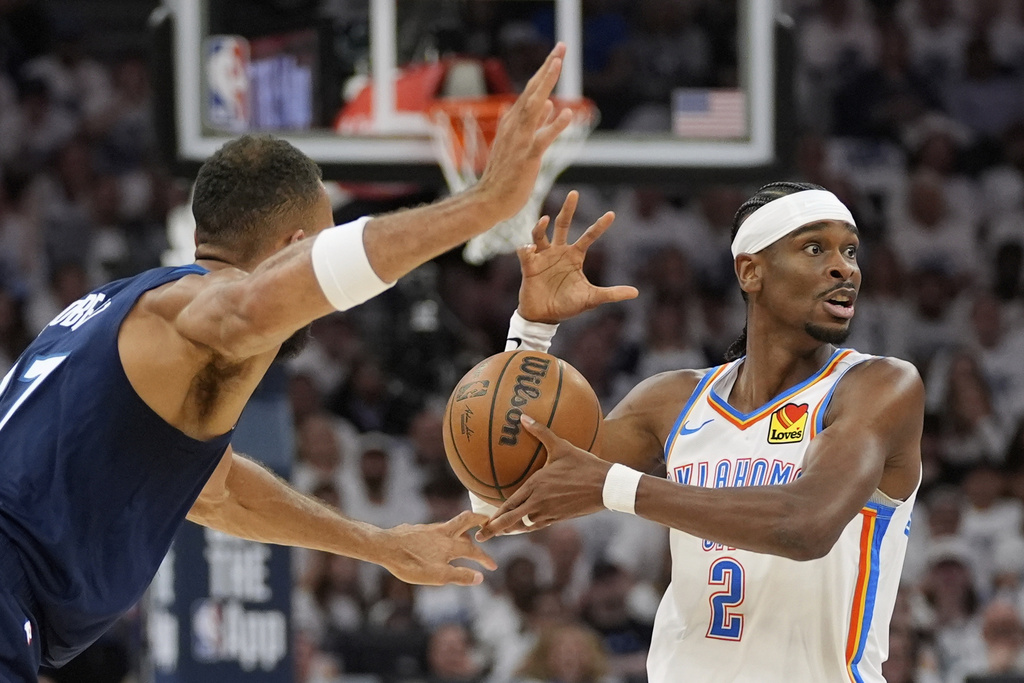
Shai Gilgeous-Alexander, the newly crowned NBA MVP, was held to 14 points on 4-for-13 shooting in Game 3. For the Thunder to succeed, Gilgeous-Alexander must assert himself offensively, creating scoring opportunities and facilitating ball movement. His ability to penetrate the defense and draw fouls can help set the tone for Oklahoma City’s offense. Moments like Game 4 are built for players like SGA to takeover. On the road, in a hostile environment, and a chance to build a 3-1 lead…this is a MVP type moment.