
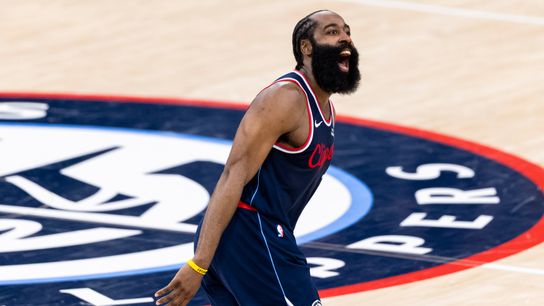
INGLEWOOD, Calif. — The James Harden era in Los Angeles is over—again, abruptly, again dramatically, and again right when it felt like it was starting to work.
The Clippers agreed to trade Harden to the Cleveland Cavaliers in exchange for two-time All-Star Darius Garland and a second-round pick in the 2026 NBA Draft, bringing a sudden close to a partnership that, strangely enough, was producing winning basketball right up until Harden decided he wanted out.
This was not the usual Harden exit. The timing made it jarring.
Advertisement
Los Angeles had won 16 of its last 20 games, looking rejuvenated and dangerous as the season turned toward the stretch run. Kawhi Leonard was playing some of the best basketball he’s played in years—efficient, dominant, fully in control. The Clippers finally looked like a team that had figured out its identity.
So why walk away now?
That’s the question Tyronn Lue was forced to answer Monday night, when news of Harden’s trade request broke during halftime of the Clippers’ game against the Philadelphia 76ers. After the game, Lue was asked whether Harden was someone he wanted on the roster past the trade deadline for a playoff push.
“Who wouldn’t want to have James Harden?” Lue said.
Advertisement
Behind the scenes, the answer was more complicated.
Contract negotiations became the turning point. Harden, whose deal is set to expire, wanted long-term security. The Clippers—already financially committed to Leonard and Paul George—were not willing to go there. When Harden didn’t get what he wanted, the pattern repeated itself: find a team that would.
This time, that team was Cleveland.
To make the move happen, Harden waived nearly all of his $2.3 million trade bonus. He wanted the Cavaliers the same way he once wanted the Clippers… and the Sixers… and the Nets before that. At this point, it’s honestly impressive how often Harden points at a destination and ends up exactly where he wants to be.
Advertisement
For the Clippers, the return is significant. Two-time All-Star. 26 years-old.
Garland brings youth, speed, and a dynamic ball-handling presence that fits neatly alongside Leonard. At his best, Garland can collapse defenses, create easy looks for teammates, and score without dominating the ball—something that should help rebalance the Clippers’ offense.
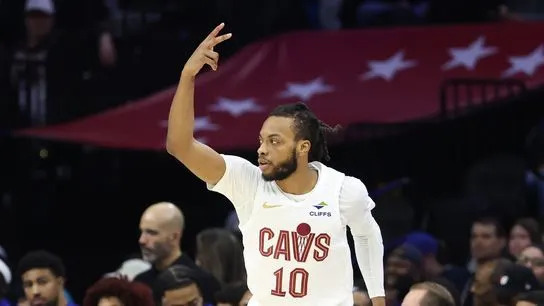
Cleveland Cavaliers guard Darius Garland (10) reacts to his three pointer against the Philadelphia 76ers during the first quarter at Xfinity Mobile Arena.
Bill Streicher-Imagn Images
Cleveland Cavaliers guard Darius Garland (10) reacts to his three pointer against the Philadelphia 76ers during the first quarter at Xfinity Mobile Arena.
There is some risk. Garland has missed the past two weeks with a Grade 1 sprain to his right big toe and has played just 26 of Cleveland’s 51 games this season. When healthy, though, he’s averaged 18.0 points, 6.9 assists, and 2.4 rebounds.
Advertisement
The Clippers’ three-point shooting shouldn’t take much of a hit, either. Garland is shooting 36 percent from beyond the arc this season, compared to Harden’s 34.7 percent while playing 44 of 49 games in a Clippers uniform.
With the NBA trade deadline looming Thursday, both teams wasted no time pulling the trigger on a deal that feels fittingly cinematic for Harden’s exit from Los Angeles—another star, another chapter closed without much warning.
The Clippers will host the Cavaliers on Wednesday night at Intuit Dome. There’s no word yet on Harden’s availability for Cleveland, but regardless, the night figures to be an interesting one in Inglewood.
Another era ends. Another begins. And for the Clippers, the focus shifts—again—to what comes next, not what might have been.