
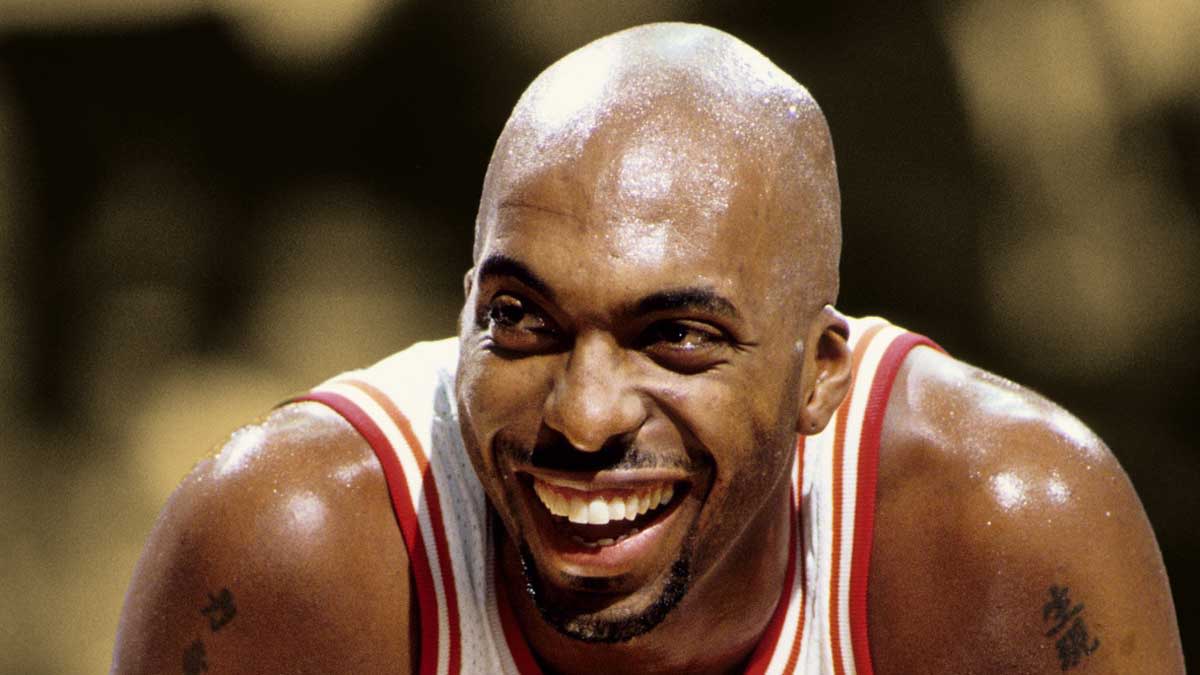
Behind the notorious image of the 1980s Detroit Pistons was a group of players who worked tirelessly on their craft. Isiah Thomas, Joe Dumars, Bill Laimbeer, and the others didn’t just throw their opponents to the ground. The Chuck Daly-coached squad studied the game like diligent scholars and spent countless hours in the gym.
Injured but still hungry
This relentlessness did not diminish when they entered the 1990-91 season, looking to defend their back-to-back crowns. The past two seasons were long and tedious. In exchange for those two chips, the Pistons suffered all sorts of injuries. Still, their mettle was well intact. Power forward John Salley was confident the Pistons could complete the three-peat-
Advertisement
“Isiah, he can hardly see outta one eye and he comes out and practices,” Salley said in 1991, per the Los Angeles Times. “Right now, he’s supposed to be sitting there and resting, and he’s on the Stairmaster for half an hour.”
Thomas was poked in the eye and required minor surgery. On top of impaired sight, “Zeke” was also dealing with wrist injuries and endured lingering pains in his body. Laimbeer, too, had his cheekbone broken by Olden Polynice.
Some say the center deserved the injury for his rough and aggressive play style. Critics deem he resorted to such brutalities because he didn’t know how to play ball. But Salley thinks otherwise. Bill, like all the Bad Boys, possessed the talent and drive required of a champion.
“People say, ‘Bill Laimbeer doesn’t have all the talent.’ Yes, he does. He can shoot. He can rebound,” “Spider” said. “Joe Dumars doesn’t say a word and he just destroys people. James Edwards doesn’t say anything. He goes out there and scores. Everyone knows their role and everyone does their role.”
Advertisement
Dumars and James Edwards were not as boisterous as Dennis Rodman or Isiah Thomas, but those two players were critical to the team’s success. Joe was seen as one of the leaders, along with “Zeke.” His defensive prowess, offensive chops, and composure guided Detroit in those tough playoff duels. Meanwhile, Edwards was their trustworthy big man who did all the dirty work.
Put some respect
Though they entered the 1990-91 NBA season as back-to-back champions, Salley and his teammates had a massive chip on their shoulders. John could still recall how critics ignored their success even after beating the Los Angeles Lakers in the 1989 NBA Finals.
Advertisement
“Nobody respected us after we beat L.A. So we came back next year and L.A. didn’t make it, did they? And we beat Portland honestly. I think it was our third championship. I think we were robbed of our first one,” Salley noted, referring to their 1988 NBA Finals loss to the Lakers, a classic series that was decided in Game 7.
“Hey, we’ve got a good team,” the retired big man reiterated. “We got the same team that was here the past two championships. We know what it’s like. We know what it takes. We like playing in June. We like being the only two teams on television besides baseball.”
John’s confidence was admirable. But those years playing over a hundred games in the regular season and the playoffs had taken a toll on their bodies. They finished the 1990-91 season with a 50-32 record, their lowest ratio since the 1986–87 season.
They crawled their way to the Eastern Conference Finals against the Chicago Bulls. But alas, Michael Jordan and company had already figured them out. Detroit fell to a 0-4 sweep, signifying the end of the Bad Boys era.